1. Introduction
If you’re wondering how to choose bathroom lighting fixtures, you’re not alone. The right lighting can completely change how your bathroom looks and feels, making it more comfortable, functional, and visually appealing.
Poor lighting often leads to shadows, dull spaces, and difficulty with daily tasks like grooming. In this guide, you’ll learn simple and practical ways to select the best bathroom lighting fixtures for any size or style of bathroom.
Table of Contents
2. Why Bathroom Lighting Is Different from Other Rooms
When learning how to choose bathroom lighting fixtures, it’s important to understand that bathroom lighting isn’t the same as lighting in a living room or bedroom. Bathrooms have unique conditions and functional needs that directly affect your fixture choices.
Moisture and Humidity Matter
Bathrooms are exposed to high levels of moisture and steam, especially after showers. This means not all light fixtures are suitable. You need fixtures that are specifically rated for damp or wet locations to ensure safety and long-term durability. Choosing the wrong type can lead to damage or even electrical hazards.
Task Lighting Is Essential
Unlike other rooms, bathroom lighting must support daily grooming tasks like shaving, applying makeup, and skincare. Poor lighting can create shadows and make these tasks difficult. That’s why task lighting—especially around the mirror—is a key factor when deciding how to choose bathroom lighting fixtures.
You Need Layered Lighting
Bathrooms require a combination of lighting types instead of relying on a single source. A well-lit bathroom typically includes:
- Ambient lighting (overall illumination)
- Task lighting (focused lighting for mirrors)
- Accent lighting (for style and depth)
This layered approach ensures both functionality and a visually appealing space.
Safety Comes First
Electricity and water are a risky combination, so safety standards are stricter in bathrooms. Fixtures must meet proper safety ratings based on where they are installed (near sinks, showers, or open areas). This is a critical consideration when figuring out how to choose bathroom lighting fixtures correctly.
In short, bathroom lighting is more technical and purpose-driven than in other areas of your home. Understanding these differences will help you make smarter, safer, and more effective lighting choices.
3. Types of Bathroom Lighting Fixtures
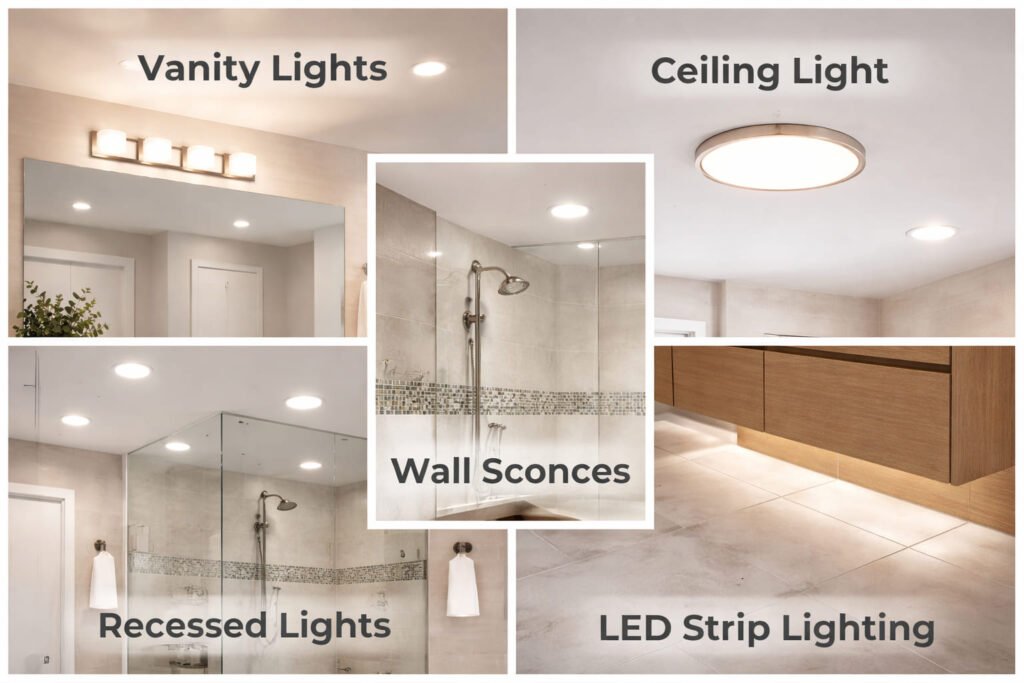
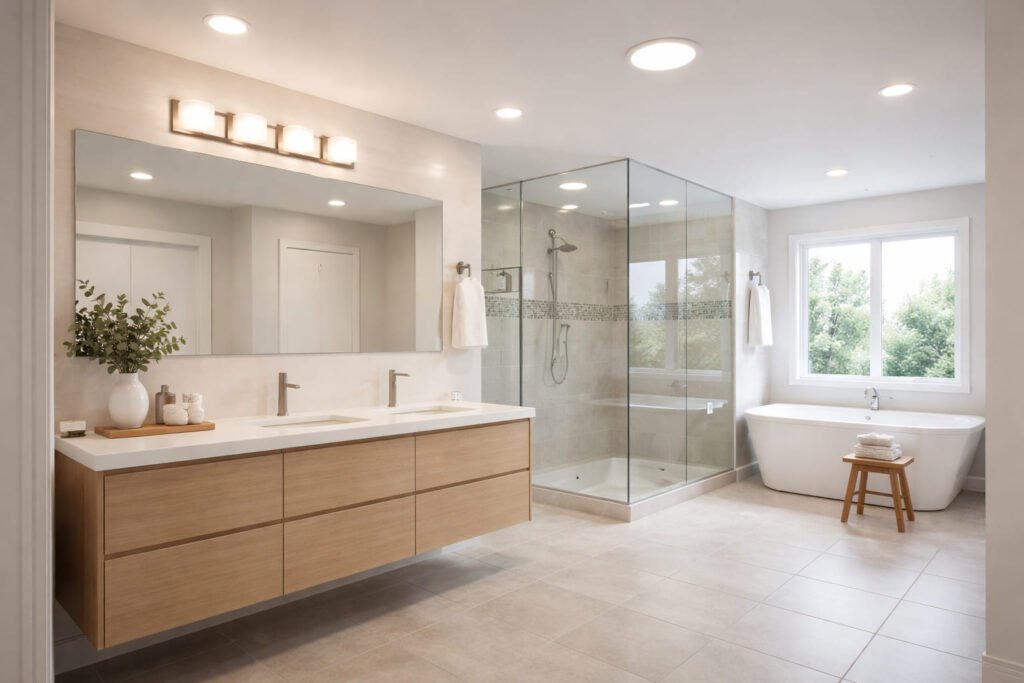
To fully understand how to choose bathroom lighting fixtures, you need to know the different types available and how each one functions. Every fixture serves a specific purpose, and combining them correctly will give you both good visibility and a stylish look.
Vanity Lighting
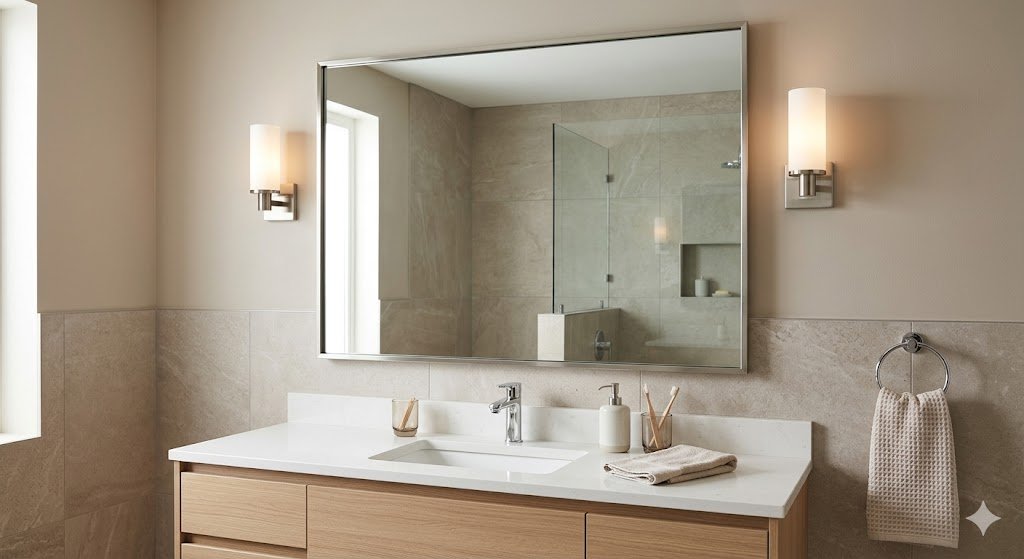
Vanity lights are one of the most important fixtures in any bathroom. They are usually installed above or beside the mirror to provide clear, even lighting for daily tasks like shaving or applying makeup.
- Best placement: Above the mirror or on both sides
- Ideal for: Task lighting
- Tip: Side-mounted lights reduce shadows on your face
Ceiling Lights
Ceiling lighting delivers overall brightness throughout the bathroom space. These are typically flush mount or semi-flush mount fixtures, making them perfect for spaces with limited ceiling height.
- Best placement: Center of the ceiling
- Ideal for: Ambient lighting
- Tip: Choose bright enough fixtures to cover the whole room
Recessed Lighting
Recessed lights (also called can lights) are installed inside the ceiling, giving a clean and modern appearance. They are great for adding extra brightness without taking up space.
- Best placement: Evenly spaced across the ceiling or in the shower area
- Ideal for: Ambient and task lighting
- Tip: Use waterproof versions for shower zones
Wall Sconces
Wall sconces are mounted on the wall, often near mirrors. They provide soft, flattering light and help eliminate harsh shadows.
- Best placement: On both sides of the mirror at eye level
- Ideal for: Task lighting
- Tip: Pair them with overhead lights for balanced lighting
Accent Lighting
Accent lighting is used to enhance the design and create a more luxurious feel. This includes LED strips, under-cabinet lighting, or lighting around mirrors.
- Best placement: Under cabinets, behind mirrors, or along shelves
- Ideal for: Decorative lighting
- Tip: Use warm tones for a relaxing atmosphere
Shower Lighting
Shower lighting is designed specifically for wet areas. These fixtures must be waterproof and safe for direct exposure to water.
- Best placement: Inside the shower or above the bathtub
- Ideal for: Task and safety lighting
- Tip: Always choose wet-rated fixtures for these areas
Understanding these fixture types is a key step in mastering how to choose bathroom lighting fixtures. The best results come from combining multiple types to create a well-lit, functional, and visually appealing bathroom.
4. How to Choose Bathroom Lighting Fixtures (Step-by-Step Guide)
If you’re wondering how to choose bathroom lighting fixtures, the best approach is to follow a simple step-by-step process. This ensures you get the right balance of brightness, functionality, and style.
4.1 Measure Your Bathroom Size
Start by understanding the size of your bathroom. A small bathroom needs fewer fixtures, while a larger space may require multiple light sources.
- Small bathrooms: 1 ceiling light + mirror lighting
- Large bathrooms: Layered lighting with multiple fixtures
Choosing the right number of lights is the first step in how to choose bathroom lighting fixtures effectively.
4.2 Choose the Right Brightness (Lumens)
Brightness plays a big role in how functional your bathroom feels. Instead of focusing on watts, look at lumens (the actual brightness).
- Small bathroom: 2,000–4,000 lumens
- Medium bathroom: 4,000–6,000 lumens
- Large bathroom: 6,000–8,000+ lumens
Proper brightness ensures you can perform daily tasks comfortably.
4.3 Select the Best Color Temperature
Color temperature affects the mood and usability of your bathroom lighting. It is measured in Kelvins (K).
- 2700K–3000K: Warm and relaxing
- 3500K–4000K: Neutral and natural (best for bathrooms)
- 5000K+: Bright daylight (very sharp and clinical)
For most homes, neutral white lighting works best when learning how to choose bathroom lighting fixtures.
4.4 Pick the Right Placement
Where you place your lights matters just as much as the type you choose. Poor placement can create shadows and uneven lighting.
- Install lights on both sides of the mirror for even illumination
- Use overhead lighting for general brightness
- Add shower lighting if needed
Good placement is key to avoiding dark spots and glare.
4.5 Match Your Bathroom Style
Your lighting should complement the overall design of your bathroom.
- Modern: Sleek, minimal fixtures
- Traditional: Decorative or classic designs
- Minimalist: Simple and clean lighting
While function is important, style helps create a cohesive look.
4.6 Check Safety Ratings
Bathrooms require special safety-rated fixtures due to moisture. Always check whether a fixture is:
- Damp-rated (for general bathroom areas)
- Wet-rated (for showers or near water)
This is a critical step in how to choose bathroom lighting fixtures safely and correctly.
By following these steps, you can confidently understand how to choose bathroom lighting fixtures that are practical, safe, and visually appealing.
5. Best Lighting Layout Ideas for Bathrooms
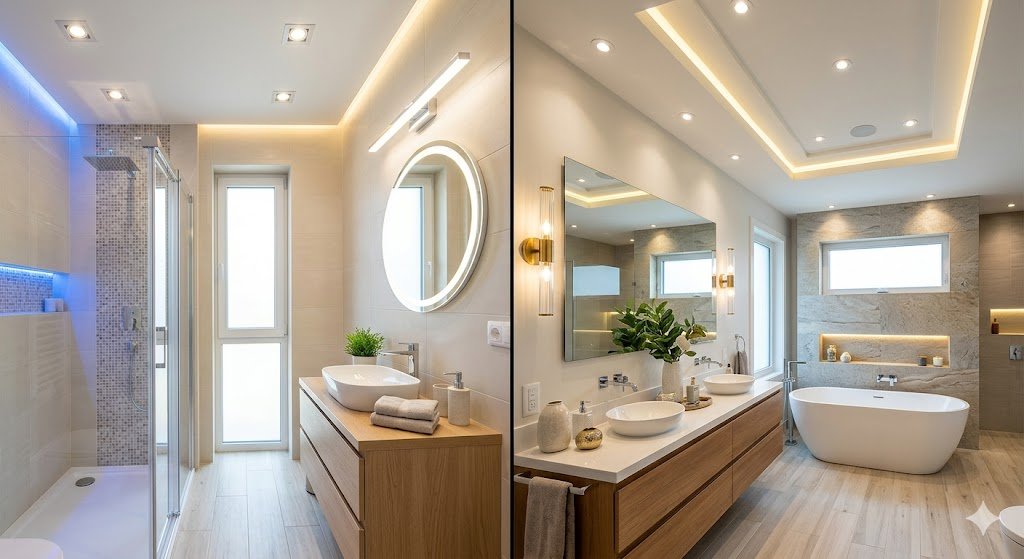
Once you understand how to choose bathroom lighting fixtures, the next step is arranging them in the right layout. A good lighting layout ensures your bathroom is bright, functional, and visually balanced.
Small Bathroom Layout
In small bathrooms, simplicity works best. You don’t need too many fixtures—just the right ones placed correctly.
- One ceiling light for overall brightness
- Vanity lighting above or beside the mirror
- Optional: A small recessed light for extra brightness
This layout avoids clutter while still providing enough light for daily tasks.
Medium Bathroom Layout
A medium-sized bathroom benefits from a more balanced lighting setup.
- Central ceiling light for ambient lighting
- Vanity lighting placed on either side of the mirror.
- One or two recessed lights for added coverage
This combination improves visibility and reduces shadows, making the space more practical.
Large or Master Bathroom Layout
Larger bathrooms require layered lighting to cover all areas properly.
- Multiple ceiling or recessed lights for even illumination
- Vanity lighting for each sink
- Accent lighting (under cabinets or mirrors) for a premium look
- Dedicated shower lighting
This layout ensures no dark corners and creates a more luxurious feel.
Double Vanity Layout
If your bathroom has two sinks, each one should have its own lighting setup.
- Separate lights for each mirror
- Wall sconces or vertical fixtures on both sides
- Optional overhead lighting for additional brightness
This setup provides equal lighting for both users and improves functionality.
Shower and Wet Area Lighting
Shower areas need focused and safe lighting.
- Use recessed, wet-rated lights inside the shower
- Position directly above to avoid shadows
- Ensure proper brightness for safety and visibility
This is an important part of how to choose bathroom lighting fixtures, especially for wet zones.
A well-planned layout is just as important as choosing the right fixtures. By applying these ideas, you can fully implement how to choose bathroom lighting fixtures in a way that improves both usability and style.
6. Common Mistakes to Avoid
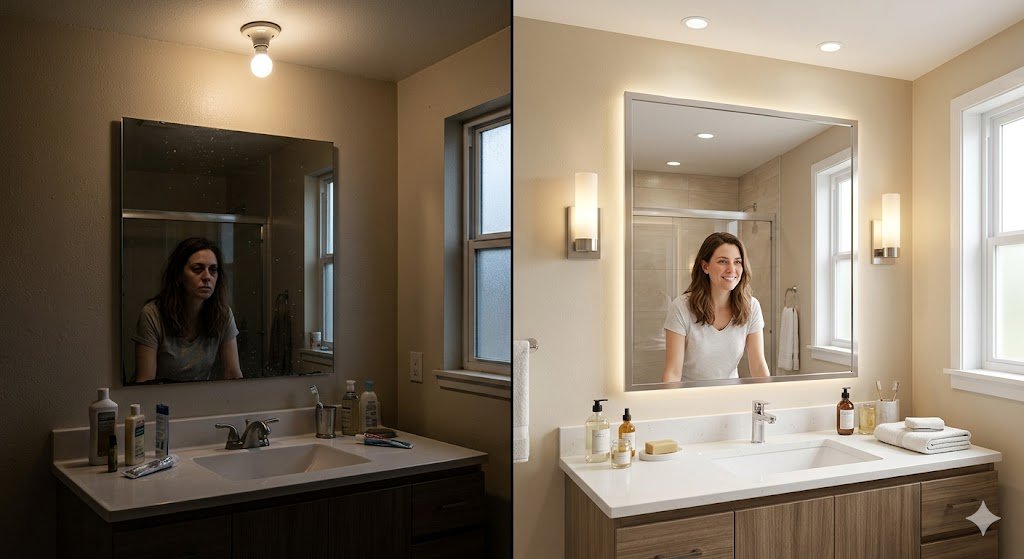
Even if you understand how to choose bathroom lighting fixtures, small mistakes can lead to poor lighting, shadows, or an unbalanced look. Avoiding these common errors will help you get the best results.
Relying on a Single Light Source
One of the biggest mistakes is using only one ceiling light. This creates uneven lighting and dark areas.
- Problem: Shadows and poor visibility
- Solution: Use layered lighting (ambient + task + accent)
Poor Mirror Lighting Placement
Incorrect placement around the mirror can create harsh shadows on your face.
- Problem: Overhead lighting alone causes shadows
- Solution: Add lights on both sides of the mirror at eye level
Choosing the Wrong Brightness
Lighting that is too dim or too bright can make the bathroom uncomfortable to use.
- Problem: Low light affects visibility, too much light feels harsh
- Solution: Choose the right lumen range based on bathroom size
Ignoring Color Temperature
Many people overlook color temperature, which affects how the space looks and feels.
- Problem: Too warm = dull lighting, too cool = harsh/clinical
- Solution: Use neutral white (around 3500K–4000K) for balance
Not Checking Safety Ratings
Using the wrong fixtures in wet areas can be dangerous.
- Problem: Risk of damage or electrical hazards
- Solution: Always use damp-rated or wet-rated fixtures where needed
Focusing Only on Style
While design matters, choosing fixtures based only on appearance can lead to poor functionality.
- Problem: Stylish but impractical lighting
- Solution: Balance both function and design
Avoiding these mistakes is a key part of mastering how to choose bathroom lighting fixtures. With the right approach, you can create a bathroom that is safe, well-lit, and visually appealing.
7. Pro Tips for Perfect Bathroom Lighting
Once you understand the basics of how to choose bathroom lighting fixtures, a few expert tips can take your lighting to the next level. These simple upgrades can improve both functionality and the overall look of your bathroom.
Layer Your Lighting
The best bathrooms use a mix of lighting types instead of relying on just one fixture.
- Ambient lighting for overall brightness
- Task lighting for mirrors and grooming
- Accent lighting for style and depth
Layering is one of the most effective ways to get balanced and professional-looking results.
Use Dimmers for Flexibility
Installing dimmer switches allows you to control the brightness based on your needs.
- Bright light for grooming tasks
- Soft light for relaxing baths
This adds convenience and enhances the overall experience.
Maximize Natural Light
If your bathroom has windows, make the most of natural light.
- Use light curtains or frosted glass for privacy
- Avoid blocking windows with bulky fixtures
Natural light works perfectly alongside artificial lighting.
Choose the Right Bulbs
Even the best fixtures won’t perform well with the wrong bulbs.
- Use LED bulbs for energy efficiency and long life
- Choose the right color temperature for your needs
This is a small detail that makes a big difference in how to choose bathroom lighting fixtures effectively.
Avoid Glare and Shadows
Lighting should be comfortable for the eyes and evenly distributed.
- Opt for soft, diffused lighting rather than strong, direct glare.
- Position fixtures to minimise shadows on the face
Proper placement and fixture design help achieve this.
Highlight Key Areas
Focus your lighting on important areas of the bathroom.
- Mirrors and vanities
- Shower or bathtub
- Storage or decorative shelves
This improves both usability and visual appeal.
Keep It Simple and Balanced
Overloading your bathroom with too many fixtures can make it feel cluttered.
- Stick to a clean and balanced layout
- Choose fixtures that complement each other
Simplicity often leads to the best results.
By applying these expert tips, you can fully master how to choose bathroom lighting fixtures and create a space that is bright, functional, and visually appealing.
8. FAQs
What lighting works best for a bathroom mirror?
The most effective mirror lighting is even and shadow-free. Side-mounted lights on both sides of the mirror are ideal because they light your face evenly. A single overhead light often creates unwanted shadows.
How many lighting fixtures are recommended for a bathroom?
There is no fixed number—it depends on the bathroom size. Small bathrooms may only need one ceiling light plus mirror lighting, while larger bathrooms usually need a combination of ceiling, task, and accent lighting.
Which light colour is most suitable for bathrooms?
A neutral white color temperature, typically around 3500K to 4000K, is usually the most suitable choice. It feels natural and makes grooming tasks easier. This is an important detail when learning how to choose bathroom lighting fixtures effectively.
Are LED lights good for bathrooms?
Yes, LED lighting is considered one of the best options. They consume less energy, last longer, and come in many brightness and colour options. Just ensure the fixtures are suitable for bathroom conditions, especially in wet areas.
Where should bathroom lighting be installed?
Bathroom lighting should be placed in layers:
1. Ceiling lights for overall brightness
2. Side or vertical lights near mirrors for tasks
3. Recessed or waterproof lights for showers or wet zones
Proper placement is a key part of how to choose bathroom lighting fixtures correctly.
What lighting mistakes should I avoid in a bathroom?
Avoid depending on a single light source, especially ceiling-only lighting. Also avoid installing non-waterproof fixtures in damp or wet areas, as this can cause safety and durability issues.
How bright should bathroom lighting be?
Brightness varies by room size, but most bathrooms need enough light to clearly see without strain. Typically, a combined brightness between 2,000 and 8,000 lumens works well depending on space size.
9. Conclusion
Good bathroom lighting is a mix of the right fixtures, proper placement, and balanced brightness. When learning how to choose bathroom lighting fixtures, the main focus should be on both function and comfort—not just appearance.
By layering your lights, choosing suitable color temperatures, and avoiding common mistakes, you can create a bathroom that looks better and works better every day.
With the right choices, you can confidently design lighting that is safe, practical, and visually appealing.