
Introduction
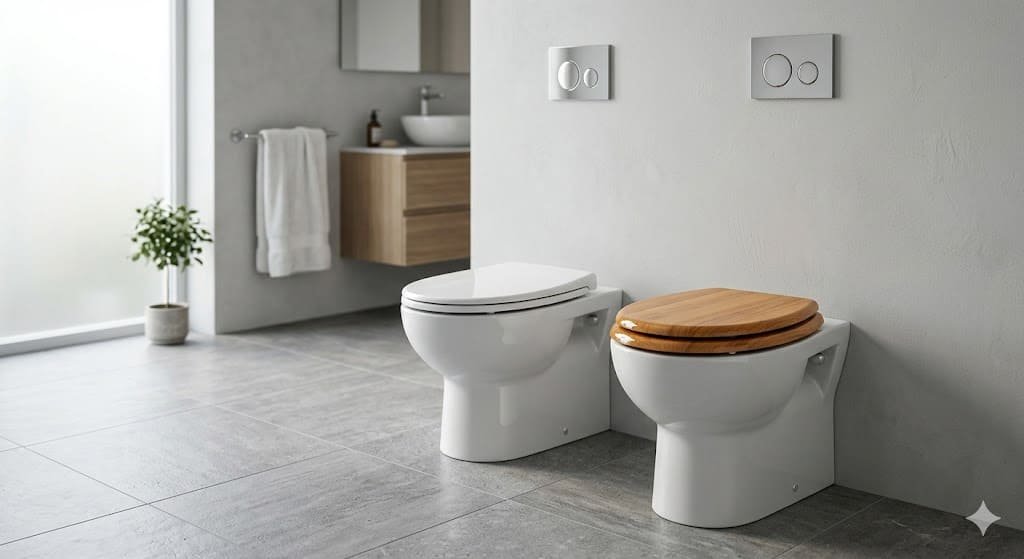
The plastic vs wooden toilet seat debate is more important than it may seem when designing or upgrading a bathroom. The right toilet seat affects comfort, hygiene, durability, and even the overall look of your bathroom. While plastic toilet seats are known for being affordable and easy to maintain, wooden toilet seats are often chosen for their comfort and premium appearance. In this guide, we will compare both options to help you decide which one is the better fit for your needs.
Table of Contents
What Is a Plastic Toilet Seat?
A plastic toilet seat is a type of toilet seat made mainly from durable synthetic materials such as polypropylene or thermoplastic. In the discussion of plastic vs wooden toilet seats, plastic seats are the most commonly used option in modern bathrooms due to their affordability and practicality.
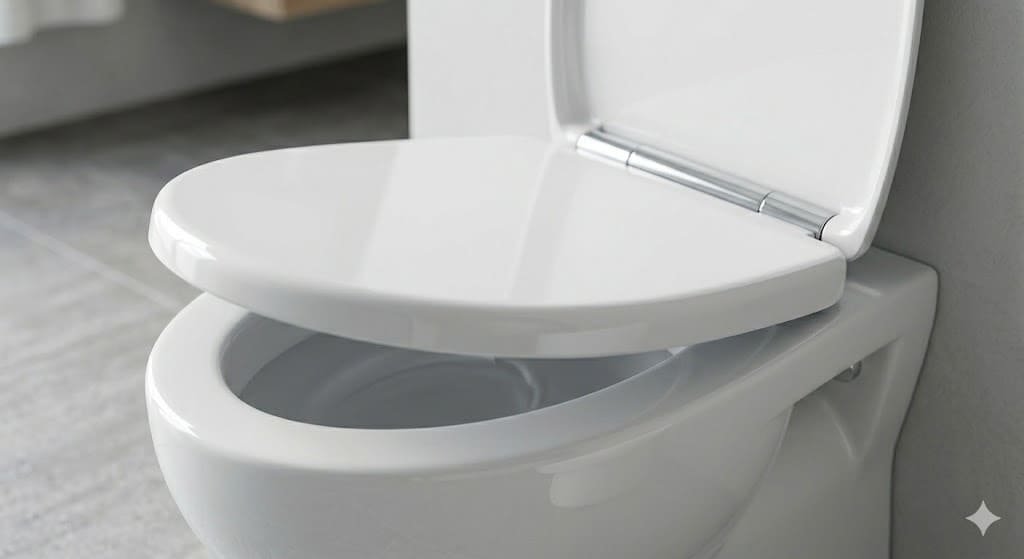
Plastic toilet seats are designed to be lightweight, easy to install, and simple to maintain. They usually come in a wide range of shapes, colours, and finishes, making them suitable for different bathroom styles—from basic family bathrooms to modern, minimal designs.
One of the key features of plastic seats is their water-resistant nature. Unlike wood, plastic does not absorb moisture, which makes it more hygienic and less prone to damage in humid bathroom environments. This is one of the main reasons many people prefer plastic when comparing plastic vs wooden toilet-seat options.
These seats are also manufactured in different quality levels. Lower-cost versions are basic and lightweight, while higher-quality models offer stronger builds, better hinges, and added features like soft-close lids.
Overall, plastic toilet seats are a practical choice for everyday use, especially for users looking for a budget-friendly, low-maintenance solution in the plastic vs wooden toilet seat comparison.
What Is a Wooden Toilet Seat?
A wooden toilet seat is a type of toilet seat made from solid wood or engineered wood materials like MDF (medium-density fibreboard), designed to provide a stronger and more premium alternative in the plastic vs wooden toilet seat comparison. These seats are usually coated with a protective layer, such as varnish, enamel, or thermoset finish, to improve durability and resistance against moisture.
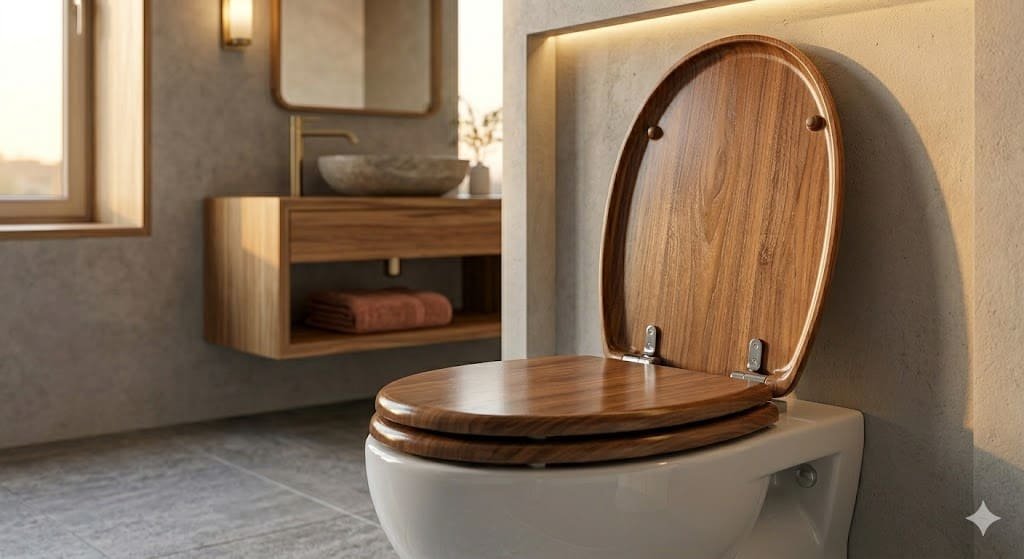
Wooden toilet seats are commonly chosen for their sturdy feel and traditional appearance. Their solid construction gives them extra weight, which helps them feel more secure and steady during use compared to plastic seats. They are often designed to match classic or elegant bathroom interiors, adding a warm and natural look to the space.
In the plastic vs wooden toilet seat debate, wooden options stand out for their comfort and aesthetic appeal. However, their performance depends heavily on the quality of the protective coating, since unsealed or damaged surfaces can absorb moisture over time.
Overall, wooden toilet seats are considered a premium choice for users who prioritise style, comfort, and durability in their bathroom setup.
Plastic vs Wooden Toilet Seats: Key Differences
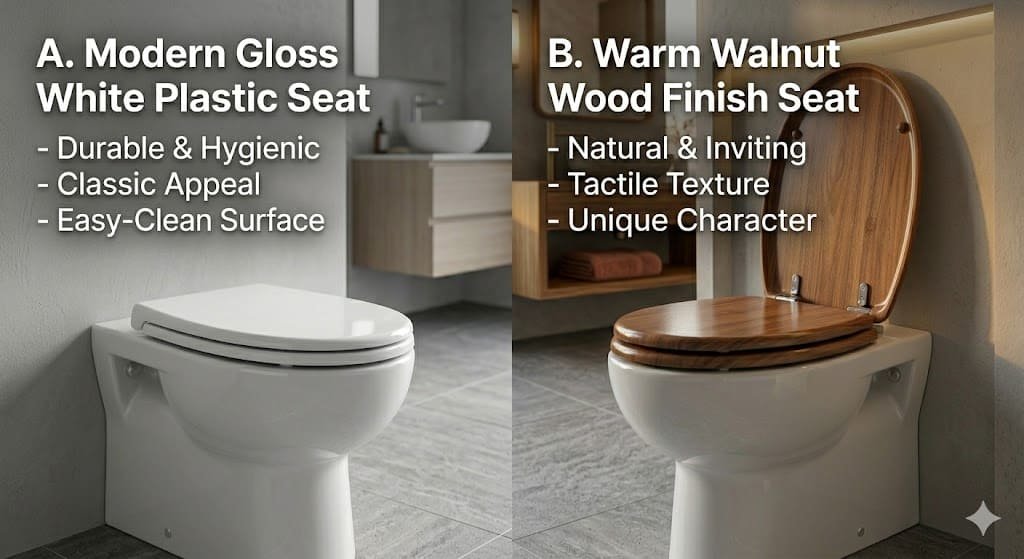
When comparing plastic vs wooden toilet seats, the main differences come down to durability, comfort, maintenance, appearance, and price. Both options serve the same purpose, but the user experience can vary significantly depending on the material you choose.
Durability
Plastic toilet seats are generally resistant to moisture and daily wear. They are less likely to absorb water, which helps prevent damage over time. However, lower-quality plastic can crack or become brittle after long use.
Wooden toilet seats, on the other hand, are usually more solid and sturdy. High-quality versions are well-coated to resist moisture, but if the protective layer gets damaged, the wood can swell or weaken over time.
Comfort
In terms of comfort, wooden toilet seats often feel warmer and more comfortable to sit on, especially in colder weather. They provide a solid, premium feel.
Plastic seats can feel slightly colder and lighter, but many modern designs improve comfort with ergonomic shaping.
Cleaning and Maintenance
Plastic toilet seats are generally simpler to maintain because their sleek, non-porous surface doesn’t readily soak up moisture or stains. This also helps reduce the chances of bacteria accumulating over time.
Wooden toilet seats, however, need a little extra attention. If their protective finish becomes damaged or worn, they can start to absorb moisture, which makes them more difficult to keep clean and maintain over an extended period.
Appearance and Style
Plastic toilet seats usually come in a wide range of colours and modern designs, making them ideal for contemporary bathrooms.
Wooden toilet seats offer a more classic and premium look. They are often chosen to match traditional or luxury bathroom interiors.
Price
Plastic toilet seats are generally more affordable and budget-friendly, making them a popular choice for everyday use and rental properties.
Wooden toilet seats tend to be more expensive due to their material quality and aesthetic appeal.
Strength and Feel
Wooden seats usually feel stronger and more solid when used. Plastic seats are lighter and more flexible, which can be an advantage for easy installation and handling.
Overall, the differences in plastic vs wooden toilet seats come down to personal preference, budget, and bathroom style.
Which Toilet Seat Material Is More Hygienic?
When comparing plastic vs wooden toilet seats, hygiene is one of the most important factors to consider. Both materials can be kept clean, but they behave differently when it comes to bacteria, moisture, and long-term cleanliness.
Plastic toilet seats are generally considered more hygienic because they have a non-porous surface. This means they do not absorb moisture, germs, or odours easily. As a result, they are easier to wipe down and disinfect regularly. In busy households or public restrooms, plastic seats are often preferred because they allow quick and effective cleaning with standard bathroom disinfectants.
On the other hand, wooden toilet seats (especially those made from MDF or coated wood) have a protective finish, but they are still more vulnerable if the coating gets damaged. Once moisture seeps into the surface, it can become harder to fully sanitise and may lead to odour or bacterial buildup over time. This makes maintenance more important for wooden seats.
In terms of daily hygiene, plastic seats usually have an advantage because they are low-maintenance and resistant to water absorption. However, if a wooden toilet seat is well-sealed and properly maintained, it can also remain hygienic for regular home use.
Overall, in the plastic vs wooden toilet seat comparison, plastic tends to be the more practical and hygienic option for most users, especially in high-use bathrooms.
Which Toilet Seat Is Better for Different Bathroom Types?
When comparing a plastic vs wooden toilet seat, the better choice often depends on the type of bathroom, how it is used, and the overall interior style. Each material performs differently in modern, traditional, family, and rental settings. Here’s a clear and easy guide to help you make the right choice.
Modern Bathrooms
For modern and minimalist bathrooms, a plastic toilet seat is usually the better fit. It has a clean, smooth finish and is available in many neutral or matching colours. Plastic seats blend well with contemporary designs and glossy fixtures. They also support soft-close and slim-profile designs, which are common in modern bathrooms.
Traditional or Classic Bathrooms
In traditional bathroom setups, a wooden toilet seat often works better. It adds a warmer, more natural look that matches wooden cabinets, vintage tiles, or classic décor. When comparing plastic vs wooden toilet seat options, wood stands out for its premium and elegant appearance.
Family Bathrooms
For family use, especially in homes with children, a plastic toilet seat is generally more practical. It is easier to clean, more resistant to stains, and handles frequent use better. In the plastic vs wooden toilet seat comparison, plastic also offers better hygiene since it does not absorb moisture.
Rental Properties and Guest Bathrooms
In rental homes or guest bathrooms, durability and low maintenance are key. A plastic toilet seat is usually preferred because it is affordable and easy to replace if damaged. It also requires less upkeep compared to wood, making it a more cost-effective option for property owners.
Luxury or Premium Bathrooms
For high-end bathrooms, both materials can be used depending on the design theme. However, a wooden toilet seat is often chosen to create a more premium and comfortable feel. In the plastic vs wooden toilet seat decision, wood adds a touch of luxury that enhances the overall bathroom aesthetic.
Final Note
Choosing between a plastic vs wooden toilet seat ultimately depends on your bathroom style and usage needs. Plastic is practical, hygienic, and modern, while wood is stylish, warm, and premium-looking.
How Long Do Plastic and Wooden Toilet Seats Last?
When comparing plastic vs wooden toilet seats, one of the most important factors to consider is lifespan. Both materials can last for years, but their durability depends on quality, usage, and maintenance.
On average, a plastic toilet seat lasts around 3 to 5 years. High-quality plastic models may last even longer, especially if they are reinforced and regularly cleaned. Lower-cost plastic toilet seats tend to wear out faster, making them more prone to cracking, hinge loosening, or surface discoloration after prolonged use and regular cleaning.
A wooden toilet seat, on the other hand, typically lasts around 5 to 8 years. Solid wood and high-quality MDF seats tend to be more durable and feel sturdier. However, their lifespan can be reduced if the protective coating gets damaged, allowing moisture to seep in and cause swelling, peeling, or warping.
When looking at plastic vs wooden toilet seat durability, wooden seats generally last longer if properly maintained, but plastic seats are easier to manage and replace at a lower cost.
Factors That Affect Lifespan
- Usage frequency: Family bathrooms experience faster wear and tear.
- Cleaning methods: Harsh chemicals can damage both materials over time.
- Hinge quality: Weak hinges reduce overall durability.
- Moisture exposure: Especially important for wooden seats
When to Replace Your Toilet Seat
You should consider replacing either type of seat if you notice the following:
- Cracks or visible damage
- Loose or broken hinges
- Stains that cannot be cleaned
- Unstable or uncomfortable seating
In short, both options can last several years, but choosing between a plastic vs wooden toilet seat depends on whether you prefer easier maintenance or longer-lasting sturdiness.
Tips for Choosing the Right Toilet Seat
Choosing the right toilet seat is not just about appearance—it affects comfort, hygiene, and long-term durability. When comparing a plastic vs wooden toilet seat, a few practical factors can help you make the best decision for your bathroom.
First, always measure your toilet bowl before buying. Toilet seats come in different shapes, like round and elongated, and an incorrect size will cause discomfort and poor fitting.
Next, consider the material based on your needs. In the plastic vs wooden toilet seat comparison, plastic seats are usually lighter, more affordable, and easier to clean, making them ideal for busy or family bathrooms. Wooden seats, on the other hand, offer a more premium look and better sitting comfort, especially in colder weather.
Check the quality of the hinges as well. Strong metal hinges provide better stability and increase the lifespan of the seat. Soft-close features are also worth considering because they prevent noise and reduce wear over time.
Hygiene is another important factor. If easy cleaning is your priority, plastic seats generally perform better. However, high-quality coated wooden seats can also be hygienic if maintained properly.
Finally, match the seat with your bathroom style and budget. A plastic seat works well for modern, minimal bathrooms, while a wooden seat suits traditional or decorative interiors.
By keeping these points in mind, you can confidently choose between a plastic vs wooden toilet seat that fits both your comfort and practical needs.
FAQs
1. Which is better: a plastic vs wooden toilet seat?
When comparing plastic vs wooden toilet seats, neither is universally “best”. Plastic seats are better for affordability, low maintenance, and moisture resistance, while wooden seats are better for comfort, strength, and a premium look. The right choice depends on your budget and bathroom style.
2. Are wooden toilet seats more comfortable than plastic ones?
Yes, wooden toilet seats are generally more comfortable because they feel warmer and sturdier. Unlike plastic, they do not feel as cold during winter, which makes them more pleasant to use in colder climates.
3. Do plastic toilet seats crack easily?
Plastic toilet seats can crack over time, especially if they are low-quality or exposed to heavy weight and pressure. However, good-quality plastic seats are designed to last several years without issues.
4. Can wooden toilet seats get water damage?
Yes, wooden toilet seats can get damaged by water if their protective coating wears off. Moisture can cause swelling, peeling, or cracking, so proper maintenance and dry cleaning are important.
5. Which is easier to clean: a plastic or wooden toilet seat?
Plastic toilet seats are easier to clean because they are non-porous and more resistant to stains and moisture. Wooden seats require more care to avoid damaging the surface coating.
6. Which lasts longer in the plastic vs wooden toilet seat comparison?
Both can last a long time if they are good quality. However, plastic seats often last longer in wet environments, while wooden seats last well if they are properly maintained and kept dry.
7. Which toilet seat is better for family bathrooms?
For family bathrooms, plastic toilet seats are usually preferred because they are hygienic, easy to clean, and more resistant to frequent use and moisture.
Conclusion
When it comes to a plastic vs wooden toilet seat, the best choice depends on your personal needs, bathroom environment, and budget.
Plastic toilet seats are a practical option for most households. They are affordable, lightweight, easy to clean, and highly resistant to moisture, making them a strong choice for busy or family bathrooms.
On the other hand, wooden toilet seats offer a more premium feel. They are generally more comfortable, sturdier, and better suited for bathrooms where style and appearance are a priority. However, they do require more care to protect them from water damage over time.
In simple terms, if you want durability and low maintenance, plastic is a smart choice. If you prefer comfort and a more elegant look, wooden seats are worth considering. The right decision comes down to balancing practicality with design preferences.
If you want a complete guide on Toilet Seat Materials Explained and how to choose the right one for your bathroom, check out our latest detailed post for expert insights and easy buying tips.