
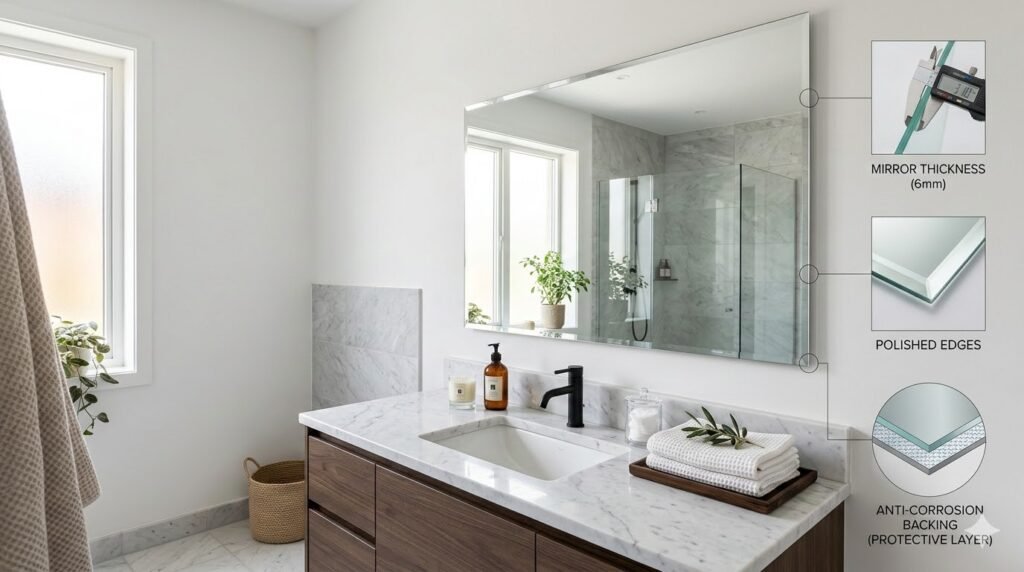
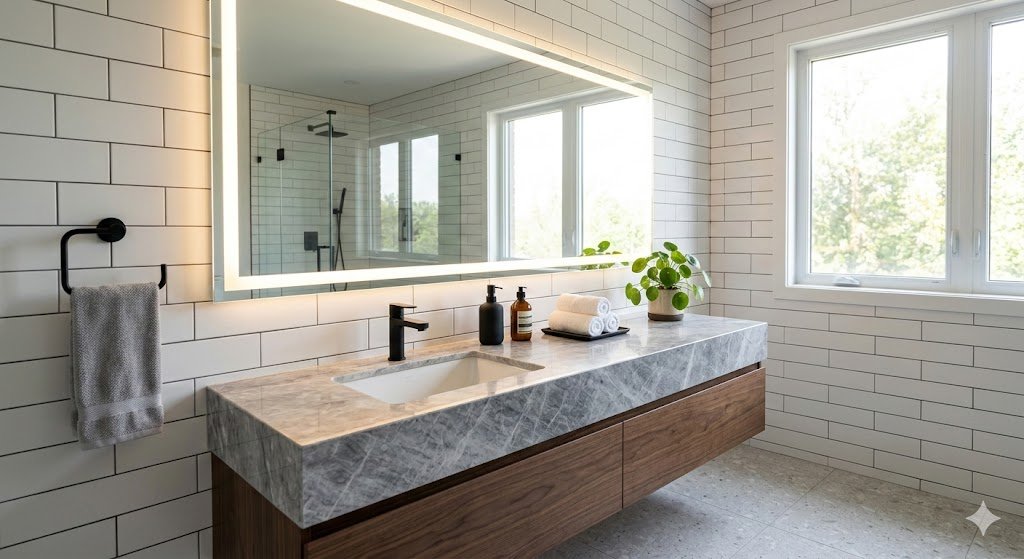
Introduction
To avoid wasting money and ending up with a disappointing product, it’s important to know how to check mirror quality before buying it. Not every mirror that looks stylish is built to last—some may quickly develop black edges, distort reflections, or corrode, particularly in bathrooms.
This guide walks you through everything you need to know to spot a high-quality mirror, whether you’re shopping in a store or online, so you can make a wise, long-lasting choice.
Table of Contents
Why Mirror Quality Matters
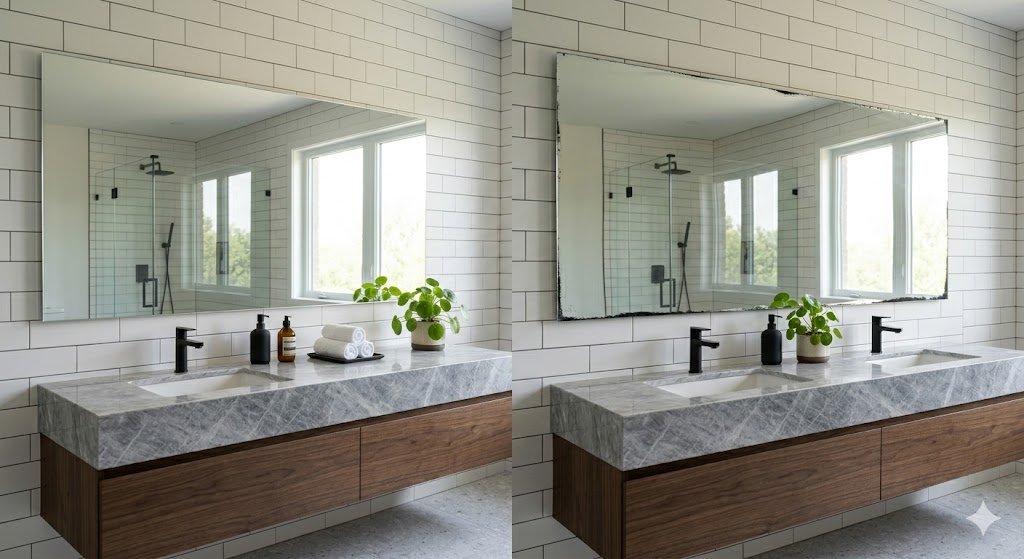
Before picking a mirror based on size or design, you need to understand how to check mirror quality before buying. A mirror’s quality impacts its clarity, durability, safety, and long-term value.
Even a mirror that appears perfect can have hidden flaws, like warping or corrosion, especially in humid spaces such as bathrooms. Here’s why quality matters:
1. Clear and Accurate Reflection
The main function of a mirror is to give a true reflection. Low-quality mirrors can:
- Appear wavy or distorted
- Show uneven or blurry images
- Bend straight lines
High-quality mirrors produce crisp, accurate reflections without any distortion.
2. Long-Term Durability
Cheap mirrors often show problems within months, such as:
- Black spots forming on edges
- Peeling or damaged backing
- Surface scratches
Mirrors made with quality glass and robust backing last longer and maintain their appearance. For technical guidance on thickness and durability, see the mirror glass thickness selection guide.
3. Resistance to Moisture and Corrosion
Bathrooms expose mirrors to steam, splashes, and high humidity. Low-quality mirrors are prone to corrosion and blackening at the edges. Premium mirrors use copper-free or anti-corrosion backing to withstand moisture and prevent early damage.
4. Safety and Shatter Resistance
Thin or non-tempered mirrors can easily crack or break into sharp shards. High-quality mirrors often use thicker glass or tempered construction and may include shatter-resistant backing for safer use, especially around children.Learn more about the benefits of tempered glass mirrors to understand why tempered glass is recommended for safety.
5. Better Value Over Time
Although inexpensive mirrors may save money initially, replacing them frequently adds up. Investing in a quality mirror reduces replacements and ensures it remains visually appealing and functional for years.
7 Ways to Check Mirror Quality Before Buying
To understand how to check mirror quality before buying, you need to evaluate the glass, edges, backing, and safety features. Here’s how:
1. Check Glass Thickness
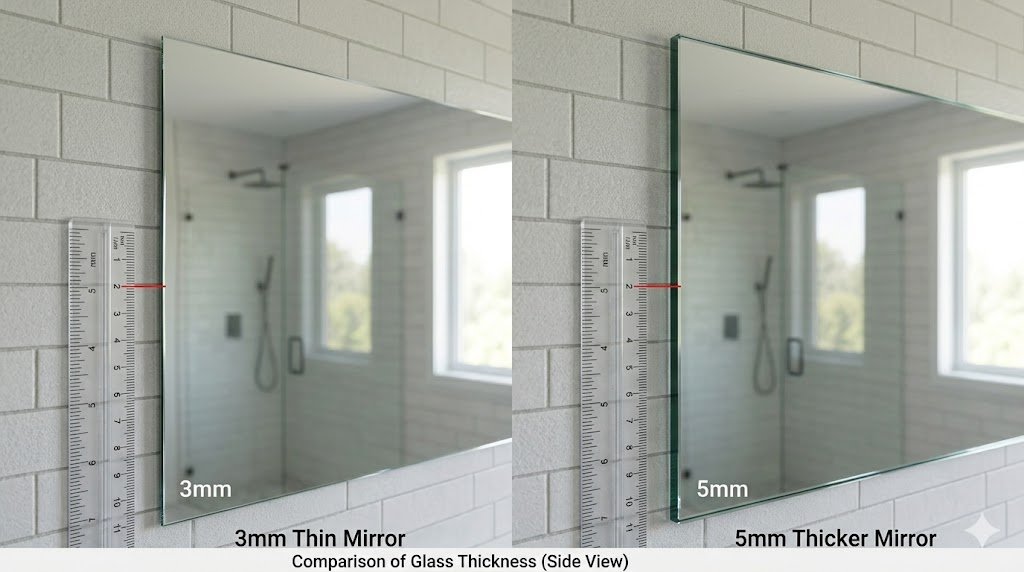
Glass thickness affects durability and clarity:
- 3mm: Budget mirrors; more likely to bend or distort
- 4–5mm: Recommended for bathrooms and larger mirrors; more stable and long-lasting
For real examples using proper thickness and safety backing, see our best modern bathroom mirrors to buy in 2026 guide.
2. Look for Reflection Distortion
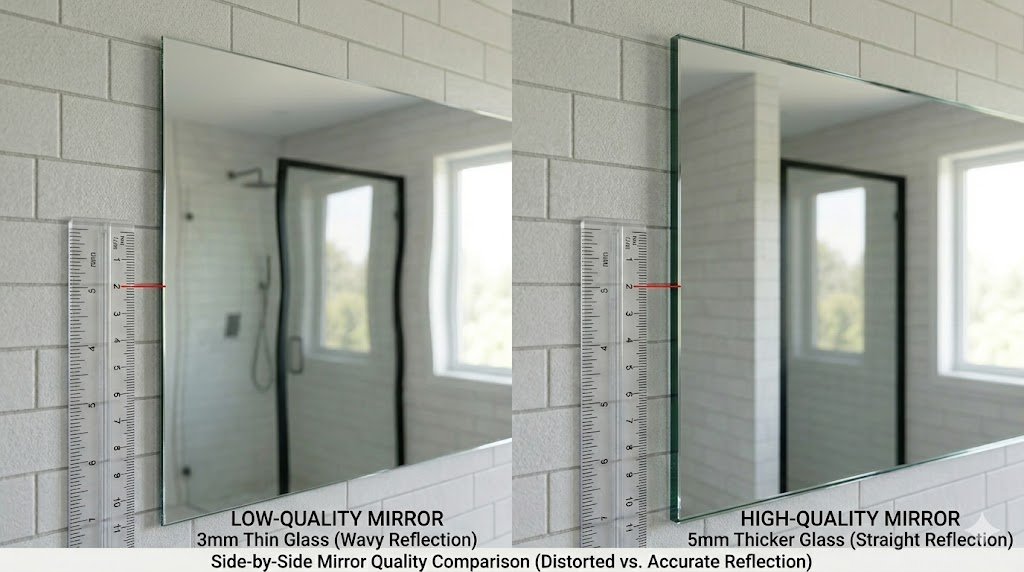
Stand in front of the mirror and observe straight lines behind it. Wavy, bent, or stretched lines indicate low-quality glass.
3. Inspect the Edges
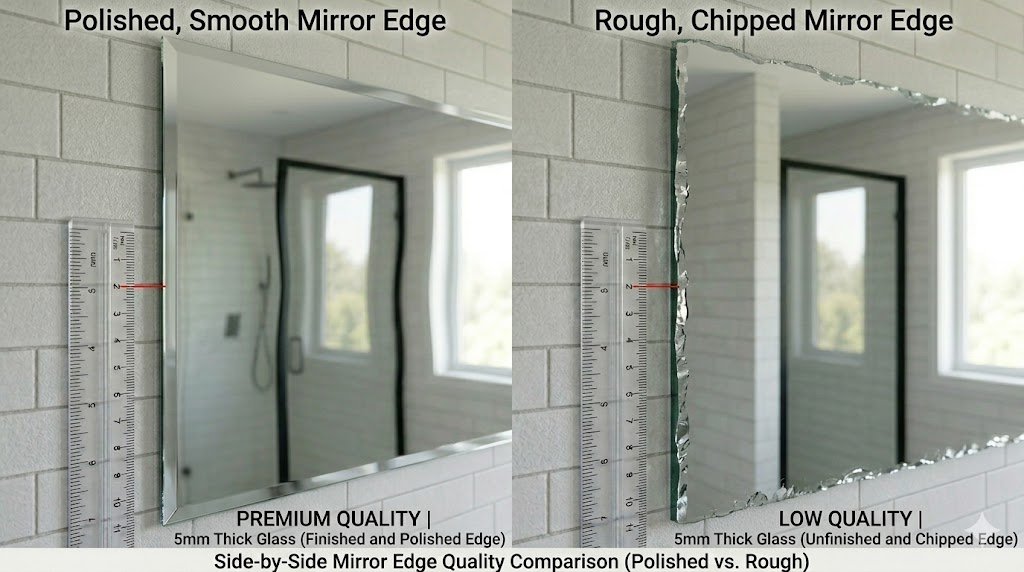
High-quality mirrors have smooth, polished edges. Rough, chipped, or uneven edges suggest poor craftsmanship.
4. Examine the Silver backing
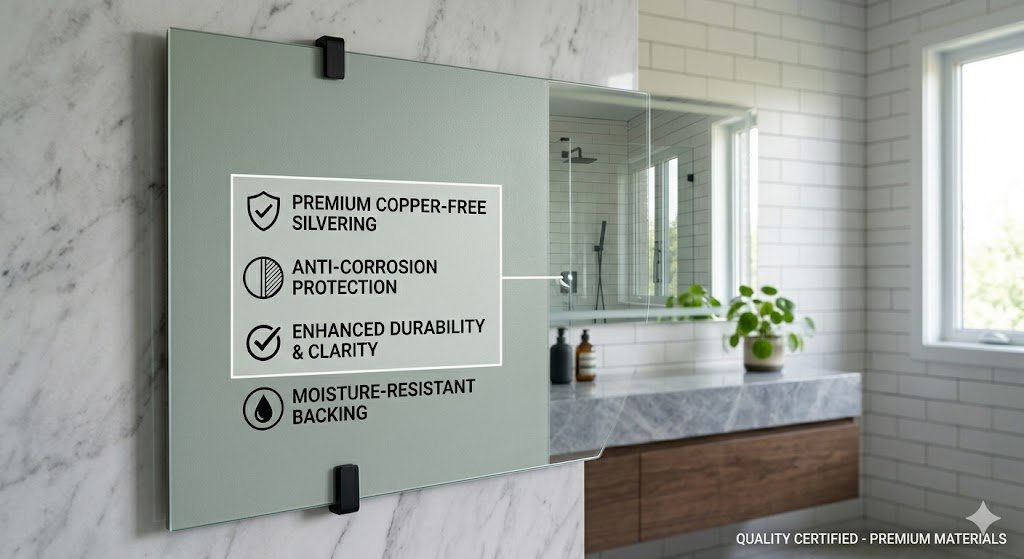
The backing determines how long a mirror lasts. Quality mirrors use copper-free or anti-corrosion backing, preventing dark spots and prolonging lifespan.
5. Check for Black Spots or Dark Edges
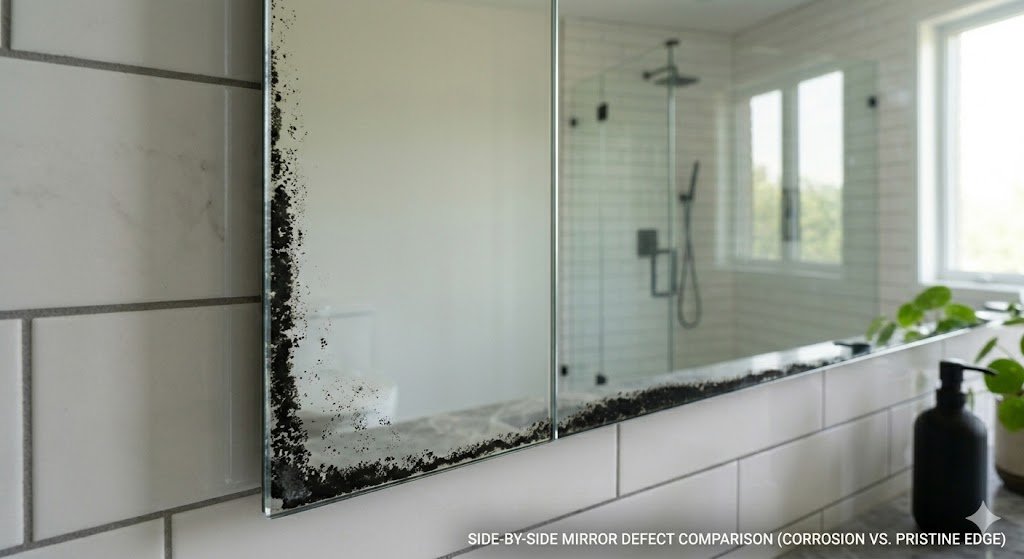
Dark spots or blackening along edges signal early corrosion. Avoid mirrors showing these signs.
6. Confirm Moisture Resistance
For bathroom mirrors, ensure they have an anti-rust or anti-corrosion coating to withstand humidity.
7. Verify Safety Features
Look for tempered glass, shatter-resistant backing, and strong mounting hardware. Tempered mirrors break safely without creating sharp shards. For more guidance, check how to choose the right mirror thickness for online purchases.
How to Check Mirror Quality When Buying Online
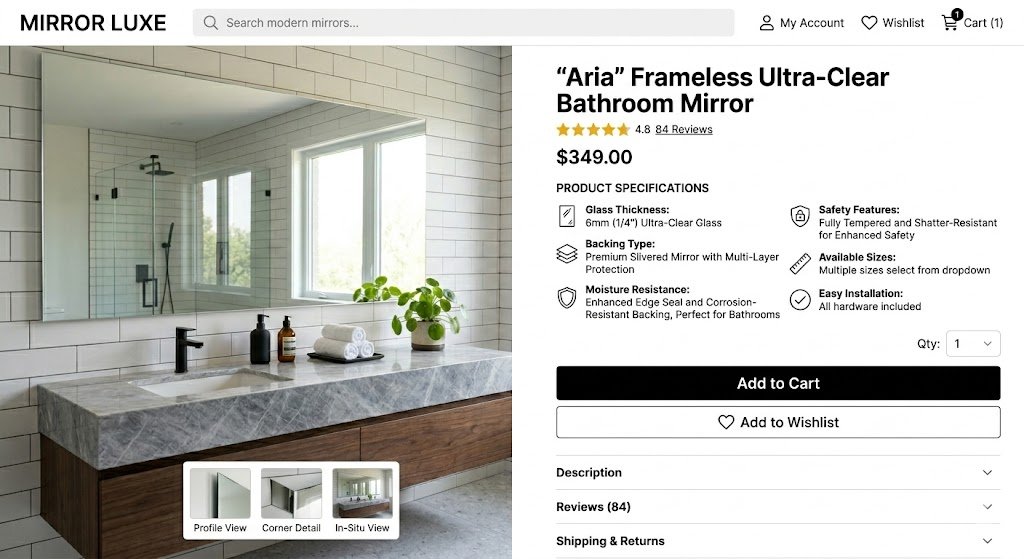
Buying online makes it harder to inspect mirrors physically, so knowing how to check mirror quality before buying is essential:
- Zoom in on images: Look for smooth edges, clear reflections, and no black spots.
- Read product specs: Check glass thickness, tempered construction, and backing.
- Review product descriptions: Ensure moisture resistance and bathroom suitability.
- Check reviews: Look for reports of distortion, black edges, or delivery damage.
- Verify warranty: At least a 1-year warranty indicates reliability.
- Research the brand: Established brands often provide better quality.
- Compare prices: Extremely cheap mirrors may compromise durability and safety.
Signs of a Low-Quality Mirror (Avoid These)
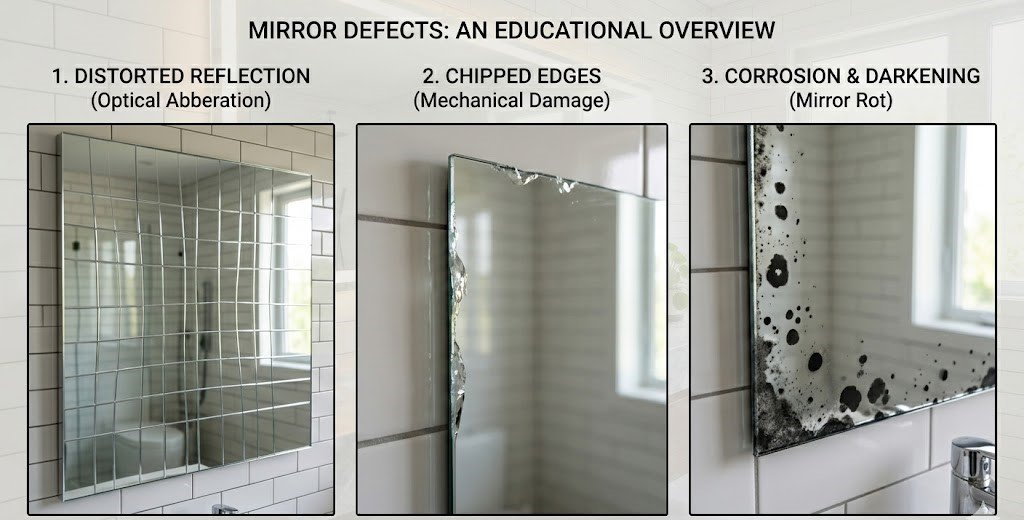
Recognising red flags helps prevent buying a poor-quality mirror:
- Wavy or distorted reflection – lines appear bent.
- Very thin glass – prone to bending or cracking.
- Black edges or spots – signs of corrosion.
- Rough or chipped edges – poor finishing.
- No moisture resistance – unsuitable for humid areas.
- No warranty or return policy – unreliable product.
- Extremely low price – compromises on thickness and quality.
Best Mirror Thickness for Different Uses
Choosing the right thickness is key to how to check mirror quality before buying:
- Bathroom Vanity Mirror: 4–5 mm for durability and moisture resistance
- Full-Length Mirror: 5 mm to prevent warping
- Decorative Wall Mirror: 4 mm for manageable weight and clear reflection
- LED Bathroom Mirror: 5 mm tempered glass for safety and longevity
- Closet/Wardrobe Mirror: 4–5 mm depending on size
For technical details on durability and mirror standards, see mirror safety and thickness best practices.
FAQs
1. Is thicker glass always better?
Thicker glass generally offers clearer reflections and more durability, but very small decorative mirrors may not require maximum thickness.
2. How long should a quality mirror last?
With proper care, high-quality mirrors can last 5–10+ years.
3. Why do mirrors develop black edges?
Black edges and corrosion develop when a mirror has inferior backing and is exposed to moisture over time.
4. Are LED mirrors lower quality?
Not necessarily, but cheap LED mirrors may compromise on glass or backing.
5. How can I check mirror quality online?
Examine images closely, read specs and reviews, and confirm warranty/return policies.
6. Does price determine mirror quality?
Price alone is not a guarantee, but extremely cheap mirrors often lack durability and proper backing.
7. What’s the most important factor in mirror quality?
Glass thickness, reflection clarity, backing quality, and moisture resistance are key.
Final Buying Checklist
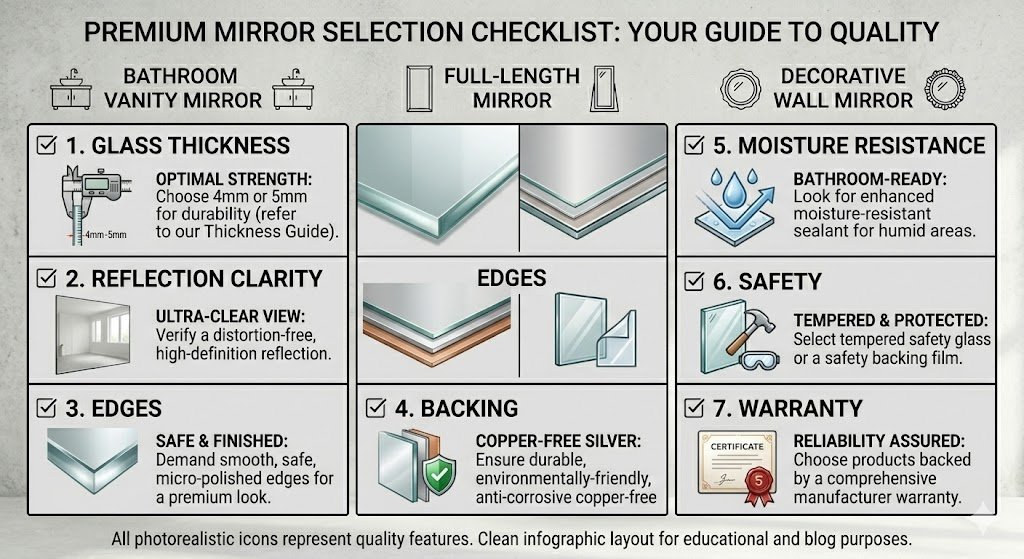
Before making your purchase, use this quick checklist:
- Glass Thickness: 4 mm+.
- Reflection: Clear, no distortion.
- Edges: Smooth and polished.
- Backing: Even, preferably copper-free.
- Black Spots: None at the corners or edges.
- Moisture Resistance: Anti-rust or anti-corrosion.
- Safety Features: Tempered glass or shatter-resistant backing.
- Warranty: Minimum 1 year.
This ensures you choose a mirror that is safe, durable, and visually perfect. If you’d like ready-to-buy recommendations that meet these quality checks, read our expert picks for modern bathroom mirrors in 2026.
Conclusion
Selecting the right mirror isn’t just about design—it’s about quality. Knowing how to check mirror quality before buying allows you to confidently pick mirrors that last, reflect accurately, and resist damage. By paying attention to thickness, reflection clarity, edges, backing, moisture protection, and safety features, you can enjoy a mirror that looks great and performs reliably for years.
A few minutes of careful inspection now can save you from costly replacements later.
If you’re ready to choose a high-quality option, see our guide to the best modern bathroom mirrors to buy in 2026.