Introduction
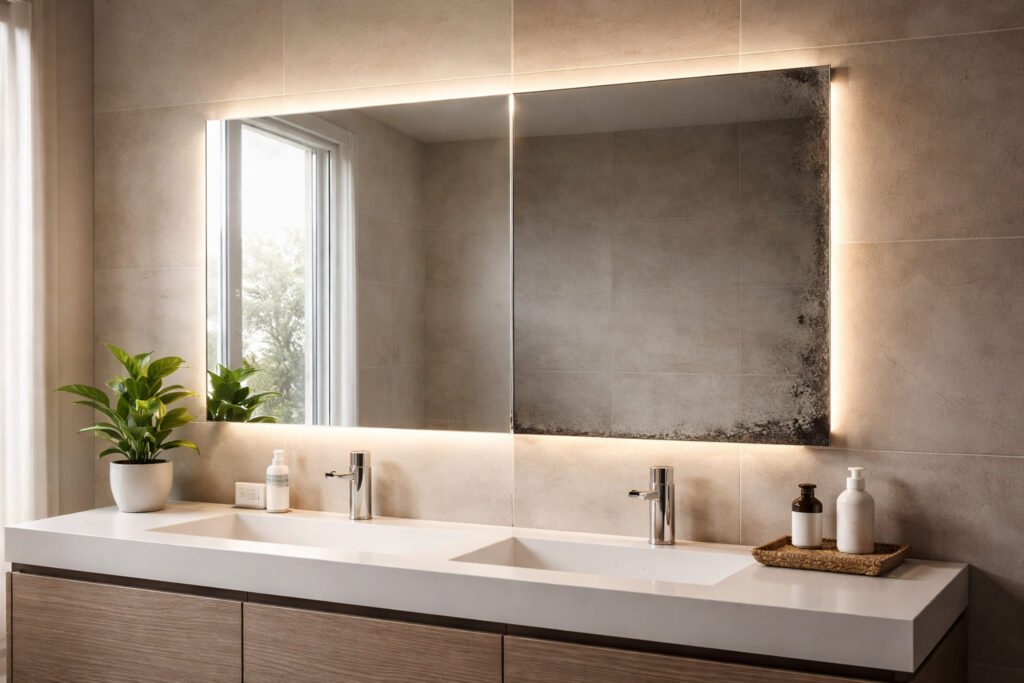
If you’ve ever noticed dark, unsightly lines creeping along your mirror’s edges, you’re probably wondering how to stop mirror edges from turning black. This common problem, often caused by moisture, humidity, and corrosion of the reflective backing, can ruin the look of any bathroom.
In this guide, we’ll show you why it happens, how to prevent it, and the best tips and products to protect your mirrors, so they stay clear, bright, and damage-free for years.
Table of Contents
1. What Causes Mirror Edges to Turn Black?
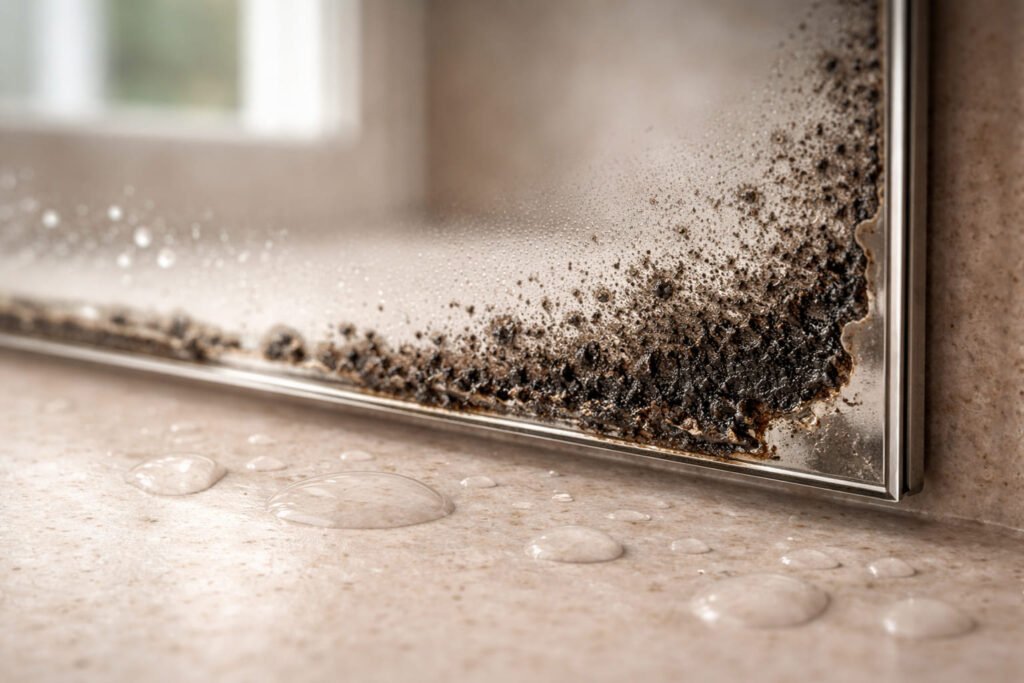
If you’re wondering how to stop mirror edges from turning black, the first step is understanding why it happens. This issue—often called mirror desilvering—is caused by damage to the thin reflective layer behind the glass. Once that layer starts to break down, dark spots and black edges begin to appear.
Main Causes:
- Moisture and Humidity
Steam from showers seeps into the edges of the mirror, where the protective seal is weakest. Over time, this moisture corrodes the reflective backing. - Oxidation of the Mirror Backing
Mirrors are coated with a thin layer of metal (silver or aluminium). Air and moisture react with it, causing dark edges over time. - Poor-Quality Mirror Materials
Low-quality mirrors have weaker coatings and thinner backing, making them more prone to corrosion.If you’re unsure how to identify a durable option, learn how to check mirror quality before buying. - Harsh Cleaning Chemicals
Ammonia or bleach can damage edges if liquid seeps behind the glass. - Water Seeping Behind the Mirror
Improper installation allows moisture to seep behind the mirror, causing blacking to spread inward. - Lack of Proper Sealing
Unsealed edges are exposed to air and water, accelerating corrosion.
Key Takeaway: Mirror edges turn black mainly due to moisture, oxidation, and poor protection of the reflective backing.
2. Early Signs Your Mirror Is Starting to Turn Black
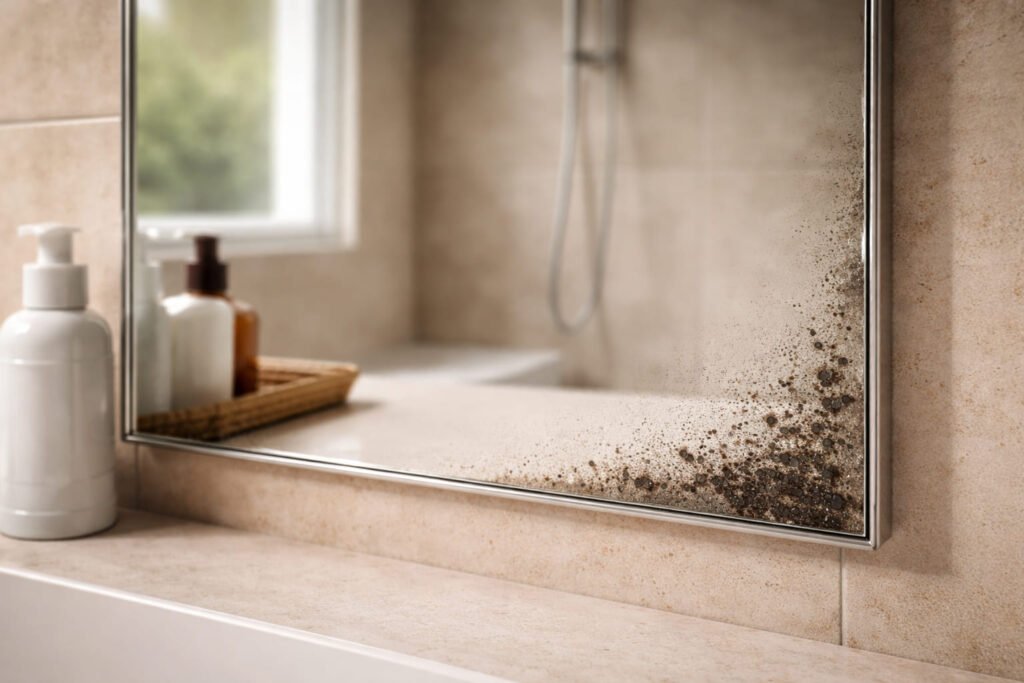
Catching the problem early is crucial. Pay attention to these indicators:
- Small Dark Spots at the Corners: Early corrosion appears as tiny black or grey dots.
- Edge Discolouration: Dull or cloudy edges indicate early damage.
- Peeling or Bubbling at the Edges: Flaking backing shows the reflective layer is breaking down.
- Fading or Distorted Reflection: Damaged areas appear blurry or warped.
- Black Edges Slowly Spreading: Small spots grow inward over time.
Key Takeaway: Spotting these early signs helps you act quickly to protect your mirror before the damage worsens.
3. How to Stop Mirror Edges from Turning Black (Step-by-Step)
To prevent corrosion and maintain your mirror:
- Seal the Mirror Edges
Apply a clear silicone sealant to create a waterproof barrier. Let it dry completely before use. - Improve Bathroom Ventilation
Use an exhaust fan, open windows, and keep the bathroom door slightly open to reduce humidity. - Avoid Spraying Cleaners Directly on the Mirror
Spray on a cloth instead, and use ammonia-free cleaners to prevent liquid from seeping into the edges. - Keep the Mirror Edges Dry
Wipe edges after showers with a soft micro-fibre cloth, especially along the bottom edge. - Add a Frame or Edge Protection
Frames or trim protect edges from direct moisture and air exposure. - Check Installation and Wall Contact
Ensure no gaps exist where water could seep behind the mirror.
Key Takeaway: Sealing, controlling moisture, and proper cleaning habits are the most effective ways to stop mirror edges from turning black.
4. Best Products to Protect Mirror Edges
Using the right products helps prevent mirror edges from turning black. Here’s a complete guide on how to check mirror quality before buying to avoid future issues.
- Mirror Edge Sealant: Blocks moisture and corrosion effectively.
- Clear Silicone Sealant: Affordable and easy to apply around edges.
- Anti-Corrosion Protective Coatings: Create a durable moisture barrier.
- Mirror Edge Tape or Protective Film: Quick, temporary protection for existing mirrors.
- Ammonia-Free Glass Cleaners: Gentle cleaning reduces chemical damage.
Key Takeaway: Combine sealants, coatings, and proper cleaning to maximise mirror edge protection.
5. Can You Fix Black Edges on a Mirror?
Unfortunately, once black edges appear, the damage cannot be fully repaired. The reflective layer has corroded, and no product can restore it.
What you can do:
- Seal edges to slow further damage.
- Add a frame or decorative trim to hide black edges.
- Use edge tape or protective film as a temporary fix.
- Replace the mirror if damage is extensive.
Key Takeaway: Prevention is better than repair—understanding how to stop mirror edges from turning black early saves time and money.
6. How to Prevent Mirror Edges from Turning Black (Long-Term Tips)
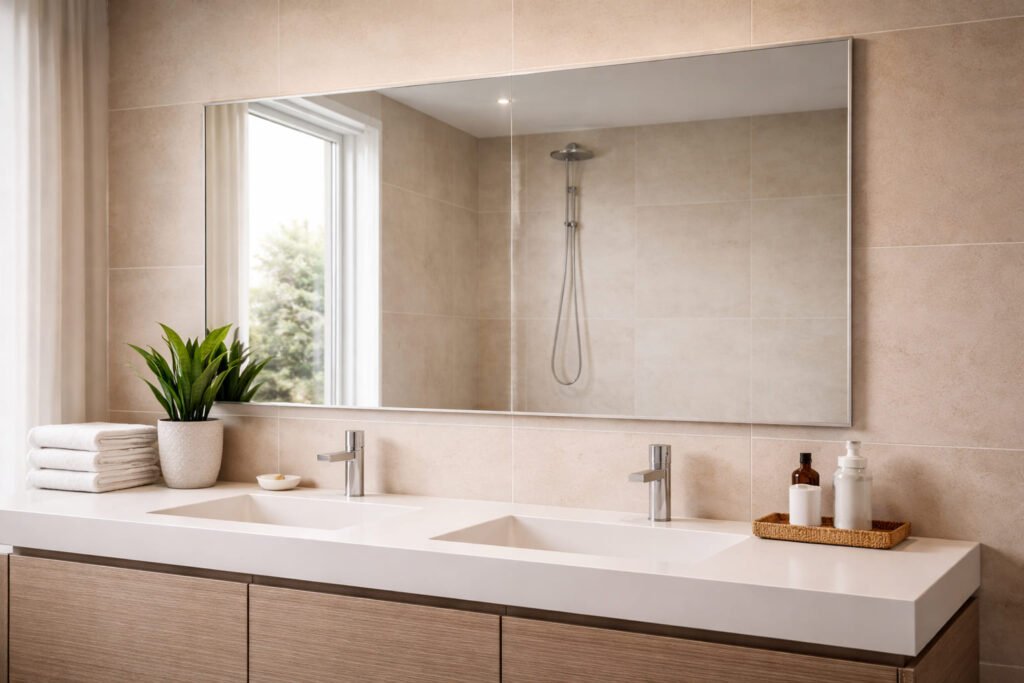
Long-term prevention ensures your mirrors stay clear and durable:
- Choose High-Quality Mirrors: Copper-free, sealed edges,and thick backing. If you don’t know what to look for, follow this step-by-step guide on how to check mirror quality before buying to ensure long-term durability.
- Control Bathroom Humidity: Use exhaust fans and open windows.
- Keep Water Away from Edges: Wipe splashes immediately.
- Clean Properly: Use ammonia-free cleaners and spray on cloths.
- Seal Edges During Installation: Apply silicone sealant on new mirrors.
- Perform Regular Maintenance: Check for early signs and reseal if needed.
Key Takeaway: Prevention through proper installation, cleaning, and moisture control is the most effective way to stop mirror edges from turning black.
7. When Should You Replace Your Mirror?
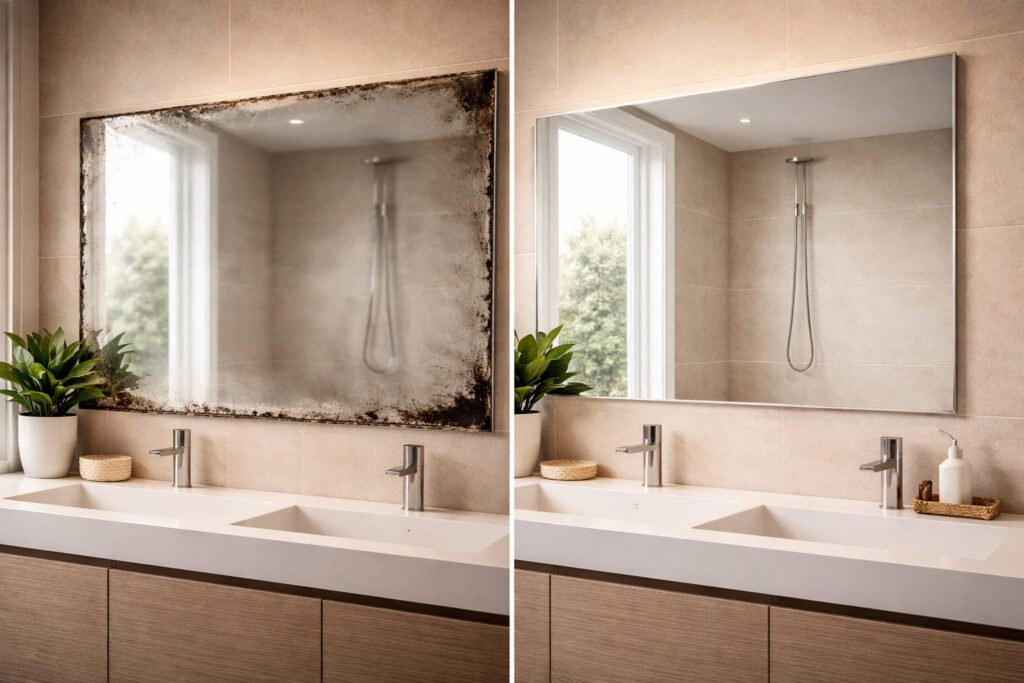
Even with proper care, some mirrors need replacement:
- Large and spreading black edges.
- Distorted or faded reflection.
- Visible damage from a distance.
- Peeling or severe backing damage.
- Temporary fixes are no longer effective.
Key Takeaway: If the mirror is heavily damaged, replacing it with a high-quality, sealed-edge mirror is the best long-term solution.
8. FAQs
Q1: Why do mirror edges turn black?
Moisture, humidity, and oxidation of the reflective backing cause black edges.
Q2: Can black edges spread over time?
Yes. Early intervention can slow the spread.
Q3: Does humidity cause mirror damage?
Yes, poorly ventilated bathrooms accelerate corrosion.
Q4: Are LED mirrors more resistant to black edges?
Often yes, due to sealed edges, but maintenance is still important.
Q5: How long do bathroom mirrors typically last?
High-quality mirrors: 10–20 years; low-quality mirrors in humid areas: 3–5 years.
Q6: Can cleaning prevent black edges?
Yes, using ammonia-free cleaners and avoiding liquid on edges helps.
Conclusion
Learning how to stop mirror edges from turning black is all about prevention, proper care, and smart maintenance. Once black edges appear, the damage cannot be fully reversed, so acting early is key.
To keep your mirrors looking clean and clear:
- Seal edges with silicone or mirror sealant.
- Control humidity with fans or ventilation.
- Use gentle, ammonia-free cleaners.
- Keep mirrors dry and wipe water immediately.
- Choose high-quality mirrors with sealed edges.
Following these steps protects your mirrors from corrosion and extends their lifespan, keeping your reflection bright and flawless.
If you’re planning to replace your mirror, make sure you choose a durable option. Read our expert guide on how to check mirror quality before buying to avoid future problems.