Introduction
If you’ve ever noticed your toilet seat moving or shifting, you might be wondering why the toilet seat keeps loosening. This common problem can be annoying and even unsafe, but it’s usually easy to fix once you know the causes. In this guide, we’ll explore the reasons behind a loose toilet seat and show you simple solutions to keep it stable and secure.
Table of Contents
Why Your Toilet Seat Keeps Loosening
If you’ve ever wondered why a toilet seat keeps loosening, you’re not alone. This is a very common household problem, and it usually happens because of worn hardware, constant use, or poor installation. Toilet seats are attached with bolts and nuts, and over time these parts can shift, wear out, or lose their grip.
Understanding the main causes can help you fix the issue quickly and prevent it from happening again. Below are the most common reasons why a toilet seat keeps loosening.
Worn or Cheap Plastic Bolts
One of the most common reasons why a toilet seat keeps loosening is the use of cheap plastic bolts. Many standard toilet seats come with plastic mounting bolts because they are inexpensive and resistant to rust.
However, plastic hardware can wear down over time. Daily pressure from sitting and shifting can slowly weaken these bolts, causing them to lose their grip. Once the plastic threads start to wear out, the bolts cannot stay tight, which makes the seat move from side to side.
Upgrading to stronger hardware, such as stainless steel bolts, can help keep the seat firmly in place for a longer time.
Frequent Movement and Daily Use
Another major reason why your toilet seat keeps loosening is constant movement from everyday use. Toilets are used multiple times a day, and each time someone sits down or shifts their weight, small amounts of pressure are applied to the seat.
Over time, this repeated motion can slowly loosen the mounting bolts underneath the toilet. Even a properly installed seat can start to wiggle after months of heavy use.
If your household has several people using the same bathroom, the extra use can cause the bolts to loosen even faster.
Improper Installation
The issue can often originate during the initial installation. If the seat is not installed correctly, it can quickly become loose.
Many people only tighten the bolts by hand or do not secure the nuts firmly underneath the toilet bowl. When the bolts are not tightened properly, the seat cannot stay stable, which leads to movement and shifting.
This is another common reason why a toilet seat keeps loosening, especially after installing a new seat. Proper installation using a screwdriver and tightening the nuts securely can usually solve the problem.
Missing Washers or Hardware
Toilet seats often rely on small hardware pieces like rubber washers, plastic inserts, or locking nuts to stay tight. These parts help absorb movement and keep the bolts from slipping.
If any of these pieces are missing or damaged, the bolts may not stay secure. Vibration and regular use can cause the hardware to come loose more readily without washers.
In many cases, replacing the missing parts with a simple toilet seat fixing kit can stop the seat from loosening repeatedly.
Low-Quality Toilet Seat Design
Finally, the overall quality of the toilet seat can also explain why your toilet seat keeps loosening. Budget or poorly designed toilet seats often use weaker hinges and low-quality hardware.
These cheaper components may not hold tightly over time, especially in busy households. As the hinges wear out, the seat can start shifting, and the bolts may loosen more frequently.
Investing in a higher-quality toilet seat with stronger hinges and better mounting hardware can prevent this problem and provide a more stable, long-lasting solution.
Signs Your Toilet Seat Hardware Is Failing
If you’re wondering why the toilet seat keeps loosening, the problem is often related to worn or failing mounting hardware. The bolts, hinges, and washers that hold the seat in place can gradually weaken over time. When this happens, the seat will start showing clear warning signs before it becomes completely loose.
Recognising these signs early can help you fix the issue before it becomes more frustrating or uncomfortable. Below are the most common indicators that your toilet seat hardware is starting to fail.
Seat Shifts Left and Right
One of the first signs why a toilet seat keeps loosening is noticeable side-to-side movement. When the mounting bolts begin to lose their grip, the seat will start shifting left and right whenever someone sits on it.
This movement usually means the bolts underneath the toilet bowl are no longer tight enough to hold the seat securely. If ignored for too long, the movement can worsen and make the seat unstable.
Clicking or Creaking Sound(s)
Strange noises are another common sign of failing toilet seat hardware. If you hear a clicking, creaking, or slight popping sound when sitting down or moving on the seat, it often means the hinges or bolts are shifting.
These sounds happen because the hardware is no longer firmly secured. In many cases, this is an early warning sign why the toilet seat keeps loosening and should be addressed before the seat becomes completely unstable.
Bolts Spinning Instead of Tightening
Another clear sign of worn hardware is when the bolts spin but refuse to tighten. This usually happens when the bolt threads are damaged or the nut underneath the toilet is worn out.
When this occurs, tightening the bolt with a screwdriver will not solve the problem because the bolt cannot properly grip the nut anymore. This situation is a common reason why a toilet seat keeps loosening, and it usually requires replacing the bolts or mounting kit.
The Seat Slides When You Sit
If the seat slides forward or shifts slightly when you sit down, it’s a strong sign that the mounting hardware is no longer secure. A properly installed toilet seat should stay completely stable during use.
Sliding movement often means the bolts have loosened significantly or the rubber washers have worn out. This issue not only feels uncomfortable but can also become unsafe if the seat continues to move.
Many homeowners notice this problem and start searching for why the toilet seat keeps loosening, only to discover that replacing the hardware or tightening the bolts can quickly fix the issue.
Step-by-Step Guide to Securing a Wobbly Toilet Seat
If you’re wondering why your toilet seat keeps coming loose, the good news is that it’s typically a simple problem to resolve. In most cases, tightening or replacing the mounting hardware can quickly solve the issue. You don’t need special tools or professional help—just a few basic steps and simple tools.
Follow this step-by-step guide to secure your toilet seat properly.
Step 1: Locate the toilet seat bolts.
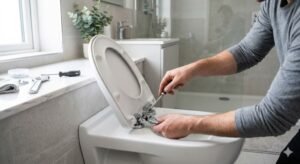
Start by finding the bolts that hold the toilet seat to the toilet bowl. You’ll usually find these bolts positioned at the rear of the toilet seat, close to the hinge area.
Most toilets have small plastic caps covering the bolts for a cleaner appearance. Simply lift or snap open these caps to reveal the bolts underneath. Once the caps are open, you will be able to see the screws that keep the seat attached.
Checking these bolts is the first step to understanding why the toilet seat keeps loosening.
Step 2: Tighten the bolts.
After locating the bolts, the next step is to tighten them. Use a screwdriver to tighten the bolt from the top, while holding the nut underneath the toilet bowl with a wrench if needed.
Turn the screwdriver clockwise until the seat feels firm and stable. Be careful not to overtighten, especially if the bolts are plastic, as this can cause them to crack.
In many cases, simply tightening the bolts is enough to stop the problem of why the toilet seat keeps loosening.
Step 3: Replace Worn Bolts or Nuts
If the bolts keep spinning or will not tighten properly, the hardware may be worn out. Damaged threads or old plastic bolts can no longer hold the seat securely.
In this situation, the best solution is to replace the bolts and nuts with new mounting hardware. Toilet-seat fixing kits are inexpensive and widely available, and they usually include bolts, nuts, and washers.
Replacing worn hardware is a reliable solution when your toilet seat keeps loosening and it becomes a repeated issue.
Step 4: Add Rubber Washers
Rubber washers play an important role in keeping the toilet seat stable. These small components sit between the bolt and the toilet surface to reduce movement and absorb vibration.
If your toilet seat does not have washers—or if the existing ones are worn out—adding new rubber washers can significantly improve stability. They help prevent the bolts from loosening due to everyday movement.
This small upgrade can make a big difference if you’re dealing with the problem of why the toilet seat keeps loosening.
Step 5: Upgrade to a Better Mounting System
If the seat keeps loosening even after tightening or replacing the bolts, upgrading the mounting system may be the best solution.
Modern toilet seats often use top-tightening bolts or locking hinge systems that are designed to stay secure for longer. These systems make installation easier and reduce the chances of the seat becoming loose over time.
Upgrading to stronger hardware can permanently solve the issue of why the toilet seat keeps loosening, especially in busy households where the toilet is used frequently.
Best Hardware to Stop Toilet Seat from Loosening
If you keep asking why toilet seat keeps loosening, the issue is often caused by weak or worn mounting hardware. Standard plastic bolts and cheap parts can lose their grip over time, especially with frequent use. Upgrading to stronger hardware can make a big difference and keep your toilet seat stable for years.
Below are some of the best hardware solutions that can help prevent a toilet seat from loosening again.
How to Prevent Your Toilet Seat from Loosening Again
After fixing the problem, the next step is making sure it doesn’t happen again. Many homeowners search why toilet seat keeps loosening, but the real solution is preventing the hardware from loosening in the first place. With a few simple steps, you can keep your toilet seat stable and secure for a long time.
Below are some practical ways to prevent the issue from returning.
Use Metal Bolts Instead of Plastic
One of the best ways to stop the problem why toilet seat keeps loosening is to replace plastic bolts with metal ones. Many standard toilet seats come with plastic hardware because it is inexpensive, but plastic can wear out quickly with daily use.
Metal bolts—especially stainless steel—are much stronger and more durable. They hold the seat firmly in place and are less likely to loosen over time. Upgrading to metal hardware can provide a long-term solution for a stable toilet seat.
Check Tightness Every Few Months
Even a well-installed toilet seat can loosen slightly over time due to regular use. A simple way to prevent this is to check the bolts every few months.
Lift the bolt caps, inspect the screws, and tighten them if needed. This quick maintenance step only takes a minute but can prevent the frustration of dealing with why toilet seat keeps loosening later on.
Install Anti-Slip Washers
Anti-slip rubber washers are small parts that make a big difference. These washers sit between the bolt and the toilet surface, helping absorb movement and reduce vibration.
By increasing friction, they help keep the bolts from loosening during daily use. Installing anti-slip washers is a simple and affordable upgrade that can significantly reduce the chances of why toilet seat keeps loosening becoming a recurring problem.
Choose High-Quality Toilet Seats
The overall quality of the toilet seat also plays an important role. Low-cost or poorly designed seats often use weak hinges and cheap mounting hardware, which can loosen quickly.
Investing in a high-quality toilet seat with strong hinges and durable hardware can prevent this issue from happening repeatedly. Learn more about recommended bathroom products on our RoomFix blog Better designs often include improved mounting systems that stay tight for much longer.
When You Should Replace the Entire Toilet Seat
Sometimes tightening the bolts or replacing the hardware is not enough to solve the problem. If you continue to wonder why the toilet seat keeps loosening, the issue may be caused by a damaged or worn-out toilet seat. In these cases, replacing the entire seat is often the best and most reliable solution.
Here are a few clear signs that it’s time to install a new toilet seat.
Cracked Seat
A cracked toilet seat is one of the most obvious reasons to replace it. Small cracks can weaken the structure of the seat and make it unstable. Over time, the cracks may grow larger and cause the seat to shift or loosen more easily.
If the seat is damaged, tightening the bolts will not fully solve the issue. This is often why homeowners keep asking why the toilet seat keeps loosening, even after attempting multiple repairs. Replacing the seat ensures better stability and safety.
Broken Hinges
The hinges connect the toilet seat to the mounting bolts. If these hinges become loose, bent, or broken, the seat will not stay properly aligned.
Broken hinges can cause the seat to move from side to side or feel unstable when you sit down. Even if the bolts are tightened, damaged hinges can still create movement. In this situation, replacing the entire seat is usually the most effective way to stop the problem of why the toilet seat keeps loosening.
Persistent Loosening Despite Repairs
If you have already tightened the bolts, replaced the hardware, and added washers but the seat still becomes loose, the seat itself may be poorly designed or worn out.
Low-quality seats often use weak materials that cannot hold the hardware securely. As a result, the bolts may continue to loosen no matter how often you fix them.
When this happens, replacing the seat with a higher-quality model that includes stronger hinges and durable mounting hardware can permanently solve the issue of why the toilet seat keeps loosening.
FAQ
Why does my toilet seat wiggle?
A toilet seat wobbles when the mounting bolts loosen or wear out over time. This is the main reason why toilet seats keep loosening.
Can I secure a toilet seat without removing it?
Yes! Simply lift the bolt covers and tighten the screws with a screwdriver. This quick fix often stops the seat from moving.
Is it better to use metal bolts instead of plastic?
Definitely. Metal bolts are stronger and more reliable, keeping the seat firmly in place and reducing the chance of it loosening.
How frequently should toilet seat bolts be tightened?
It’s recommended to check and tighten the bolts every few months to prevent the seat from becoming loose again.
Do soft-close toilet seats stay in place better?
Soft-close seats handle pressure more gently, so they loosen less often, but occasional tightening is still necessary for stability.
Conclusion
A loose toilet seat is a common frustration, but understanding why toilet seat keeps loosening makes it easy to fix and prevent. Most issues are caused by worn bolts, poor installation, or low-quality hardware. By tightening or replacing bolts, adding rubber washers, and choosing high-quality seats, you can keep your toilet seat stable for years. Regular maintenance and the right hardware are key to a secure, comfortable, and worry-free bathroom experience.