Introduction
If you’re searching for how to fix a soft close toilet seat, you’re probably dealing with a seat that slams shut, feels loose, or no longer works as smoothly as it should. The good news is that most of these problems are minor and can be fixed at home without professional help.
In this guide, you’ll learn the common reasons soft close toilet seats fail, simple tools you need, and step-by-step methods to restore proper function so your toilet seat closes quietly and smoothly again.
Table of Contents
Why Soft-Close Toilet Seats Stop Working
Understanding the causes behind a faulty mechanism is the first step in learning how to fix soft-close toilet seat issues effectively. Soft close toilet seats rely on small hydraulic dampers and hinge systems, and even minor problems can stop them from working properly.
Loose Hinges
One of the most common reasons is loose hinges. Over time, regular use can cause screws to loosen, making the seat unstable. When the alignment shifts, the soft-close function cannot work smoothly.
Worn-Out Dampers
Inside the hinges are small dampers that control the slow closing motion. When these components become worn or lose their tension, the seat may stop closing slowly and instead drop down with a sudden slam.
Dirt and Rust Build-Up
Bathrooms are humid environments, which can lead to rust or dirt buildup around the hinge area. This can block the smooth movement of the mechanism and affect performance.
Incorrect Installation
If the seat was not installed properly from the beginning, it may not function correctly. Misaligned hinges or uneven tightening can prevent the soft-close system from working as intended.
Cheap or Old Toilet Seats
Seats made from lower-grade materials, or those that are older, usually deteriorate more quickly and lose their durability over time. In such cases, the soft-close feature may fail permanently, making repair less effective.
By identifying these issues, you can better understand how to fix soft close toilet seat problems and choose the right solution, whether it’s a simple adjustment or a part replacement.
Signs Your Soft Close Toilet Seat Needs Repair
Before learning how to fix soft-close toilet seat issues, it’s important to identify when the seat is actually starting to fail. Soft-close mechanisms usually give a few clear warning signs before they stop working completely.
1. The Seat Slams Shut
Instead of closing slowly and quietly, the seat drops quickly and makes noise. This is one of the most common signs that the soft-close damper is worn out or damaged.
2. Uneven or One-Sided Closing
If one side of the seat closes faster than the other, it usually means the hinge system is misaligned or one of the dampers is failing.
3. Loose or Wobbly Seat
A seat that shifts when you sit on it or moves side to side indicates loose hinges or worn mounting bolts. This can also affect the soft-close function.
4. Squeaking or Grinding Sounds
Unusual noises during closing or opening suggest dirt buildup, lack of lubrication, or internal hinge wear.
5. Weak or Inconsistent Soft-Close Action
If the seat sometimes closes slowly and sometimes drops suddenly, the internal mechanism is likely starting to fail.
6. Visible Wear or Damage
Cracks in the hinge area, rust on metal parts, or stiff movement are clear signs that repair is needed.
If you notice any of these issues, it’s a good indication that it’s time to look into how to fix soft-close toilet seat problems before the damage gets worse or the seat stops working completely.
Tools You Need to Fix a Soft-Close Toilet Seat
Before you start learning how to fix soft-close toilet seat issues, it’s important to gather the right tools. Having everything ready will make the repair process faster, easier, and safer.
Basic Tools You’ll Need
- Screwdriver (flathead or Phillips): Used to tighten or remove seat hinge screws
- Adjustable Wrench: Helps loosen or secure bolts under the toilet seat.
- Cleaning Cloth or Sponge: For wiping dirt, dust, and buildup around the hinges
- Mild Cleaning Solution: Useful for removing grime that may affect the soft-close mechanism
Optional but Helpful Tools
- Silicone-Based Lubricant: Helps restore smooth movement in the soft-close hinges (avoid oil-based products).
- Replacement Hinges or Dampers: Needed if the soft-close system is worn out or broken.
- Small Brush or Old Toothbrush: Useful for cleaning tight areas around the hinges.
Why These Tools Matter
Using the right tools ensures you don’t damage the seat or its soft-close mechanism. Many problems are caused by loose fittings or dirt buildup, so proper cleaning and tightening often fix the issue without needing full replacement.
With these tools ready, you’ll be well-prepared to move on to the actual steps of how to fix soft-close toilet seat problems efficiently.
How to Fix a Soft-Close Toilet Seat Step by Step
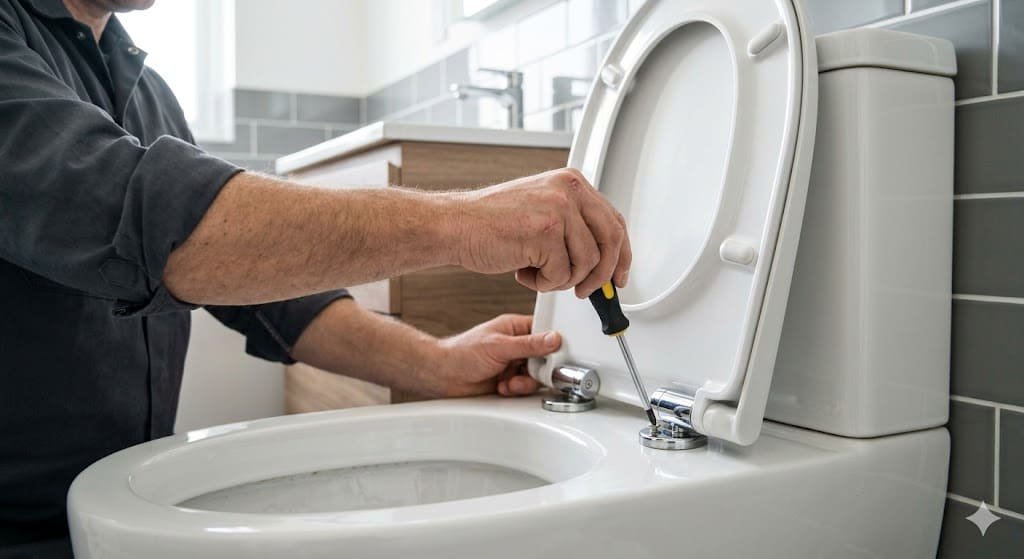
If you’re trying to understand how to fix a soft-close toilet seat, the good news is that most issues can be solved at home without professional help. You usually just need a few basic tools and a little patience. Follow these steps in order for the best results.
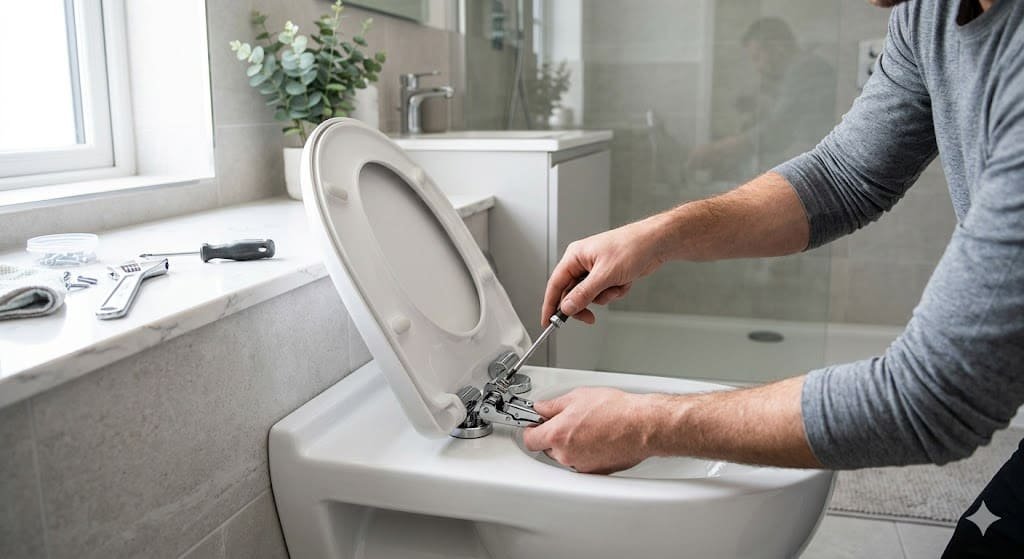
Step 1 – Tighten the toilet seat hinges.
Start by checking the hinges at the back of the seat. Over time, they can become loose, which causes uneven or faulty closing.
- Lift the hinge covers, if present
- Secure the screws firmly by using a screwdriver or wrench.
- Make sure both sides are equally tight.
- Test the seat to see if movement improves
This alone often solves wobbling and minor soft-close issues.
Step 2 – Clean the Hinges and Dampers.
Dirt, dust, and grime can block the soft-close mechanism.
- Wipe the hinges with a damp cloth.
- Remove any buildup around moving parts
- Clean hard-to-reach areas carefully
- Let everything dry completely.
A clean mechanism works much more smoothly and restores proper closing speed.
Step 3 – Lubricate Moving Parts
If the seat is still not closing properly, the internal parts may need lubrication.
- Use a silicone-based lubricant only
- Apply a small amount to hinge joints
- Avoid oil-based products as they attract dirt
- Move the seat up and down to spread the lubricant.
This helps restore the soft, controlled closing motion.
Step 4 – Fine-Tune the Soft Close System
Some soft-close seats have adjustable hinges.
- Check for adjustment knobs or screws on the hinge system
- Align both sides so the seat closes evenly.
- Test after small adjustments instead of large changes
- Repeat until the motion feels balanced.
Proper alignment is key when learning how to fix soft-close toilet seat issues effectively.
Step 5 – Replace Damaged Hinges or Dampers
If nothing else works, the internal mechanism may be worn out.
- Look for cracks or broken hinge parts
- Check if one side is not resisting movement
- Replace with compatible soft-close hinges or dampers
- Install carefully and follow the manufacturer’s instructions.
In many cases, replacing just the hinges is enough to restore full functionality without buying a new seat.
How to Remove a Soft-Close Toilet Seat
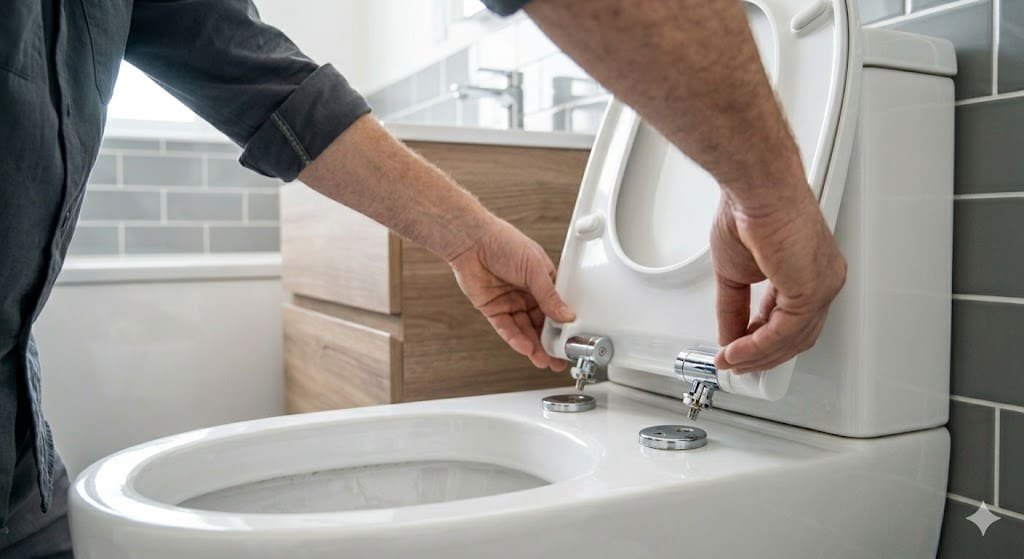
Before you can properly fix soft-close toilet seat issues, you often need to remove the seat so you can access the hinges and mounting area. The removal process is usually simple, but it depends on the type of seat installed in your bathroom.
Quick-Release Soft-Close Toilet Seats
Many modern soft-close seats come with a quick-release button. To remove them:
- Open the toilet seat fully.
- Look for a button or latch near the hinge area.
- Press the release button and gently lift the seat upward.
- The seat should slide off the mounting pins easily.
This type is the easiest to remove and is designed for quick cleaning and repair.
Traditional Bolt-On Soft-Close Seats
If your seat does not have a quick-release feature, it is likely secured with bolts.
- Find the small hinge caps positioned at the rear of the toilet seat.
- Flip open the covers to expose the screws or bolts.
- Use a screwdriver or wrench to loosen them.
- Carefully lift the seat once the bolts are removed or loose.
Take your time while loosening to avoid damaging the porcelain or plastic fittings.
Tips for Stuck or Rusted Bolts
Sometimes old seats can be difficult to remove due to rust or tight fittings.
- Apply a small amount of lubricant to loosen the bolts.
- Allow it to rest for a couple of minutes before testing it again.
- Use steady pressure instead of forcing the parts
- If needed, use pliers carefully to grip and turn the bolt.
Once the seat is removed, you’ll have full access to the hinges and dampers, making it much easier to continue with the process of how to fix soft-close toilet seat issues effectively.
Common Mistakes to Avoid When Fixing a Soft-Close Toilet Seat
When learning how to fix soft-close toilet seat issues, many people make simple mistakes that can make the problem worse or even damage the mechanism. Avoiding these errors will save time and help your toilet seat work properly again.
One common mistake is over-tightening the screws. While it may seem like tightening everything firmly will fix the issue, it can actually crack the plastic hinges or make the seat sit unevenly. Always tighten just enough to secure the seat without forcing it.
Using an unsuitable lubricant is another common error people make. Oil-based products like WD-40 may seem helpful, but they can damage the soft-close damper over time. Instead, use a silicone-based lubricant, which is safer for plastic and moving parts.
Many people also ignore rust or corrosion on bolts and hinges. If the metal parts are already damaged, simply adjusting the seat won’t solve the problem. In such cases, replacement parts are usually necessary.
Forcing the soft-close mechanism is another error. The system is designed to work gently, and applying pressure or trying to “speed it up” can break the internal damper completely.
Lastly, using incompatible replacement parts can cause long-term issues. Not all toilet seat hinges are universal, so always check compatibility before replacing anything.
By avoiding these mistakes, you’ll have a much easier time figuring out how to fix soft-close toilet seat problems and keeping the mechanism working smoothly for longer.
When It’s Time to Install a New Toilet Seat Instead of Repairing It
Sometimes, learning how to fix soft-close toilet seat issues is not enough because the problem is beyond simple repair. In these cases, replacing the entire toilet seat is the more practical and long-term solution.
If the seat is cracked or physically damaged, no adjustment or tightening will restore its proper function. Cracks can also worsen over time, making the seat unsafe to use. Another clear sign is damaged mounting holes or hinges that no longer hold the seat firmly in place. When the seat keeps shifting even after repeated tightening, replacement is usually the only reliable fix.
You should also consider replacing the seat if the soft-close mechanism keeps failing repeatedly. If you’ve already tried basic repairs like cleaning, tightening, and lubricating, but the seat still slams shut or closes unevenly, the internal damper is likely worn out and cannot be repaired effectively.
Older or low-quality toilet seats are another common reason for replacement. Over time, cheaper materials and worn-out mechanisms lose their smooth closing function permanently. In such cases, upgrading to a new, better-quality soft-close seat is often more cost-effective than continuous repairs.
In short, if repairs no longer solve the problem or the damage is structural, replacing the toilet seat is the best way to restore full soft-close performance.
How to Keep a Soft-Close Toilet Seat Working Longer
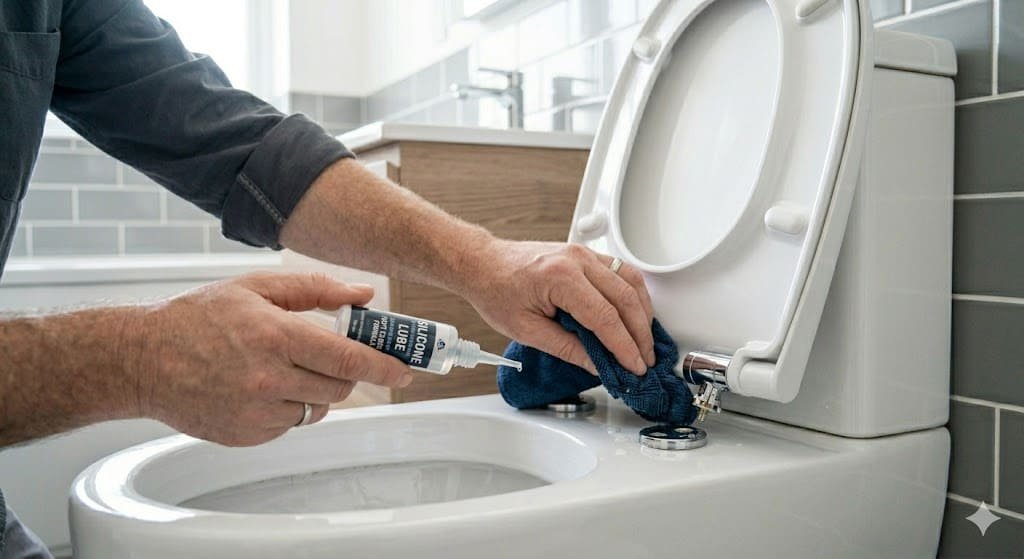
If you’ve already learnt how to fix soft-close toilet seat issues, the next important step is preventing those problems from coming back. With a little regular care, you can significantly extend the life of your toilet seat and keep the soft-close mechanism working smoothly.
Clean the hinges regularly.
Dust, grime, and bathroom moisture can slowly affect the soft-close hinges. Wipe the hinges every week with a soft cloth and mild cleaner. This prevents build-up that can block smooth movement.
Avoid Slamming the Seat
Even though soft-close seats are designed to close slowly, forcing them shut can damage the dampers over time. Always let the mechanism work naturally instead of pushing it down.
Check and tighten screws periodically.
Loose screws can make the seat unstable and affect alignment. Every few months, check the hinges and gently tighten them if needed to maintain proper balance.
Use Gentle Cleaning Products.
Harsh chemicals or strong bleach can weaken plastic parts and rubber dampers. Stick to mild, non-corrosive cleaners to protect the mechanism.
Apply Light Lubrication When Needed
If the seat starts feeling stiff, apply a small amount of silicone-based lubricant to the moving parts. This helps maintain smooth and quiet operation.
By following these simple maintenance tips, you won’t need to frequently search for how to fix soft-close toilet seat problems again. Regular care keeps the mechanism reliable, quiet, and long-lasting.
FAQs
Why is my soft-close toilet seat slamming shut?
This usually happens when the soft-close damper inside the hinge is worn out or damaged. If the mechanism stops controlling the speed, the seat will close normally instead of slowly. In many cases, cleaning or tightening the hinges can help, but a damaged damper may need replacement.
Is it possible to repair a soft-close toilet seat on your own?
Yes, most issues can be fixed at home without a plumber. Problems like loose hinges, dirt buildup, or minor misalignment are easy to repair with basic tools. Learning how to fix soft-close toilet seat issues step-by-step can save you money and time.
What is the typical lifespan of a soft-close toilet seat?
A good-quality soft close toilet seat usually lasts 3 to 5 years, depending on usage and maintenance. Regular cleaning and avoiding forceful closing can extend its lifespan.
What is the best lubricant for soft-close toilet seat hinges?
A silicone-based lubricant is the safest option. It helps smooth movement without damaging plastic or rubber parts. Avoid using oil-based lubricants, as they can attract dust and reduce performance over time.
Are soft-close toilet seat hinges universal?
Not always. Some hinges are universal, but many are designed for specific brands or models. Before replacing parts, check the measurements and mounting style to ensure compatibility.
Conclusion
Fixing a soft-close toilet seat is usually not as difficult as it looks. In most cases, the problem comes from loose hinges, dirt build-up, or a worn-out damper that can be repaired or replaced without much effort. By following the right steps for how to fix a soft-close toilet seat, you can restore smooth, quiet closing and avoid unnecessary replacement costs.
If basic tightening, cleaning, and lubrication don’t solve the issue, the internal mechanism is likely damaged. At that point, replacing the hinges or the entire seat becomes the most practical solution.
Regular maintenance, gentle use, and occasional checks can keep your soft-close toilet seat working properly for years.
If you want a complete guide on Common Toilet Seat Problems and Their Solution and how to choose the right one for your bathroom, check out our latest detailed post for expert insights and easy buying tips.