Introduction
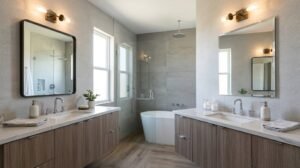
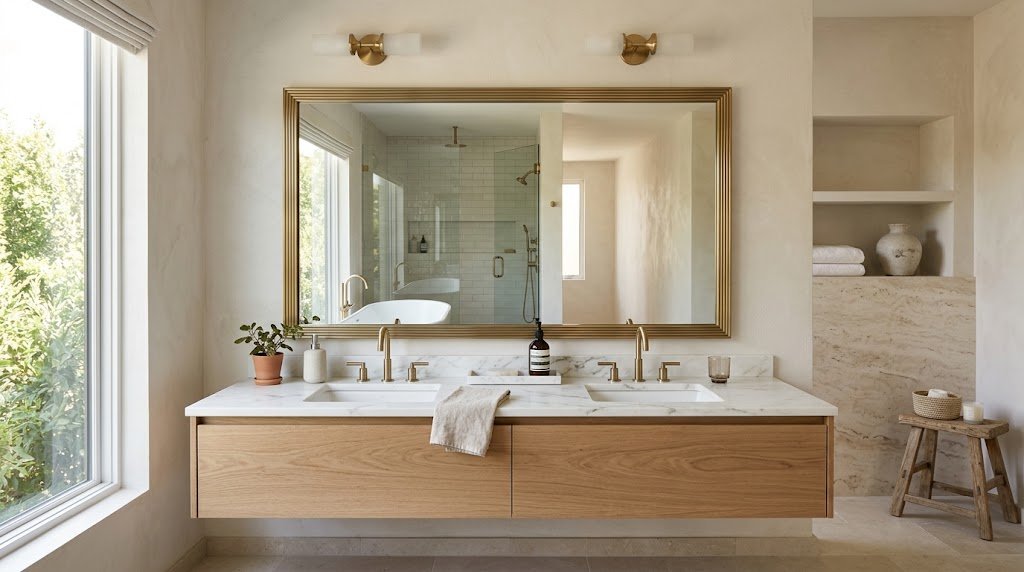
Bathroom mirror styles can make a noticeable difference in how your bathroom looks and feels. The right mirror can complement your vanity, fixtures, lighting, and overall interior design. From modern and minimalist designs to traditional, farmhouse, luxury, and coastal styles, there are many options to choose from. In this guide, we will explore 15 popular bathroom mirror styles and explain how to choose the right one for your bathroom.
Table of Contents
What Are Bathroom Mirror Styles?
Bathroom mirror styles describe the overall design and visual character of a mirror and how well it fits into a bathroom’s interior. A mirror can have a modern, traditional, farmhouse, industrial, luxury, or minimalist style depending on its frame, finish, lighting, and design details.
What Makes a Bathroom Mirror a Particular Style?
Several elements determine the style of a bathroom mirror. The frame is one of the most noticeable features. A simple metal or frameless design can create a modern appearance, while a detailed wood or decorative frame may give the mirror a traditional or farmhouse look.
The finish also affects the overall style. Black, brushed nickel, brass, chrome, wood, and other finishes can change how a mirror works with the rest of the bathroom. For example, matte black often suits modern or industrial bathrooms, while warm brass can complement traditional or luxury spaces.
Lighting can also influence the mirror’s style. LED and backlit mirrors generally create a contemporary appearance, while a simple unlit mirror can work with a wider range of traditional and modern designs.
Finally, the overall design matters. Clean lines and minimal detailing usually create a modern or minimalist look, while decorative elements, textured materials, and ornate frames can create a more classic or decorative appearance.
Bathroom Mirror Style vs. Shape vs. Type
These three terms are related but have different meanings.
| Term | Meaning | Examples |
|---|---|---|
| Style | The overall design and visual character | Modern, traditional, farmhouse, industrial |
| Shape | The physical outline of the mirror | Round, rectangular, oval, arched |
| Type | The mirror’s function or construction | LED, backlit, medicine cabinet, pivot |
For example, a round mirror describes the shape, not the style. That round mirror could have a simple black frame and look modern, or it could have an ornate gold frame and look traditional.
Understanding this difference makes it easier to choose a mirror that matches your bathroom design rather than focusing only on its shape.
How Frame, Finish, Lighting, and Design Influence Style
The style of a bathroom mirror usually comes from a combination of several design elements:
- Frame: Determines much of the mirror’s visual character. Frameless and thin-profile frames often look modern, while decorative frames can create a traditional appearance.
- Finish: Helps coordinate the mirror with faucets, cabinet hardware, lighting fixtures, and other bathroom finishes.
- Lighting: Integrated LED or backlighting can give a mirror a contemporary appearance and add useful illumination.
- Design: Details such as clean lines, decorative edges, natural materials, or geometric elements help define the mirror’s overall style.
When these elements work together, the mirror becomes part of the bathroom’s overall design rather than simply serving as a reflective surface.
15 Popular Bathroom Mirror Styles
Choosing a mirror is not only about finding the right size or shape. The overall design should also complement your bathroom’s interior. These bathroom mirror styles range from clean and modern designs to traditional, rustic, and decorative options, making it easier to find a mirror that fits your space.
1. Modern Bathroom Mirrors
Modern bathroom mirrors focus on clean lines, simple forms, and a streamlined appearance. Many feature frameless construction or thin frames that keep the design looking uncluttered.
Black, chrome, brushed metal, and other simple finishes are commonly used. Modern mirrors can also include features such as integrated LED lighting and touch controls.
Best for: Contemporary bathrooms, floating vanities, and bathrooms with clean, simple designs.
2. Traditional Bathroom Mirrors
Traditional bathroom mirrors have a classic and decorative appearance. They often feature detailed frames made from wood, metal, or other decorative materials.
Warm finishes, curved details, and ornamental designs can make these mirrors feel elegant and timeless. They work particularly well when paired with traditional vanities and classic bathroom fixtures.
Best for: Traditional, classic, and elegant bathroom interiors.
3. Contemporary Bathroom Mirrors
Contemporary bathroom mirrors reflect current interior design trends while maintaining a simple and practical appearance. They may combine clean lines with distinctive frame designs, unusual finishes, or modern lighting.
Unlike strictly modern designs, contemporary mirrors can incorporate a wider range of shapes, materials, and decorative details.
Best for: Updated bathrooms and interiors that combine current design elements with practical features.
4. Minimalist Bathroom Mirrors
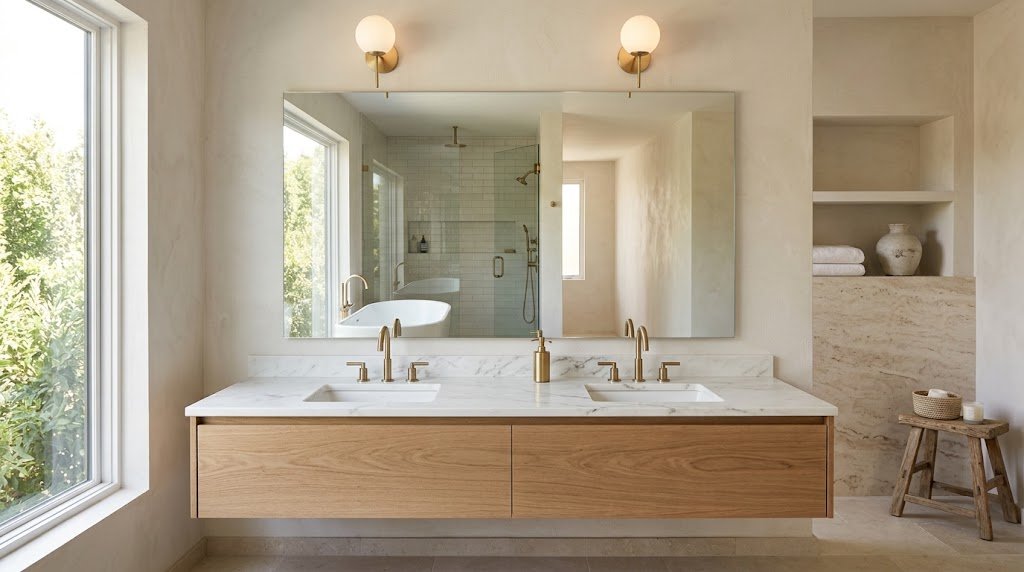
Minimalist mirrors are designed around simplicity. They usually have little or no decorative detailing and focus on clean lines and an uncluttered appearance.
Frameless mirrors and mirrors with thin, simple frames are common choices. Their understated design allows other bathroom features, such as tiles, lighting, or a vanity, to stand out.
Best for: Small bathrooms, simple interiors, and bathrooms with a clean aesthetic.
5. Farmhouse Bathroom Mirrors
Farmhouse bathroom mirrors bring a warm and comfortable character to the space. Wood frames, natural textures, and distressed finishes are common features.
Many farmhouse mirrors have substantial frames that add visual warmth without making the bathroom look overly formal. They pair naturally with wood vanities, white surfaces, and traditional fixtures.
Best for: Farmhouse, country, and comfortable rustic-inspired bathrooms.
6. Industrial Bathroom Mirrors
Industrial bathroom mirrors typically use metal frames, darker finishes, and straightforward designs. Their appearance is often inspired by exposed materials and functional architecture.
Black metal, aged finishes, and simple rectangular designs can work especially well with concrete-look surfaces, exposed hardware, and darker bathroom elements.
Best for: Industrial bathrooms, loft-inspired spaces, and bathrooms with metal fixtures.
7. Rustic Bathroom Mirrors
Rustic bathroom mirrors emphasize natural materials, texture, and warmth. Wood-inspired frames and weathered finishes are common choices.
These mirrors can add a relaxed appearance and work well with natural stone, wood cabinets, neutral colors, and other organic materials.
Best for: Rustic, country, and nature-inspired bathroom designs.
8. Vintage Bathroom Mirrors
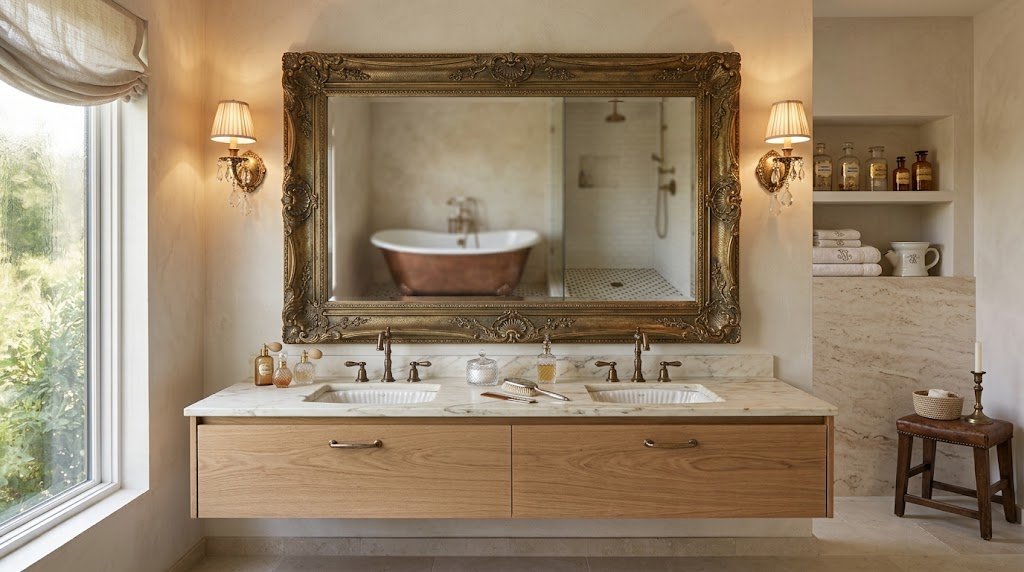
Vintage bathroom mirrors are inspired by designs from earlier periods. They often include decorative frames, antique-inspired finishes, and classic detailing.
Gold, bronze, aged metal, and distressed finishes can help create a vintage appearance. The right mirror can become a decorative focal point in the bathroom.
Best for: Vintage, traditional, and nostalgic bathroom interiors.
9. Mid-Century Modern Bathroom Mirrors
Mid-century modern mirrors combine simple geometric forms with practical design. They often feature clean lines, rounded details, and natural-looking materials or warm finishes.
The style works well when paired with wood vanities, simple fixtures, and understated bathroom accessories.
Best for: Mid-century modern bathrooms and interiors influenced by retro design.
10. Scandinavian Bathroom Mirrors
Scandinavian bathroom mirrors focus on simplicity, functionality, and a light appearance. Their designs are usually uncomplicated and work well with bright, neutral interiors.
Simple frames, natural-looking materials, and soft finishes can complement the clean appearance associated with Scandinavian design.
Best for: Bright bathrooms, minimalist interiors, and spaces with light colors and natural materials.
11. Luxury Bathroom Mirrors
Luxury bathroom mirrors are designed to create a sophisticated and refined appearance. They may feature premium-looking finishes, decorative frames, larger dimensions, or integrated technology.
LED and backlit mirrors are also popular in luxury bathrooms because they combine visual appeal with useful lighting.
Best for: Upscale bathrooms, large vanities, and sophisticated interior designs.
12. Transitional Bathroom Mirrors
Transitional bathroom mirrors combine traditional and modern design elements. They offer a balanced appearance without being extremely decorative or overly minimal.
For example, a mirror may have a classic frame with a simple profile or a modern finish combined with traditional detailing.
Best for: Bathrooms that combine classic features with modern fixtures and finishes.
13. Coastal Bathroom Mirrors
Coastal bathroom mirrors create a light, relaxed, and natural atmosphere. They often use light-colored frames, natural materials, woven textures, or beach-inspired finishes.
These mirrors work especially well with white, blue, beige, and other soft colors commonly used in coastal interiors.
Best for: Coastal, beach-inspired, and relaxed bathroom designs.
14. Boho Bathroom Mirrors
Boho bathroom mirrors often feature organic materials, artistic details, and natural textures. Woven frames, wood, rope-inspired details, and unusual decorative elements can complement this style.
The goal is usually to create a relaxed and individual appearance rather than a perfectly matched or formal design.
Best for: Boho, eclectic, artistic, and relaxed bathroom interiors.
15. Glam Bathroom Mirrors
Glam bathroom mirrors are designed to make a noticeable visual impact. They often feature metallic finishes, decorative frames, polished surfaces, or elegant detailing.
Gold, silver, brass, and other reflective finishes can add a more sophisticated appearance. These mirrors can also serve as a focal point above a vanity.
Best for: Glamorous, elegant, and highly decorative bathroom interiors.
Bathroom Mirror Styles Comparison Table
The following table provides a quick comparison of popular bathroom mirror styles. It highlights the main design features, overall appearance, and the types of bathrooms where each style works well.
| Style | Main Features | Overall Look | Best For |
|---|---|---|---|
| Modern | Clean lines, simple design | Sleek | Modern bathrooms |
| Traditional | Decorative details | Classic | Traditional bathrooms |
| Contemporary | Current design elements | Updated | Modern interiors |
| Minimalist | Simple, uncluttered design | Clean | Small and simple bathrooms |
| Farmhouse | Wood, rustic details | Warm | Farmhouse bathrooms |
| Industrial | Metal frames, dark finishes | Raw | Industrial bathrooms |
| Rustic | Natural materials and textures | Warm | Rustic interiors |
| Vintage | Antique-inspired details | Classic | Vintage bathrooms |
| Mid-Century Modern | Simple geometric details | Retro-modern | Mid-century interiors |
| Scandinavian | Light, functional design | Simple | Scandinavian bathrooms |
| Luxury | Premium finishes, sophisticated details | Sophisticated | Upscale bathrooms |
| Transitional | Modern and traditional elements | Balanced | Versatile interiors |
| Coastal | Light colours, natural finishes | Relaxed | Coastal bathrooms |
| Boho | Organic materials and textures | Artistic | Boho interiors |
| Glam | Metallic finishes, decorative details | Elegant | Glamorous bathrooms |
Each style creates a different visual effect, so consider your bathroom’s existing vanity, fixtures, colours, and materials before making a choice. A mirror that complements these elements can create a more cohesive and polished bathroom design.
How to Choose the Right Bathroom Mirror Style
Choosing the right bathroom mirror style is about more than finding a mirror that looks attractive. It should complement your bathroom’s design, work well with your vanity and fixtures, and provide the functionality you need. Consider the following factors before making your choice.
Match the Mirror With Your Bathroom’s Overall Design
Start by looking at the existing design of your bathroom. The mirror should complement the style rather than look out of place.
For a modern bathroom, consider a frameless, minimalist, LED, or simple metal-framed mirror. Traditional bathrooms may work better with decorative or framed mirrors, while farmhouse spaces can pair well with wood-framed designs.
Consider Your Vanity Style
Your vanity is one of the main elements that the mirror should coordinate with. Consider its color, materials, hardware, and overall design.
A simple floating vanity can work well with a modern or minimalist mirror, while a detailed wood vanity may pair better with a traditional, farmhouse, or rustic style.
Choose a Suitable Frame Finish
The frame finish can have a noticeable effect on the mirror’s appearance. Choose a finish that works with other bathroom fixtures and hardware.
For example, black can complement modern and industrial interiors, while brass or bronze can work well with traditional, vintage, or luxury designs. If your bathroom already has several finishes, choose a mirror frame that helps create a cohesive appearance.
Consider the Wall and Tile Colours.
Your wall and tile colors can affect how the mirror looks in the space. A contrasting frame can make the mirror stand out, while a similar finish can create a more subtle appearance.
For light-colored walls, darker frames can provide definition. In bathrooms with dark tiles or walls, a lighter or metallic frame can create contrast and prevent the mirror from blending into the background.
Think About Lighting
Consider both the bathroom’s existing lighting and the lighting built into the mirror. LED and backlit mirrors can provide useful illumination while adding a modern appearance.
If you already have wall sconces or other vanity lighting, make sure the mirror works with their placement. Avoid choosing a style based only on appearance if the mirror will interfere with the lighting you need for everyday grooming.
Consider Bathroom Size
The size of your bathroom can influence which mirror style looks appropriate. In a small bathroom, a simple frameless or minimalist mirror can help maintain an open appearance. A medicine cabinet mirror can also provide useful storage without requiring additional wall space.
Larger bathrooms can accommodate bigger framed mirrors, decorative designs, or statement pieces. However, the mirror should still be appropriately sized for the vanity and available wall space.
Balance Appearance With Functionality
A beautiful mirror should also meet your practical needs. Think about how you use the bathroom and whether you need features such as built-in lighting, storage, adjustable positioning, or easy cleaning.
For example, an LED mirror may be useful for grooming, while a medicine cabinet mirror can provide additional storage. If simplicity is more important, a basic framed or frameless mirror may be sufficient.
Ultimately, the right bathroom mirror style should complement your bathroom’s design while providing the size, lighting, and functionality you need.
How to Match Bathroom Mirror Styles With Vanity Styles
The vanity and mirror are two of the most noticeable features in a bathroom, so they should work well together. When choosing bathroom mirror styles, consider the vanity’s design, materials, color, hardware, and overall appearance. A well-matched combination can make the bathroom look more balanced and cohesive.
Modern Vanity
Modern vanities usually feature clean lines, simple hardware, and streamlined surfaces. They pair well with modern, contemporary, or minimalist bathroom mirror styles.
A frameless mirror or a mirror with a thin black, chrome, or metal frame can complement a modern vanity without adding unnecessary visual detail. LED mirrors are also a practical choice for a modern bathroom.
Traditional Vanity
Traditional vanities often include decorative details, raised panels, classic hardware, and richer finishes. They work well with traditional, vintage, or transitional mirrors.
A framed mirror with decorative detailing can complement the vanity and reinforce the classic appearance. Wood, bronze, brass, or other warm finishes can also work well with traditional cabinetry.
Floating Vanity
Floating vanities are mounted to the wall rather than sitting directly on the floor. Their clean and open design makes them suitable for several mirror styles.
Frameless, minimalist, modern, and contemporary mirrors can emphasize the streamlined appearance of a floating vanity. A backlit or LED mirror can also add visual interest while maintaining a clean look.
Farmhouse Vanity
Farmhouse vanities commonly feature wood finishes, simple hardware, and natural textures. Farmhouse, rustic, and vintage mirror styles can complement these characteristics.
A substantial wood-framed mirror can add warmth and coordinate with the vanity. Distressed or natural-looking finishes can also help create a consistent farmhouse appearance.
Luxury Vanity
Luxury vanities often use premium-looking materials, elegant hardware, detailed finishes, or sophisticated colors. They can be paired with luxury, glam, contemporary, or decorative mirror styles.
A large framed mirror with a polished finish can create an elegant appearance. LED and backlit mirrors are also suitable when you want to combine sophisticated design with useful lighting.
Minimalist Vanity
Minimalist vanities focus on simplicity, functionality, and limited visual detail. They are best paired with mirror styles that follow the same design principles.
A frameless mirror or a simple mirror with a thin frame can maintain the uncluttered appearance. Avoid overly decorative frames if the goal is to keep the bathroom clean and understated.
Final Tip
The mirror does not have to exactly match the vanity. Instead, look for complementary bathroom mirror styles that share similar design elements, such as finishes, materials, colors, or visual simplicity. This creates coordination without making every element in the bathroom look identical.
Bathroom Mirror Styles by Bathroom Size
The size and layout of your bathroom can influence which bathroom mirror styles work best. A mirror should complement the available wall space without making the room feel crowded or leaving the vanity area looking unbalanced. Consider the following styles for different bathroom sizes and spaces.
Styles for Small Bathrooms
Small bathrooms benefit from mirror styles that keep the space looking open and uncluttered. Minimalist, frameless, modern, and Scandinavian mirrors can work well because their simple designs do not add much visual weight.
A mirrored medicine cabinet can also be useful when storage is limited. LED mirrors are another practical option because they can provide lighting without requiring separate fixtures around the mirror.
Good choices include:
- Frameless mirrors
- Minimalist mirrors
- Modern mirrors
- Scandinavian mirrors
- Medicine cabinet mirrors
Styles for Large Bathrooms
Large bathrooms provide more wall space, making it easier to use larger or more decorative mirror designs. Luxury, traditional, contemporary, and glam bathroom mirror styles can create a strong focal point above a large vanity.
For a double vanity, you can use one large mirror or two separate mirrors. Choose an option that maintains visual balance with the vanity and surrounding wall.
Good choices include:
- Large framed mirrors
- Luxury mirrors
- Contemporary mirrors
- Traditional mirrors
- Glam mirrors
- Backlit mirrors
Styles for Powder Rooms
Powder rooms are usually smaller and are often used by guests, so the mirror can serve as both a functional feature and a decorative focal point. Vintage, glam, traditional, boho, and contemporary bathroom mirror styles can add character without requiring a large mirror.
Since powder rooms often have limited wall space, focus on a style that complements the vanity, wallpaper, tiles, or wall color.
Good choices include:
- Vintage mirrors
- Glam mirrors
- Decorative framed mirrors
- Boho mirrors
- Contemporary mirrors
Styles for Master Bathrooms
Master bathrooms generally offer more space and may include larger vanities, additional lighting, and more design features. This allows you to choose from a wide range of bathroom mirror styles, including luxury, modern, transitional, traditional, and contemporary designs.
Consider how the mirror works with the vanity, lighting, fixtures, and other finishes. For a larger master bathroom, an LED or backlit mirror can combine an attractive appearance with useful task lighting.
Good choices include:
- Luxury mirrors
- Modern mirrors
- Transitional mirrors
- Traditional mirrors
- Contemporary mirrors
- LED or backlit mirrors
The best mirror style depends not only on the size of the bathroom but also on the vanity, wall space, lighting, and overall interior design. Choosing a style that fits these elements will help create a balanced and functional space.
Common Mistakes When Choosing a Bathroom Mirror Style
Choosing the right bathroom mirror style can improve the overall appearance of your space, but a few common mistakes can make the mirror feel out of place. Avoiding these issues can help you create a bathroom that looks balanced and cohesive.
Mixing Unrelated Design Styles
One common mistake is combining mirror and bathroom elements that have very different design styles. For example, an ornate vintage mirror may look out of place in a highly minimalist bathroom.
This does not mean every element needs to match exactly. Instead, choose styles that share some similar characteristics, such as materials, finishes, colors, or design details.
Choosing a Frame That Clashes With Fixtures
The mirror frame should work with other visible finishes in the bathroom. A frame that strongly conflicts with the faucets, cabinet hardware, lighting fixtures, or other metal finishes can make the room feel less coordinated.
Before choosing a framed mirror, consider the existing finishes. Black, brass, bronze, chrome, and other finishes can each create a different visual effect.
Ignoring Vanity Proportions
A mirror that is too large or too small for the vanity can make the bathroom look unbalanced. Consider the vanity’s width and the available wall space before selecting a mirror.
The mirror does not always need to be the exact same width as the vanity, but it should look appropriately proportioned within the space.
Choosing Style Without Considering Lighting
A mirror’s appearance should not be considered separately from the bathroom’s lighting. Poor placement can create shadows or reduce the usefulness of the mirror for everyday grooming.
If you choose an LED or backlit mirror, also consider how its built-in lighting will work with existing ceiling lights or wall sconces.
Using Too Many Decorative Elements
A highly decorative mirror can become overwhelming when combined with heavily patterned tiles, ornate lighting, detailed cabinetry, and other strong design features.
If your bathroom already has several decorative elements, a simpler mirror may provide better balance. On the other hand, a decorative mirror can become a focal point when the surrounding design is relatively simple.
By avoiding these mistakes, you can choose bathroom mirror styles that complement your vanity, fixtures, lighting, and overall bathroom design without making the space feel visually cluttered.
Frequently Asked Questions
What Are the Most Popular Bathroom Mirror Styles?
Some popular bathroom mirror styles include modern, traditional, contemporary, minimalist, farmhouse, industrial, rustic, vintage, luxury, and transitional. The right choice depends on your bathroom’s overall design, vanity, available space, and personal preference.
What Style of Mirror Is Best for a Modern Bathroom?
Modern bathrooms usually work well with modern, minimalist, frameless, or contemporary mirrors. Look for clean lines, simple frames, and uncluttered designs. LED and backlit mirrors can also complement a modern bathroom while providing useful lighting.
What Bathroom Mirror Style Is Best for a Traditional Bathroom?
Traditional, vintage, or transitional bathroom mirrors can complement a traditional bathroom. Decorative frames, classic details, and finishes such as brass, bronze, or wood can reinforce the traditional appearance.
What Is the Difference Between Modern and Contemporary Bathroom Mirrors?
Modern and contemporary are related but not identical design styles. Modern bathroom mirrors generally focus on clean lines, simple forms, and minimal decoration. Contemporary bathroom mirrors are influenced by current design trends and can include a wider variety of materials, finishes, shapes, and details.
What Mirror Style Works Best With a Farmhouse Bathroom?
Farmhouse and rustic bathroom mirror styles work particularly well with farmhouse bathrooms. Wood frames, natural textures, and distressed finishes can complement farmhouse vanities and other natural materials.
What Bathroom Mirror Style Makes a Bathroom Look More Luxurious?
Luxury, glam, and sophisticated contemporary mirrors can give a bathroom a more upscale appearance. Large framed mirrors, metallic finishes, high-quality-looking materials, LED lighting, and backlighting can all contribute to a luxurious look.
Should a Bathroom Mirror Match the Vanity Style?
The mirror does not have to match the vanity exactly, but the two should complement each other. Consider shared elements such as color, finish, materials, and overall design. For example, a minimalist mirror can work well with a simple floating vanity, while a decorative framed mirror may complement a traditional vanity.
Can You Mix Different Bathroom Design Styles?
Yes, you can mix different bathroom design styles. The key is to create some visual connection between the different elements. For example, a modern mirror can work with a traditional vanity if they share a similar finish or color. Transitional bathroom mirror styles can also help bridge modern and traditional elements.
Final Thoughts
Choosing the right bathroom mirror style can help bring the entire bathroom design together. From modern, minimalist, and contemporary mirrors to traditional, farmhouse, rustic, luxury, coastal, and glam styles, there are many options to suit different interiors.
The right choice depends on your bathroom’s existing design, including the vanity, fixtures, wall colors, tiles, and lighting. Before making a decision, consider the mirror’s style, size, functionality, and finish to make sure it fits both the appearance and practical needs of your space.
If you want to learn more about choosing the right mirror, including different types, shapes, sizes, features, and installation considerations, see our Ultimate Guide to Bathroom Mirrors.