Introduction
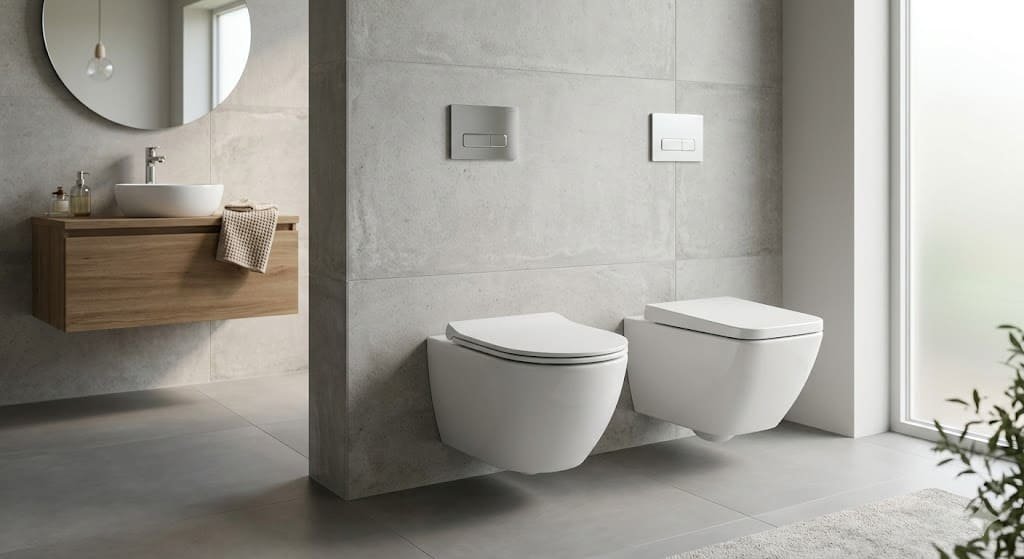
D-Shaped vs Square Toilet Seats is a common comparison for anyone upgrading or replacing a modern toilet seat. While both designs look stylish and contemporary, they differ in shape, comfort, and compatibility with different toilet bowls.
Choosing the right one can make a big difference in daily comfort, bathroom aesthetics, and ease of cleaning. In this guide, we’ll break down the key differences between D-shaped and square toilet seats to help you quickly decide which option is best for your bathroom.
Table of Contents
What Are D-Shaped Toilet Seats?
D-shaped toilet seats are a modern toilet seat design that features a flat straight back and a smooth curved front, forming a shape similar to the letter “D”. This design is commonly used in contemporary bathrooms, especially with wall-hung or modern close-coupled toilets.
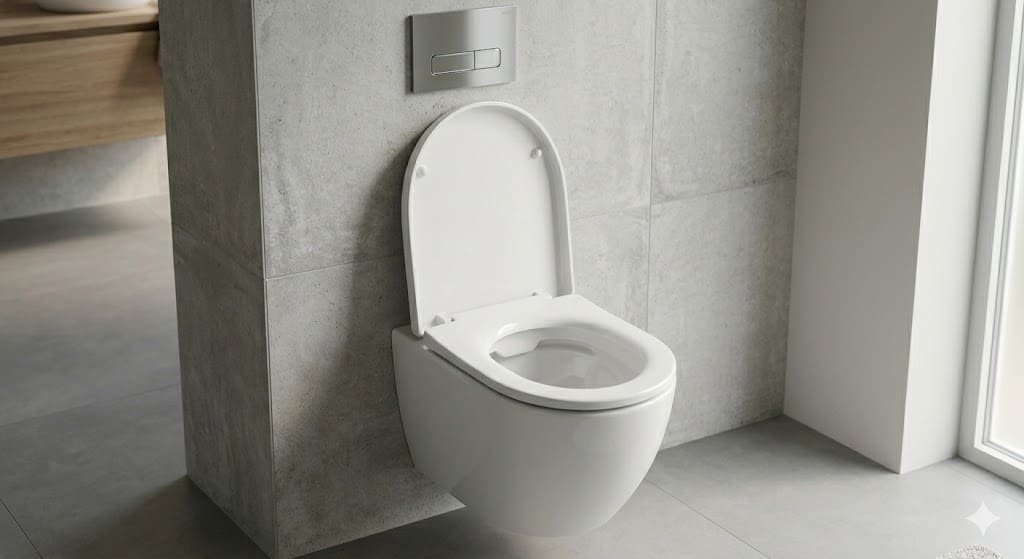
When comparing D-shaped vs square toilet seats, the D-shaped option is generally considered more practical and widely compatible with standard modern toilet bowls that are designed with softer, rounded edges rather than sharp angles.
One of the main characteristics of D-shaped toilet seats is their ergonomic design. The curved front provides a more natural seating position, which improves comfort during daily use. At the same time, the flat back allows the seat to align neatly with the toilet cistern or wall, creating a clean and minimal look.
From a design perspective, D-shaped seats are popular because they give bathrooms a sleek and modern appearance without looking overly bulky. They also tend to take up slightly less visual space, making them a good choice for smaller bathrooms or minimalist interiors.
In terms of practicality, these seats are generally easy to clean due to their smooth curves and lack of sharp corners where dirt can accumulate. This makes them a hygienic and low-maintenance option for many households.
Overall, D-shaped toilet seats are a balanced combination of comfort, style, and functionality, which is why they are often preferred when considering D-shaped vs square toilet seats for modern bathroom setups.
What Are Square Toilet Seats?
Square toilet seats are modern-style toilet seats designed with a fully angular shape, meaning both the front and back sections follow a straight-edged, geometric design rather than a curved one. Unlike traditional round or even D-shaped designs, square seats feature a more structured and bold appearance that stands out in contemporary bathroom interiors.
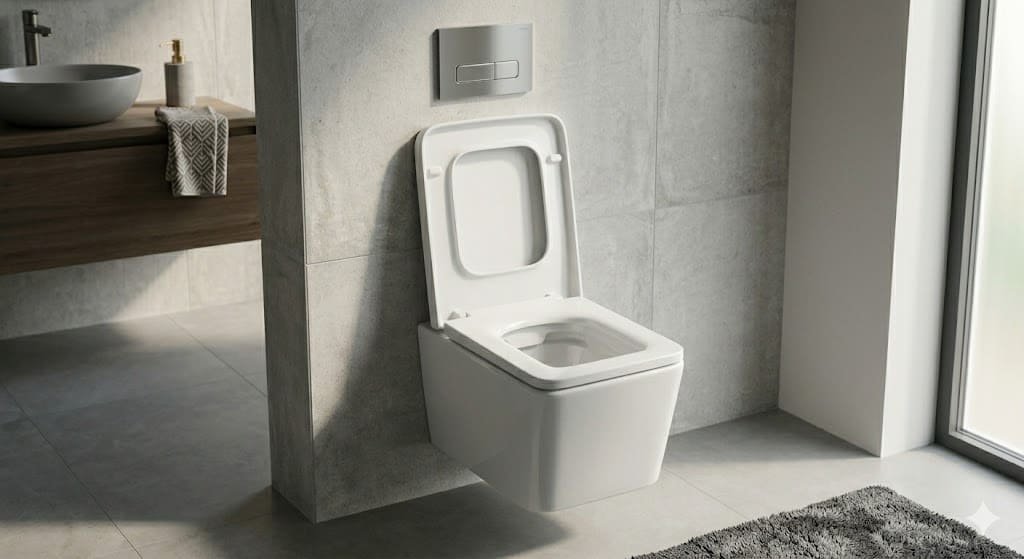
These seats are commonly used in designer bathrooms where a strong, minimalist, or luxury aesthetic is preferred. They are often paired with modern ceramic toilet pans that match the same square or angular design language.
From a design perspective, square toilet seats offer a unique visual appeal. They create a sharp, clean look that complements modern bathroom fittings such as wall-mounted toilets, floating vanities, and square basins. This makes them a popular choice in high-end homes and hotels.
In the discussion of D-shaped vs square toilet seats, square seats are generally considered more style-focused than universal in design. While they can enhance the overall bathroom appearance, they may not always be the most practical option for every user, especially when it comes to comfort and compatibility.
One of the main advantages of square toilet seats is their aesthetic impact—they instantly give a bathroom a modern and premium feel. However, their angular edges may feel less natural for some users compared to more curved designs.
Overall, square toilet seats are best suited for those who prioritise design consistency and a bold, contemporary bathroom look.
D-Shaped vs Square Toilet Seats: Key Differences
When comparing D-shaped vs square toilet seats, the main differences come down to design, comfort, compatibility, and maintenance. Both styles are modern and stylish, but they serve slightly different needs depending on bathroom layout and user preference.
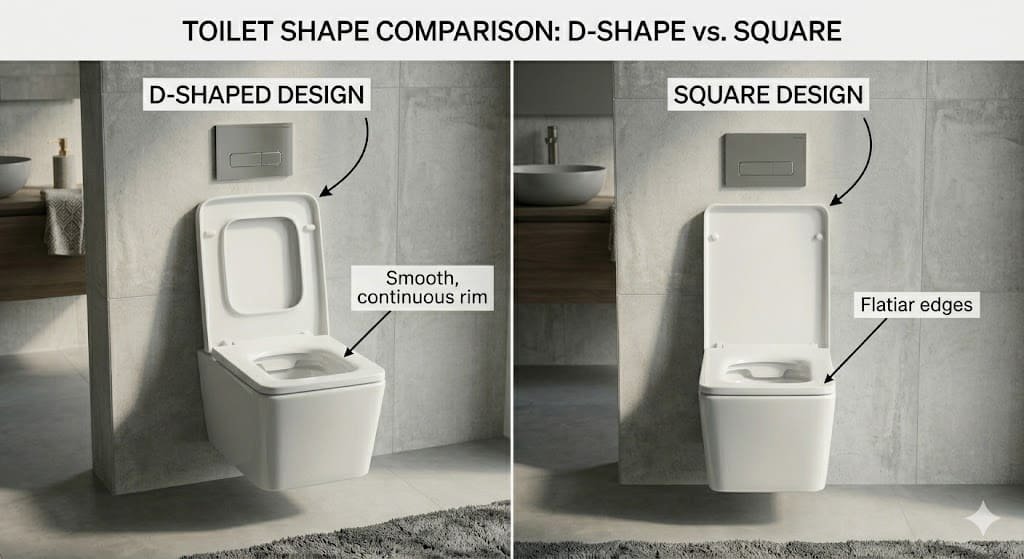
1. Shape and Design
The most obvious difference is the shape.
- D-shaped toilet seats have a flat back with a smooth, rounded front, forming a “D” outline.
- Square toilet seats feature more angular edges and a box-like structure with defined corners.
This design difference affects both appearance and how the seat feels during use.
2. Comfort Level
Comfort is an important factor in the D-shaped vs square toilet seats comparison.
- D-shaped seats are generally more ergonomic because the rounded front supports a natural seating position.
- Square seats can feel slightly rigid due to their straight edges, but they may suit users who prefer a wider and more structured seating area.
3. Bathroom Style Compatibility
- D-shaped seats are commonly used in modern, minimalist bathrooms and pair well with wall-hung or contemporary toilets.
- Square seats are often chosen for bold, luxury-inspired bathroom designs where sharp lines and geometric styling are preferred.
4. Cleaning and Maintenance
Cleaning is another key difference.
- D-shaped seats are easier to clean because of their smoother curves and fewer tight corners.
- Square seats may require more effort since dirt and dust can collect in the sharp edges and corners.
5. Toilet Compatibility
Not every toilet supports both designs.
- D-shaped seats must match D-shaped pans exactly.
- Square seats require specifically designed square or compatible modern toilet pans.
This makes proper measurement essential before buying either type.
6. Overall Practicality
In terms of everyday use, D-shaped seats are often more practical for households due to their comfort and easy maintenance. Square seats, on the other hand, are more about style and design impact.
Overall, the D-shaped vs square toilet seats comparison shows that neither option is universally better—it depends on your bathroom design, comfort preference, and compatibility with your toilet bowl.
Comfort Comparison: Which One Feels Better?
When comparing D-shaped vs square toilet seats, comfort is one of the most important factors because it directly affects daily use.
D-shaped toilet seats are generally designed with ergonomics in mind. The curved front and rounded edges match the natural shape of the human body, making them more comfortable for most users. They also provide a smoother seating experience, especially for longer sitting durations. Many people find them less restrictive and more natural to use.
On the other hand, square toilet seats offer a different kind of comfort. While they may not follow the body’s natural curves as closely, they provide a wider seating area in some designs. However, the sharp corners and angular shape can feel slightly rigid or less natural for some users, especially during extended use.
In real-world use, comfort also depends on the toilet bowl design and seat material. A well-designed square seat can still feel comfortable, but in general, D-shaped seats tend to win in comfort because of their ergonomic curvature.
So, in the D-shaped vs square toilet seats comparison, if your priority is everyday comfort and natural seating posture, D-shaped seats usually come out ahead.
Style and Bathroom Aesthetics
When it comes to D-shaped vs square toilet seats, style and overall bathroom aesthetics play a big role in the final decision. Both designs are modern, but they create very different visual impressions.
D-shaped toilet seats are known for their smooth and rounded look with a flat back. This design blends easily into most contemporary bathrooms, especially those with soft edges, neutral tones, and minimalist layouts. They create a clean and balanced appearance without drawing too much attention, making them a safe choice for almost any interior style.
On the other hand, square toilet seats are more bold and architectural in design. Their sharp lines and defined edges make them stand out, giving the bathroom a more luxurious or designer feel. They are often used in high-end or modern statement bathrooms where strong geometric shapes are part of the overall theme.
In the context of D-shaped vs square toilet seats, the choice comes down to design preference. If you want a subtle, universally compatible look, D-shaped seats are ideal. If you prefer a striking, modern aesthetic that enhances visual impact, square seats are the better option.
Both styles can elevate a bathroom’s appearance, but the right choice depends on whether you prefer soft simplicity or bold modern design.
Installation and Compatibility
When comparing D-shaped vs square toilet seats, installation and compatibility are very important because the wrong fit can make even a high-quality seat unusable.
D-shaped toilet seats are designed specifically for modern, wall-hung, and contemporary toilet bowls. They have a flat back and a curved front, so they usually require a matching D-shaped pan. If your toilet bowl is not designed for this shape, installation will not align properly, even if the hinges seem to fit. That’s why checking the exact bowl design before buying is essential.
Square toilet seats, on the other hand, are less common and are typically used with specially designed square or angular toilet pans. These are often found in designer bathrooms. Because of their unique shape, compatibility is even more specific, meaning you cannot easily swap them with standard round or D-shaped seats.
In both cases, measuring is crucial. You should check:
- Distance between hinge holes
- Length from hinge to front edge
- Width of the toilet bowl
A small mismatch can lead to poor alignment, instability, or gaps that affect comfort and hygiene.
In short, when choosing between D-shaped vs square toilet seats, always prioritise compatibility with your existing toilet model over design preference.
Cleaning and Maintenance
When comparing D-shaped vs square toilet seats, cleaning and maintenance are important factors that can affect daily bathroom hygiene and long-term convenience.
D-shaped toilet seats are generally easier to clean because of their smooth, curved front and fewer sharp edges. The rounded design reduces tight corners where dust, stains, or dirt can build up. This makes wiping and regular cleaning quicker and more efficient, especially for busy households.
On the other hand, square toilet seats can require a bit more effort to maintain. Their angular edges and corners may collect dirt more easily, especially in areas where cleaning tools have limited access. While this doesn’t make them unhygienic, it does mean they need more careful and frequent cleaning to keep them spotless.
In terms of maintenance, both types are similar when made from the same material (such as plastic or thermoset). However, design shape plays a key role in how easy it is to reach all surfaces during cleaning.
Overall, if low-maintenance cleaning is your priority, D-shaped seats usually have a slight advantage in the D-Shaped vs Square Toilet Seats comparison.
Durability and Material Factors
When comparing D-shaped vs square toilet seats, durability is not just about the shape—it also depends heavily on the material and build quality.
Both D-shaped and square toilet seats can be made from materials like plastic (polypropylene), MDF, or thermoset resin. Each material affects how long the seat lasts and how well it handles daily use.
In general, thermoset resin and high-quality MDF seats tend to be more durable because they are harder, more scratch-resistant, and less likely to lose their finish over time. Plastic seats, while affordable and lightweight, may develop cracks or discolouration faster, especially with heavy use.
The shape also plays a small role in durability. Square toilet seats often have sharper edges, which can be slightly more prone to stress points if the material is weak. On the other hand, D-shaped seats have a smoother, more rounded structure, which can distribute pressure more evenly and reduce strain on certain areas.
Hinges are another important factor. Soft-close, stainless steel hinges generally improve durability for both shapes by reducing impact and preventing slamming damage.
In short, when evaluating D-shaped vs square toilet seats, the material quality and hinge system matter more than the shape itself—but design can still influence long-term wear.
Which One Should You Choose?
When deciding between D-shaped vs square toilet seats, the right choice mainly depends on your toilet bowl shape, bathroom design, and personal comfort preferences.
If your bathroom has a modern, wall-hung, or contemporary toilet, a D-shaped toilet seat is usually the better fit. It offers a smooth curved front that feels comfortable for most users and helps save a bit of visual space, making the bathroom look cleaner and more minimal.
On the other hand, square toilet seats are best suited for bold, designer-style bathrooms where aesthetics matter as much as function. They make a bold design impact and complement specially shaped or high-end luxury toilet styles very well. However, they may not feel as naturally comfortable for everyone due to their angular structure.
For everyday family use, D-shaped seats are often the more practical choice because they are widely compatible and easier to find in standard sizes. Square seats, while stylish, require more careful matching with the toilet pan to ensure proper fit and comfort.
In short:
- Choose D-shaped if you want comfort, compatibility, and simplicity.
- Choose square if you prioritise modern design and visual impact.
Ultimately, in the comparison of D-shaped vs square toilet seats, the best option is the one that fits your toilet correctly and matches your bathroom’s overall style.
Pros and Cons Summary Table
When comparing D-Shaped vs Square Toilet Seats, it helps to see the advantages and disadvantages side by side. This makes it easier to quickly understand which option suits your bathroom needs.
D-Shaped vs Square Toilet Seats – Pros & Cons
| Feature | D-Shaped Toilet Seats | Square Toilet Seats |
|---|---|---|
| Pros | ✔ Comfortable ergonomic curve ✔ Fits most modern wall-hung toilets ✔ Smooth, space-saving design ✔ Easier to clean with fewer sharp edges | ✔ Stylish and bold modern look ✔ Premium designer appearance ✔ Strong visual statement in bathrooms ✔ Matches square/industrial interior styles |
| Cons | ✘ Limited to specific toilet bowl types ✘ Less visually bold compared to square designs | ✘ May feel less comfortable for some users ✘ Harder to clean in sharp corners ✘ Not compatible with all toilet bowls |
This comparison shows that D-Shaped vs Square Toilet Seats mainly differ in comfort, compatibility, and style. D-shaped seats focus more on practicality and comfort, while square seats prioritize modern aesthetics and design impact.
FAQs
1. What is the main difference between D-shaped vs square toilet seats?
The main difference is the shape. D-shaped toilet seats have a curved front with a flat back, while square toilet seats have a more angular, geometric design. In the comparison of D-shaped vs square toilet seats, the choice mostly comes down to toilet bowl compatibility, comfort, and bathroom style.
2. Are D-shaped toilet seats more comfortable than square ones?
Comfort depends on the user and design quality. D-shaped seats usually feel more natural because of their rounded front, while square seats offer a more structured seating style. In most cases, D-shaped vs square toilet seat comfort differences are subtle, but D-shaped designs are often preferred for daily household use.
3. Do square toilet seats fit all toilets?
No, square toilet seats do not fit all toilets. They are designed for specific square or modern ceramic bowls. Before choosing between D-shaped vs square toilet seats, it is important to measure your toilet bowl shape to ensure proper compatibility.
4. Which is easier to clean: D-shaped or square toilet seats?
D-shaped toilet seats are generally easier to clean because they have smoother curves and fewer sharp edges. Square toilet seats may collect more dust and dirt in corners. So, when comparing D-shaped vs square toilet seats, D-shaped options often have a slight advantage in hygiene maintenance.
5. Which one should I choose for my bathroom?
If your bathroom has a modern, wall-hung or contemporary toilet, a D-shaped seat is usually the best fit. Square toilet seats are better suited for bold, designer-style bathrooms. When deciding between D-shaped vs square toilet seats, always consider toilet shape, comfort preference, and overall bathroom design.
Conclusion
Choosing between D-shaped vs square toilet seats mainly depends on your toilet design, comfort preference, and bathroom style. Both options are modern and visually appealing, but they serve slightly different needs.
D-shaped toilet seats are often the more practical choice due to their curved front, better comfort for most users, and easier cleaning. They also fit well in compact and contemporary bathrooms. On the other hand, square toilet seats stand out for their bold, designer look and are ideal for bathrooms that focus heavily on modern aesthetics.
In the end, there is no single “best” option in the comparison of D-shaped vs square toilet seats—the right choice is the one that matches your toilet bowl shape and complements your bathroom design. By understanding their differences, you can make a smarter, more comfortable, and long-lasting choice for your home.