Introduction
Common toilet seat problems and their solutions are something almost every homeowner deals with at some point. From loose fittings and annoying squeaks to cracks, stains, and soft-close issues, these small problems can quickly affect bathroom comfort and hygiene.
The good news is that most toilet seat issues are simple to identify and fix without professional help. In this guide, we will explore the most frequent toilet seat problems and provide clear, practical solutions to help you maintain a clean, stable, and long-lasting toilet seat.
Table of Contents
1. Loose Toilet Seat
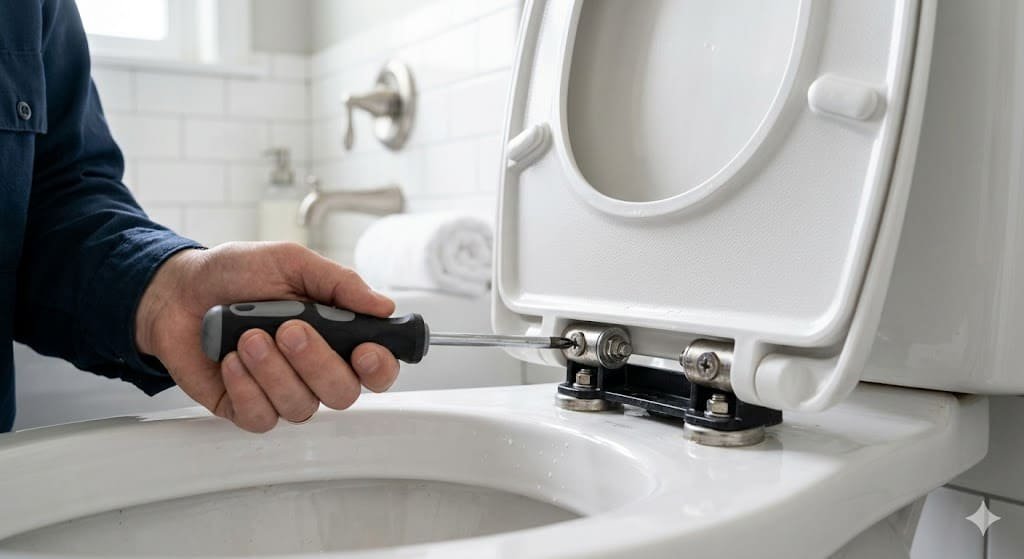
A loose toilet seat is one of the most frustrating bathroom issues homeowners face. It can slide from side to side, feel unstable, and make daily use uncomfortable. Among all common toilet seat problems and their solution, this is one of the easiest issues to fix with a few simple tools and basic maintenance.
What leads to a toilet seat becoming loose?
Toilet seats usually become loose because of regular daily use. Over time, the bolts that hold the seat in place begin to shift or wear out. In some cases, improper installation or damaged hinges can also cause the seat to move around.
Some common causes include:
- Loose or worn mounting bolts
- Broken plastic hinges
- Incorrect seat installation
- Frequent pressure and movement
- Rusted or damaged hardware
Signs Your Toilet Seat Is Loose
It is important to fix a loose toilet seat early before the problem becomes worse. Here are a few common signs:
- The seat slides sideways when sitting.
- You hear clicking or shifting noises
- The toilet seat feels unstable.
- Bolts underneath the seat appear loose
Ignoring these signs can lead to cracked hinges or a completely broken toilet seat.
How to Fix a Loose Toilet Seat
Fixing a loose toilet seat is simple and usually takes less than 15 minutes.
Step 1: Locate the bolts.
Look behind the toilet seat near the hinges. Most toilet seats have two bolts covered with plastic caps.
Step 2: Open the Caps
Use your fingers or a flat screwdriver to gently lift the caps covering the bolts.
Step 3: Tighten the Bolts
Use a screwdriver on the top and hold the nut underneath with pliers if needed. Tighten both sides evenly until the seat no longer moves.
Step 4: Test the Seat
Sit carefully on the toilet seat and check if it stays firmly in place.
When Should You Replace the Hardware?
Sometimes tightening the bolts is not enough. If the hinges are cracked, the bolts are rusted, or the seat keeps becoming loose, replacing the hardware is the best option. New toilet seat fixing kits are affordable and easy to install.
Tips to Prevent a Loose Toilet Seat
To avoid this issue in the future:
- Check seat bolts regularly
- Avoid putting excessive weight on one side
- Clean hinges to prevent dirt buildup
- Replace damaged parts quickly
Understanding common toilet seat problems and their solution helps you maintain a cleaner, safer, and more comfortable bathroom without spending money on professional repairs.
2. Toilet Seat Keeps Sliding
A toilet seat that constantly slides out of place can be annoying and uncomfortable. It may shift left or right every time someone sits down, making the bathroom feel unsafe and poorly maintained. When discussing common toilet seat problems and their solution, a sliding toilet seat is a very common issue that can usually be resolved quickly without professional help.
Here are a few typical causes that can make a toilet seat shift or slide around.
There are several reasons why a toilet seat keeps moving. Typically, loose fittings or an incorrect seat size cause the issue.
Here are the most common causes:
- Loose mounting bolts
- Worn or damaged hinges
- Incorrect toilet seat size
- Missing anti-slip pads
- Low-quality installation hardware
If the toilet seat does not fit the toilet bowl properly, it will continue to slide even after tightening the bolts.
How to Stop a Toilet Seat From Sliding
Fortunately, fixing a sliding toilet seat is simple and affordable. Follow these easy solutions to keep the seat secure.
Tighten the Mounting Bolts
Start by checking the bolts located behind the toilet seat. Use a screwdriver to secure the screws, making sure they are tightened evenly on all sides. Avoid over tightening because it can damage plastic parts.
Install Anti-Slip Pads
Anti-slip pads are small rubber grips placed under the toilet seat. They help prevent movement and improve stability during use.
Replace Damaged Hinges
If the hinges are cracked or worn out, tightening alone will not solve the problem. Replacing the hinges can restore proper alignment and keep the seat in place.
Choose the Correct Toilet Seat Size
Not all toilet seats fit every toilet bowl. Measure your toilet before buying a replacement seat. Most toilets are either round or elongated, and using the wrong type can cause constant sliding.
How to Prevent Toilet Seat Sliding
Preventive maintenance can help avoid future problems. Here are a few useful tips:
- Check bolts every few months
- Clean around hinges regularly
- Avoid using excessive force on the seat
- Replace worn hardware early
Understanding typical toilet seat issues and how to fix them allows homeowners to handle everyday bathroom problems with ease while enhancing comfort, cleanliness, and hygiene.
3. Cracked or Broken Toilet Seat
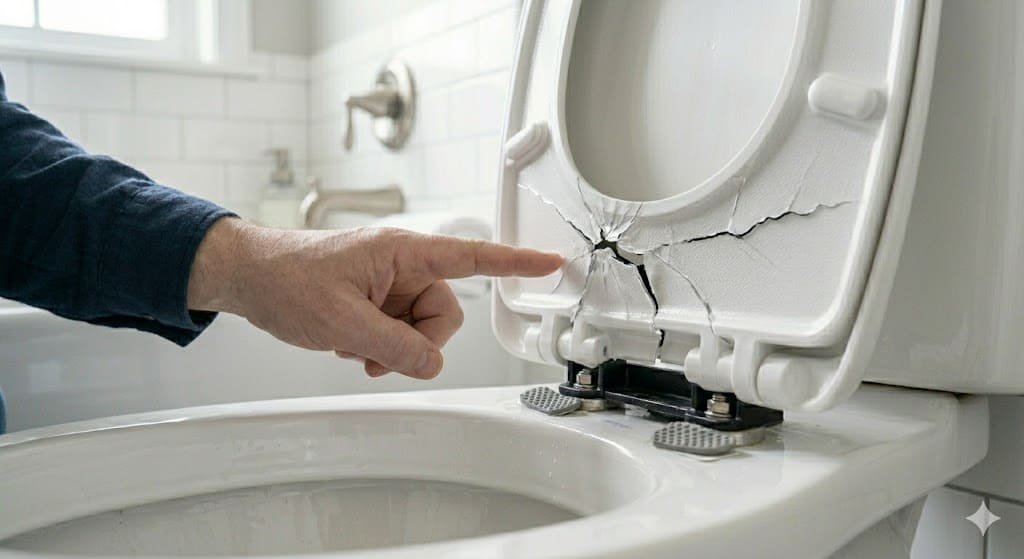
A cracked or broken toilet seat is not only uncomfortable but also unsafe. Small cracks may seem harmless at first, but they can quickly become larger and create hygiene problems or even cause injuries. Among common toilet seat problems and their solution, this issue often requires immediate attention to maintain bathroom safety and cleanliness.
Why Toilet Seats Crack or Break
Toilet seats can become damaged over time because of daily wear and pressure. Poor-quality materials and improper use also increase the risk of cracking.
Some common causes include:
- Heavy pressure or impact
- Ageing plastic or wood materials
- Loose fittings causing uneven stress
- Poor-quality toilet seats
- Exposure to harsh cleaning chemicals
Even a small crack can trap dirt, moisture, and bacteria, making cleaning more difficult.
Risks of Using a Broken Toilet Seat
Using a damaged toilet seat can lead to several problems. Sharp edges from cracks may cause skin injuries, while hidden bacteria inside the damaged areas can affect bathroom hygiene.
Here are a few risks of ignoring a broken toilet seat:
- Cuts or minor injuries
- Increased bacteria buildup
- Uncomfortable seating
- Further damage to hinges and fittings
Replacing a broken seat early can prevent bigger bathroom repair issues later.
How to Replace a Cracked Toilet Seat
In most cases, replacing the toilet seat is the best solution. The process is simple and only requires basic tools.
Step 1: Measure Your Toilet Bowl
Before buying a replacement, measure the toilet bowl length and width. Most toilets are either round or elongated, so choosing the correct size is important.
Step 2: Remove the Old Toilet Seat
Open the caps covering the mounting bolts behind the seat. Unscrew the bolts and carefully lift off the damaged seat.
Step 3: Clean the Area
Wipe the toilet surface around the mounting holes to remove dirt and bacteria before installing the new seat.
Step 4: Install the New Seat
Place the new toilet seat in position, insert the bolts, and tighten them evenly. Make sure the seat feels secure and properly aligned.
Tips to Prevent Toilet Seat Cracks
You can extend the life of your toilet seat by following a few simple maintenance tips:
- Avoid standing on the toilet seat
- Tighten loose fittings regularly
- Use gentle cleaning products
- Choose durable seat materials
Understanding common toilet seat problems and their solution helps homeowners keep their bathrooms safer, cleaner, and more comfortable with minimal effort.
4. Toilet Seat Won’t Stay Up
A toilet seat that refuses to stay up can be frustrating during daily use. This problem is especially common in older toilet seats where the hinges become weak or loose over time. When discussing common toilet seat problems and their solution, this issue is usually caused by worn hardware and can often be fixed without replacing the entire seat.
Why a Toilet Seat Won’t Stay Up
The main reason a toilet seat falls back down is a problem with the hinge mechanism. Over time, constant opening and closing can loosen the tension that keeps the seat upright.
Here are the most common causes:
- Loose hinge screws
- Worn hinge tension
- Damaged or broken hinges
- Poor-quality toilet seat materials
- Incorrect installation
Sometimes the toilet seat itself may also become slightly warped, making it difficult to balance properly.
Signs of a Faulty Toilet Seat Hinge
You may notice several warning signs before the problem becomes worse:
- The seat slowly falls down after lifting.
- Hinges feel loose or unstable
- The seat does not remain fully upright.
- Clicking or squeaking sounds near the hinges
Fixing these problems early can prevent further damage to the toilet seat.
Easy Ways to Fix a Toilet Seat That Keeps Falling Down
In many cases, the issue can be solved with a few simple adjustments.
Tighten the Hinge Screws
Check the mounting screws behind the toilet seat. Use a screwdriver to secure them, making sure to tighten each one evenly. Loose screws are one of the most common reasons the seat falls down.
Adjust the Hinges
Some modern toilet seats have adjustable hinges that control movement and tension. Carefully adjust the hinge position to help the seat stay upright.
Replace Worn Hinges
If the hinges are cracked or worn out, replacing them is usually the best solution. New hinges are affordable and easy to install.
Replace the entire seat if needed.
If the toilet seat is old or badly damaged, replacing the full seat may save time and prevent future problems.
Tips to Prevent This Problem
You can help keep your toilet seat functioning properly with regular maintenance:
- Avoid slamming the seat shut
- Tighten screws regularly
- Clean hinges to prevent buildup
- Replace damaged parts early
Learning about common toilet seat problems and their solution makes it easier to handle simple bathroom repairs and maintain a more comfortable and hygienic home.
5. Bad Smell Coming from the Toilet Seat
A bad smell coming from the toilet seat can make the entire bathroom feel dirty, even after regular cleaning. In many cases, the odour is caused by hidden bacteria, moisture buildup, or stains trapped around the seat hinges. Among common toilet seat problems and their solutions, unpleasant odours are one of the most common hygiene-related issues homeowners face.
What Causes Toilet Seat Odours?
Toilet seat odours usually develop when dirt and bacteria collect in hard-to-clean areas. Moisture and poor ventilation can make the problem even worse over time.
Some common causes include:
- Bacteria build-up under the seat
- Urine stains around hinges
- Mould or mildew growth
- Dirty mounting hardware
- Poor bathroom ventilation
Sometimes the smell may also come from tiny cracks in older toilet seats where bacteria can collect.
How to Remove Bad Smells from a Toilet Seat
Proper deep cleaning is the best way to remove unpleasant odours and restore bathroom freshness.
Clean Around the Hinges
Most hidden dirt collects near the hinges. Use a disinfectant cleaner and an old toothbrush to scrub hard-to-reach areas thoroughly.
Use Baking Soda and Vinegar.
A mixture of baking soda and vinegar helps remove stains and neutralise odours naturally. Spread the mixture evenly, allow it to rest for a few minutes, and then wipe it off thoroughly.
Disinfect the Entire Toilet Seat
Use antibacterial wipes or a bathroom disinfectant spray to thoroughly clean the upper surface as well as the bottom side of the seat.
Remove and deep clean the seat.
If the odour remains, remove the toilet seat completely and clean underneath it. Dirt and moisture often build up around the mounting area.
How to Prevent Toilet Seat Odours
Avoiding bad odors is much simpler than trying to remove strong smells once they develop. Consistent cleaning along with good airflow can greatly help keep the area fresh.
Here are some useful prevention tips:
- Clean the toilet seat weekly.
- Keep the bathroom dry and ventilated
- Wipe around hinges regularly
- Avoid allowing moisture to sit for long periods
- Replace cracked or damaged toilet seats
When Should You Replace the Toilet Seat?
If the smell continues even after deep cleaning, the toilet seat may have hidden cracks or permanent bacteria buildup. In this case, replacing the seat is often the best solution for better hygiene.
Understanding common toilet seat problems and their solution helps maintain a cleaner, fresher, and healthier bathroom environment for everyone in the home.
6. Toilet Seat Discolouration and Stains
Toilet seat discolouration and stains can make a bathroom look dirty and poorly maintained, even when it is cleaned regularly. Yellow spots, dark marks, and faded surfaces are common issues that develop over time due to moisture, cleaning chemicals, and mineral buildup. Among common toilet seat problems and their solutions, discolouration is one of the most noticeable problems homeowners deal with.
What Causes Toilet Seat Discolouration?
Several factors can cause stains and fading on a toilet seat. Some stains appear gradually, while others develop because of improper cleaning products or hard water deposits.
Common causes include:
- Hard water mineral buildup
- Mould and mildew growth
- Harsh chemical cleaners
- Moisture and humidity
- Ageing plastic materials
- Dirt and bacteria buildup
White toilet seats are especially likely to show yellow stains over time if they are not cleaned properly.
How to Remove Toilet Seat Stains
Most toilet seat stains can be removed with simple household cleaning methods.
Use Baking Soda and Vinegar.
Mix baking soda with vinegar to create a gentle cleaning paste. Apply it to stained areas, leave it for a few minutes, and wipe clean with a soft cloth.
Clean with mild disinfectants.
Use non-abrasive bathroom cleaners to remove dirt and bacteria without damaging the toilet seat surface.
Scrub Gently
Clean the surface gently using a soft sponge or a smooth cloth. Rough scrubbing pads can scratch the surface and make future stains worse.
Focus on Hidden Areas
Clean around hinges and underneath the seat where moisture and bacteria often collect.
Cleaning Mistakes to Avoid
Some cleaning habits can damage the toilet seat and cause faster discolouration.
Avoid these common mistakes:
- Using bleach too frequently
- Scrubbing with steel wool
- Leaving strong chemicals on the surface for too long
- Ignoring moisture buildup around hinges
Gentle and regular cleaning is usually more effective than harsh cleaning methods.
How to Prevent Future Discolouration
Preventing stains is easier than removing heavy discolouration later.
Here are a few simple prevention tips:
- Clean the toilet seat weekly.
- Dry the seat after cleaning.
- Improve bathroom ventilation
- Avoid strong chemical cleaners
- Remove stains as soon as they appear
When Should You Replace the Toilet Seat?
If stains become permanent or the surface starts cracking, replacing the toilet seat may be the best option. Older plastic seats can absorb stains over time, making them difficult to restore completely.
Understanding common toilet seat problems and their solution helps homeowners maintain a cleaner, fresher, and more attractive bathroom with less effort.
7. Noisy or Squeaky Toilet Seat
A noisy or squeaky toilet seat may seem like a small issue, but it can become annoying over time. Squeaking sounds usually happen when the seat moves against loose or dry hinges during use. Among common toilet seat problems and their solution, this is one of the easiest problems to fix with simple maintenance and cleaning.
Why Does a Toilet Seat Squeak?
Toilet seats often become noisy because the moving parts around the hinges start wearing down or drying out. Dirt and moisture buildup can also increase friction and create squeaking sounds.
Some common causes include:
- Loose mounting bolts
- Dry or dirty hinges
- Worn plastic parts
- Rusted metal hardware
- Poor-quality toilet seat materials
If the squeaking is ignored, the hinges may eventually become damaged or unstable.
How to Fix a Squeaky Toilet Seat
Most squeaking problems can be solved quickly without replacing the entire toilet seat.
Tighten the Bolts
Check the bolts located behind the toilet seat. Use a screwdriver to tighten them carefully. Loose bolts are one of the most common causes of toilet seat noise.
Clean the hinges.
Dust, dirt, and moisture around the hinges can create friction. Wipe the hinges thoroughly using a damp cloth and mild cleaner.
Lubricate Moving Parts
Apply a small amount of silicone-based lubricant to the hinges to reduce friction and stop squeaking. Avoid using too much lubricant because it can attract dirt.
Replace Worn Hinges
If the hinges are cracked or heavily worn, replacing them may be the best solution. New hinges can improve both stability and comfort.
How to Prevent Toilet Seat Noise
Regular maintenance can help prevent squeaking and extend the life of your toilet seat.
Here are a few useful prevention tips:
- Tighten fittings regularly
- Clean hinges during bathroom cleaning
- Avoid slamming the seat shut
- Replace damaged parts early
- Use high-quality replacement hardware
When Should You Replace the Toilet Seat?
If the squeaking continues even after cleaning and tightening, the toilet seat may have worn internal parts. In this case, replacing the seat is often the easiest long-term solution.
Understanding typical toilet seat issues and how to fix them allows homeowners to quickly resolve minor bathroom problems and enjoy a more peaceful, comfortable space.
8. Soft-Close Toilet Seat Problems
Soft-close toilet seats are designed for comfort and quiet use, but they can develop issues over time. Instead of closing slowly and smoothly, they may start slamming shut or stopping midway. When discussing common toilet seat problems and their solution, soft-close mechanism failures are a frequent concern in modern bathrooms.
Why Soft-Close Toilet Seats Stop Working
Soft-close toilet seats rely on small dampers inside the hinges to control movement. When these dampers wear out or get damaged, the smooth closing function stops working properly.
Common causes include:
- Worn-out dampers inside the hinges
- Dirt or debris blocking the mechanism
- Loose hinge adjustments
- Low-quality soft-close system
- Regular wear and tear over time
Heavy or repeated force on the seat can also damage the internal closing system.
Signs of Soft-Close Toilet Seat Problems
You can easily notice when the soft-close system is failing. Some common signs include:
- The seat slams down instead of closing slowly.
- Uneven or jerky closing movement
- Seat stops halfway while closing
- Clicking or grinding sounds from hinges
These signs usually indicate that the internal mechanism needs adjustment or replacement.
How to Fix Soft-Close Toilet Seat Problems
In many cases, soft-close issues can be fixed without replacing the entire seat.
Clean the Hinges and Dampers.
Dust and grime can interfere with the soft-close system. Gently wipe the hinges using a soft cloth to clear away any accumulated dirt.
Adjust the Hinge Tension
Some models allow hinge adjustment. Tightening or repositioning the hinges may restore the smooth closing function.
Replace the Dampers.
If the soft-close feature is completely failing, replacing the internal dampers is often the best solution. Many toilet seat kits offer replacement parts.
Replace the toilet seat if needed.
If the mechanism is badly damaged or the seat is old, replacing the entire unit is a more reliable long-term fix.
How to Prevent Soft-Close Problems
Proper care can help extend the life of a soft-close toilet seat.
- Close the seat gently (avoid forcing it down).
- Clean hinges regularly
- Avoid using harsh chemicals on moving parts.
- Check hinge tightness every few months
- Replace worn parts early
Soft-close issues are a part of common toilet seat problems and their solution, but with proper maintenance, they are easy to manage and prevent.
Final Note
Soft-close toilet seats are convenient, but they need basic care to function properly. Regular cleaning and timely adjustments can keep them working smoothly for years.
When You Should Replace Your Toilet Seat
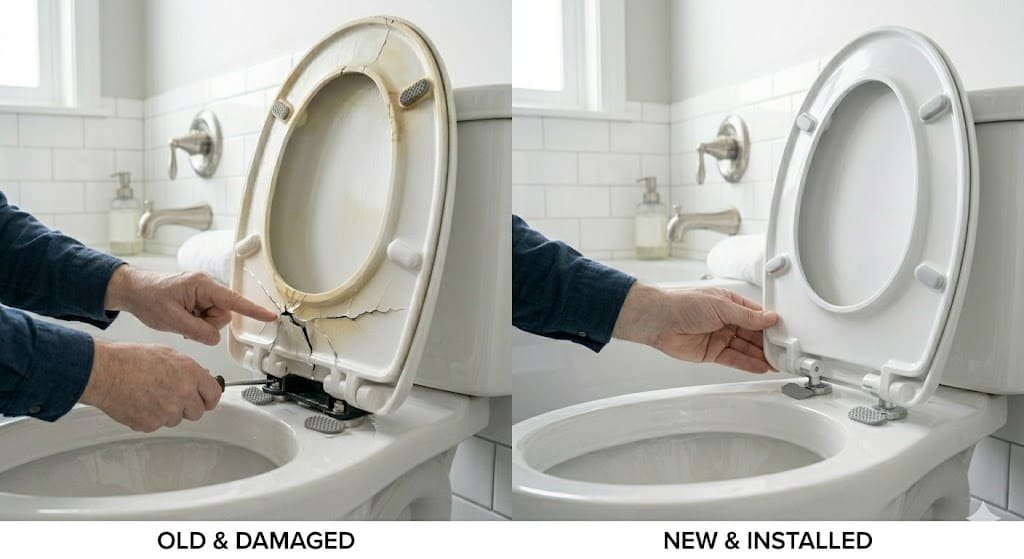
Knowing when to replace your toilet seat is important for maintaining hygiene, comfort, and safety. While many issues can be fixed with simple repairs, there comes a point where replacement is the better and more cost-effective option. In the context of common toilet seat problems and their solution, replacing the seat is sometimes the only reliable fix.
Clear Signs You Need a New Toilet Seat
A toilet seat does not last forever. Over time, wear and damage make it less functional and harder to clean or repair.
You should consider replacing your toilet seat if you notice the following:
- Deep cracks or breaks in the seat
- Persistent stains that do not come off
- Loose or damaged hinges that keep failing
- Unpleasant odours even after deep cleaning
- Constant shifting or instability
- Worn-out soft-close or lifting mechanism
If multiple issues appear at the same time, replacement is usually the best option.
Why Repair Is Not Always Enough
Some minor issues like loose bolts or squeaking can be fixed easily. However, when the material itself is damaged, repairs only offer a temporary solution.
For example:
- Cracked plastic cannot be fully restored.
- Old hinges may keep breaking again.
- Stains embedded in the surface often return
In such cases, replacing the seat saves time and prevents repeated maintenance.
How to Choose a New Toilet Seat
When replacing your toilet seat, choosing the right one is important for long-term use.
Keep these points in mind:
- Measure your toilet bowl (round or elongated)
- Choose durable materials like heavy-duty plastic or wood
- Consider soft-close features for comfort
- Check hinge quality for stability
- Pick an easy-to-clean design
A good-quality toilet seat reduces future problems and improves bathroom hygiene.
See our complete guide on How to Choose a New Toilet Seat.
Benefits of Replacing Your Toilet Seat
Installing a new toilet seat offers several advantages:
- Better hygiene and cleanliness
- Improved comfort and safety
- No more recurring repairs
- Enhanced bathroom appearance
- More reliable performance
Final Advice
Understanding common toilet seat problems and their solution helps you decide whether to repair or replace. If damage keeps returning or cleaning becomes difficult, replacing the toilet seat is the smartest and most long-lasting solution.
Tips to Prevent Common Toilet Seat Problems
Preventing issues is always easier than fixing them later. Most toilet seat problems develop due to poor maintenance, frequent wear, or incorrect use. By following a few simple habits, you can extend the life of your toilet seat and avoid unnecessary repairs. When looking at common toilet seat problems and their solution, prevention plays the most important role.
Clean Your Toilet Seat Regularly
Regular cleaning helps prevent stains, odours, and bacteria buildup.
- Use mild cleaners instead of harsh chemicals
- Clean both the top and underside of the seat.
- Pay special attention to hinges and corners
Consistent cleaning keeps the seat in good condition and improves hygiene.
Avoid Excess Pressure and Rough Use
Toilet seats are not designed to handle heavy force.
- Do not stand on the seat.
- Avoid slamming the lid
- Sit gently to prevent stress on hinges.
Careless or rough use is a major factor that leads to toilet seats becoming loose or developing cracks over time.
Check and Tighten Fittings Periodically
Loose bolts are a common cause of instability and noise.
- Inspect bolts every few months
- Tighten screws if the seat starts moving
- Replace rusted or damaged hardware early
This simple step helps prevent many common toilet seat problems, and their solution becomes much easier.
Keep Hinges Clean and Dry
Moisture and dirt can damage hinge mechanisms over time.
- Wipe hinges during cleaning
- Avoid letting water collect around fittings.
- Use a dry cloth after washing the seat.
Clean hinges last longer and work more smoothly.
Choose Quality Materials from the Start
A good-quality toilet seat reduces the chances of future problems.
- Choose durable plastic or wood materials
- Look for strong, rust-resistant hinges
- Prefer soft-close models for smoother use
Investing in quality reduces repair frequency and improves long-term performance.
Replace Damaged Parts Early
Overlooking minor issues can eventually result in much larger complications.
- Replace cracked seats immediately
- Fix weak hinges before they break completely
- Don’t delay repairs once instability starts.
Early action saves money and prevents inconvenience.
Final Tip
Most toilet seat issues can be avoided with simple care and regular maintenance. By following these preventive steps, you can reduce common toilet seat problems, and their solution becomes much less stressful in the long run.
FAQs
Why does my toilet seat keep getting loose?
This usually happens because the mounting bolts become loose over time due to regular use. In some cases, worn-out hinges or poor installation can also be the cause. Tightening the bolts or replacing damaged hardware usually solves the problem.
Can I fix a cracked toilet seat?
Small surface cracks cannot be properly repaired, and they often get worse over time. For safety and hygiene reasons, replacing the seat is the best solution when cracks appear.
What is the recommended frequency for replacing a toilet seat?
On average, a toilet seat lasts around 5 to 8 years depending on usage and material quality. However, you should replace it sooner if you notice cracks, stains that won’t clean, or unstable fittings.
What is the best cleaner for toilet seats?
Mild disinfectants, warm soapy water, or natural solutions like vinegar and baking soda work best. Avoid harsh chemicals or abrasive scrubbers, as they can damage the surface and reduce durability.
How do I know which toilet seat size to buy?
Before purchasing a replacement toilet seat, take accurate measurements of your toilet bowl. Toilets generally come in either round or elongated shapes, so choosing the correct type is important. Selecting the right size helps the seat sit securely in place and avoids any shifting or instability during use.
Why does my toilet seat keep moving even after tightening?
If tightening does not help, the issue may be worn hinges, incorrect seat size, or missing anti-slip pads. In such cases, replacing the fittings or the seat is usually required.
Conclusion
Toilet seat issues are common in almost every home, but most of them are simple to fix once you understand the cause. From loose fittings and cracks to noise, stains, and soft-close failures, each problem has a practical solution that can be handled with basic tools and regular maintenance.
By learning about common toilet seat problems and their solution, you can quickly identify what is wrong and decide whether to repair or replace the seat. In many cases, timely cleaning, tightening bolts, and replacing small parts are enough to restore proper function.
If the seat keeps getting damaged or starts working poorly, the most practical long-term solution is to replace it. Choosing a new one ensures better comfort and hygiene over time. Keeping your toilet seat in good condition also helps maintain bathroom cleanliness and reduces the chances of recurring problems later on.
With simple care and regular checks, you can keep your toilet seat in good condition and avoid unnecessary inconvenience.
If you want a complete guide on toilet seats and how to choose the right one for your bathroom, check out our latest detailed post for expert insights and easy buying tips.
For toilet safety tips, see bathsmartly’s guide to toilet safety tips.