
Introduction
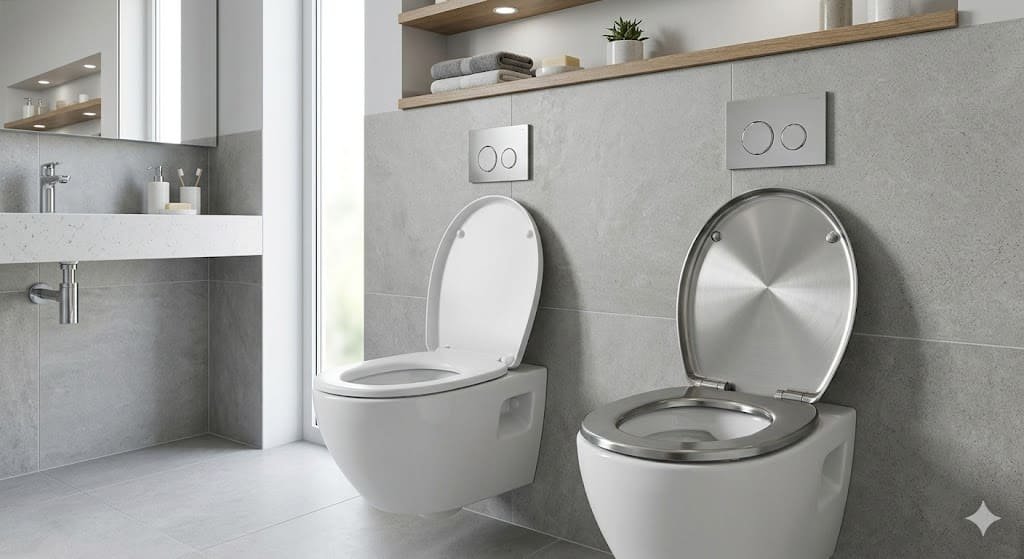
Plastic vs stainless steel toilet seats is a common comparison for anyone looking to upgrade or replace their bathroom fittings. Both materials offer different benefits in terms of durability, comfort, price, and maintenance. Choosing the right one can directly affect your daily comfort and long-term satisfaction. In this guide, we’ll break down the key differences between plastic and stainless steel toilet seats to help you make the best decision for your bathroom.
Table of Contents
What Is a Plastic Toilet Seat?
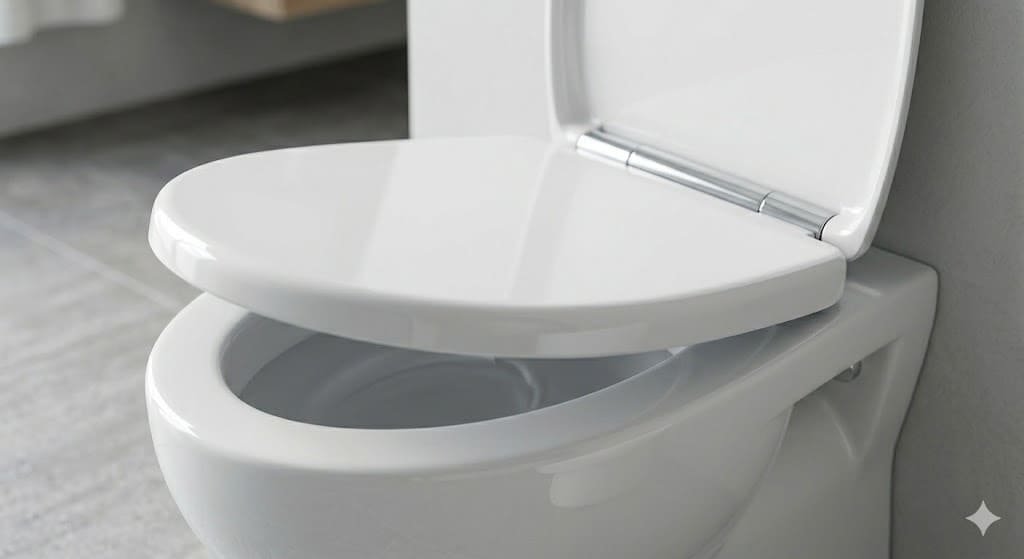
A plastic toilet seat is one of the most commonly used toilet seat types in modern bathrooms. In the context of plastic vs stainless steel toilet seats, plastic seats are often chosen for their affordability, lightweight structure, and wide availability. They are designed to provide basic comfort and functionality while fitting most standard toilet bowls.
Materials Used in Plastic Toilet Seats
Plastic toilet seats are usually made from materials such as polypropylene (PP) or thermoset plastic (urea-formaldehyde). These materials are chosen because they are lightweight, easy to mould, and cost-effective.
- Polypropylene (PP): Flexible, lightweight, and resistant to moisture
- Thermoset plastic: Harder, more rigid, and more durable than standard plastic
These materials make plastic seats suitable for everyday residential use, especially where budget and convenience are important factors in the plastic vs stainless steel toilet seat comparison.
Common Features of Plastic Toilet Seats
Plastic toilet seats come with several practical features that make them popular:
- Lightweight construction for easy handling
- Quick and simple installation
- Compatibility with most toilet designs
- Available in both standard and soft-close versions
- Smooth surface for basic cleaning and maintenance
Because of these features, plastic seats are often considered a practical entry-level option in the plastic vs stainless steel toilet seat debate.
Advantages of Plastic Toilet Seats
Plastic toilet seats offer several benefits that make them a widely used choice:
Lightweight and easy to install
Plastic seats are very light, making them easy to carry, handle, and install without professional help.
Affordable option
They are generally much cheaper than stainless steel alternatives, making them ideal for budget-conscious buyers.
Wide variety of designs and colours
Plastic seats are available in many shapes, styles, and colours, allowing users to match their bathroom décor easily.
Disadvantages of Plastic Toilet Seats
Despite their benefits, plastic toilet seats also have some limitations, especially when compared in the plastic vs stainless steel toilet seat discussion:
Can crack over time
With regular use, plastic seats may develop cracks, especially under heavy weight or pressure.
May discolour with heavy use
Over time, exposure to cleaning chemicals and frequent use can lead to yellowing or staining.
Less durable than metal options
Compared to stainless steel, plastic seats are generally less strong and may need replacement sooner.
What Is a Stainless Steel Toilet Seat?
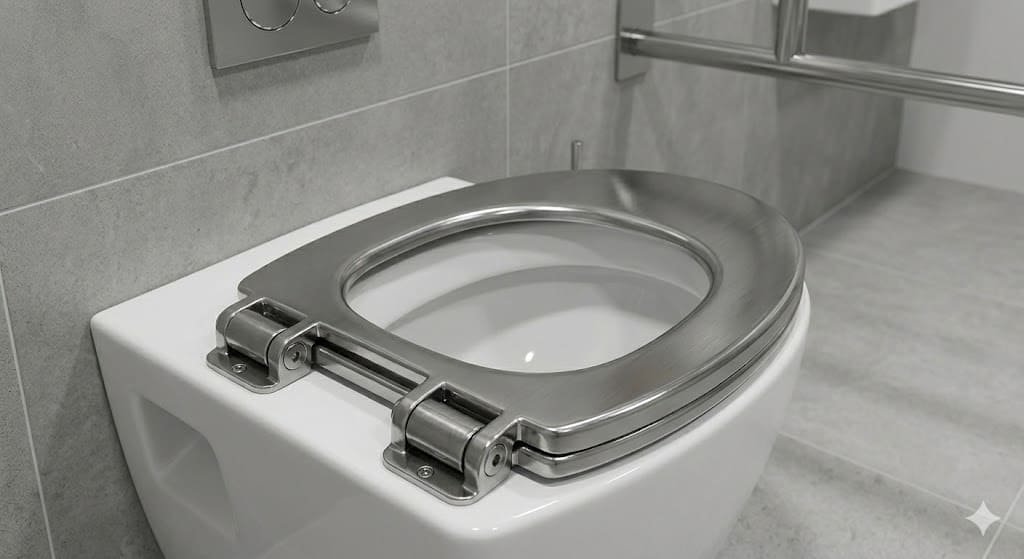
A stainless steel toilet seat is a strong and durable alternative in the plastic vs stainless steel toilet seat comparison. It is designed for long-term use, offering higher strength and resistance compared to plastic seats. These seats are commonly used in commercial places, public washrooms, and homes where durability is a priority.
Materials Used in Stainless Steel Toilet Seats
Stainless steel toilet seats are primarily made from high-grade stainless steel, often combined with a metal core or reinforced hinges for extra strength.
- Stainless steel (304 or similar grade): Known for strength and corrosion resistance
- Metal hinges and fittings: Provide stable and secure installation
- Sometimes combined with plastic or foam coating: To improve comfort
These materials make stainless steel seats a premium option in the plastic vs stainless steel toilet seat comparison.
Common Features of Stainless Steel Toilet Seats
Stainless steel toilet seats come with several strong performance features:
- Heavy-duty and solid construction
- High load-bearing capacity
- Rust-resistant surface
- Secure and stable fitting system
- Designed for long-term and heavy use
Because of these features, they are often chosen for high-traffic environments where reliability matters in the plastic vs stainless steel toilet seat debate.
Advantages of Stainless Steel Toilet Seats
Stainless steel toilet seats offer several important benefits:
Extremely durable
They are built to handle heavy usage without cracking or breaking easily.
Resistant to rust and corrosion
The stainless steel material resists moisture damage, making it suitable for humid bathroom environments.
Strong and long-lasting
These seats are designed for long-term performance, often lasting significantly longer than plastic alternatives.
Disadvantages of Stainless Steel Toilet Seats
Despite their strength, stainless steel seats also have some drawbacks in the plastic vs stainless steel toilet seat comparison:
Higher cost
They are generally more expensive than plastic toilet seats, which can be a limiting factor for some buyers.
Can feel cold or uncomfortable
Metal surfaces can feel cold, especially in winter or unheated bathrooms.
Limited design variety
Compared to plastic, stainless steel seats come in fewer colours and styles, focusing more on function than appearance.
Plastic vs Stainless Steel Toilet Seats: Key Differences
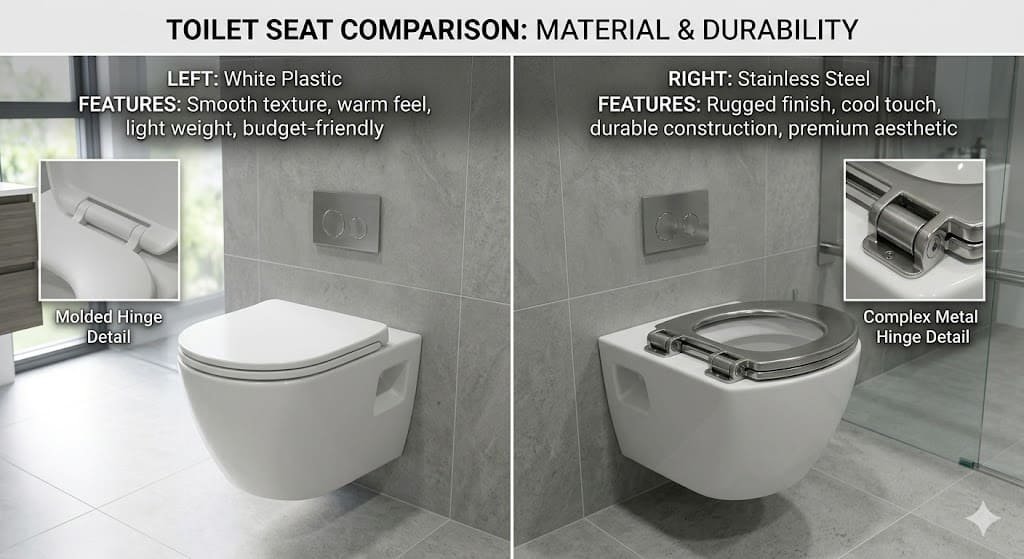
When comparing a plastic vs stainless steel toilet seat, it is important to understand how both materials perform in real-life use. Each option has its own strengths and weaknesses depending on durability, comfort, price, and design needs.
Durability Comparison
In terms of durability, stainless steel toilet seats are significantly stronger than plastic ones. Stainless steel is resistant to cracking, bending, and heavy pressure, making it ideal for long-term use.
Plastic toilet seats, on the other hand, are more likely to develop cracks or wear out over time, especially with frequent use or heavier loads. In the plastic vs stainless steel toilet seat comparison, stainless steel clearly leads in durability.
Comfort Comparison
Plastic toilet seats are generally more comfortable for everyday use because they feel warmer and smoother to sit on. They also do not feel as cold in winter.
Stainless steel seats can feel cold and less comfortable, especially in colder climates. This is one of the main drawbacks in the plastic vs stainless steel toilet seat discussion when comfort is a priority.
Price Comparison
Plastic toilet seats are much more affordable and widely available. They are a budget-friendly option for most households.
Stainless steel toilet seats are more expensive due to their strong material and long-lasting performance. In the plastic vs stainless steel toilet seat comparison, plastic wins when it comes to cost-effectiveness.
Maintenance and Cleaning
Both types are relatively easy to clean, but plastic seats may stain or discolour over time if not maintained properly.
Stainless steel toilet seats are highly resistant to stains, rust, and moisture, making them easier to maintain in the long run. This gives stainless steel an advantage in hygiene and long-term cleanliness in the plastic vs stainless steel toilet seat comparison.
Appearance and Design Options
Plastic toilet seats offer a wide range of colours, shapes, and designs, making them easier to match with bathroom interiors.
Stainless steel seats have a more limited design range and focus mainly on a simple, functional appearance. In the plastic vs stainless steel toilet seat comparison, plastic is better for style variety, while stainless steel is more minimal and practical.
Which One Should You Choose?
Choosing between the two options in the plastic vs stainless steel toilet seat comparison depends on your budget, usage needs, and personal preferences.
If you are looking for an affordable and comfortable option for everyday home use, a plastic toilet seat is usually the better choice. It is lightweight, easy to install, and comes in many designs, making it suitable for most residential bathrooms.
However, if your priority is strength, durability, and long-term performance, then a stainless steel toilet seat is a smarter investment. It performs well in high-traffic areas, lasts longer, and requires less replacement over time.
In short, in the plastic vs stainless steel toilet seat decision:
- Choose plastic for comfort, style, and lower cost
- Choose stainless steel for durability, strength, and heavy use.
The best option ultimately depends on whether you value affordability and comfort or long-term durability and strength.
Expert Buying Tips for Toilet Seats
Choosing between a plastic vs stainless steel toilet seat depends on your needs, budget, and bathroom usage. Here are some expert tips to help you make the right decision.
Start by thinking about the level of daily usage the toilet will receive. Stainless steel toilet seats are more suitable for busy environments such as public restrooms or frequently used bathrooms because they are highly durable and built to withstand heavy use. Plastic toilet seats, however, are often the better option for standard household bathrooms since they are affordable, practical, and suitable for everyday family use.
Next, check the quality of hinges and fittings. Strong hinges improve stability and prevent wobbling or early damage, especially in both plastic and stainless steel options.
Another important factor is comfort and climate. If you live in a colder region, plastic seats are generally more comfortable because they don’t feel as cold as metal. This is an important point in the plastic vs stainless steel toilet seat comparison.
Also, pay attention to weight capacity and durability ratings. Stainless steel seats usually support higher weight and handle rough use better, while plastic seats are better suited for lighter, everyday use.
Finally, think about maintenance and hygiene. If easy cleaning and long-term stain resistance are your priority, stainless steel performs better. However, plastic is easier to replace if it gets damaged or discoloured.
By keeping these factors in mind, you can choose the right option in the plastic vs stainless steel toilet seat comparison based on your specific needs.
FAQs
Is a stainless steel toilet seat better than plastic?
It depends on your needs. In the plastic vs stainless steel toilet seat comparison, stainless steel is better for durability and long-term use, while plastic is better for affordability and comfort.
Do plastic toilet seats break easily?
Plastic toilet seats are generally durable for normal home use, but they can crack or break over time if exposed to heavy weight or rough handling. This is one of the key considerations in the plastic vs stainless steel toilet seat comparison.
Are stainless steel toilet seats comfortable?
Stainless steel toilet seats are strong but can feel cold and less comfortable, especially in colder weather. Comfort is usually higher with plastic seats in the plastic vs stainless steel toilet seat comparison.
Which toilet seat lasts longer?
Stainless steel toilet seats usually last much longer due to their high strength and resistance to damage. Plastic seats have a shorter lifespan but are easier and cheaper to replace in the plastic vs stainless steel toilet seat comparison.
Conclusion
Choosing between a plastic vs stainless steel toilet seat ultimately depends on your priorities and where the toilet seat will be used. Both options have clear strengths, but they serve slightly different needs.
Plastic toilet seats are a popular option for households due to their low cost, comfortable feel, and wide range of styles. They are especially suitable for homeowners looking for an economical toilet seat that is simple to install and convenient for daily use.
On the other hand, stainless steel toilet seats stand out for their durability, strength, and long-lasting performance. They are better suited for high-traffic bathrooms or situations where heavy use is expected, even though they come at a higher cost and may feel less comfortable.
In the end, the best choice in the plastic vs stainless steel toilet seat comparison depends on whether you value comfort and price or strength and long-term durability.
If you want a complete guide on Toilet Seat Materials Explained and how to choose the right one for your bathroom, check out our latest detailed post for expert insights and easy buying tips.