Introduction
If your bathroom has started making annoying sounds every time you sit down, you’re not alone. A common household issue many people face is a noisy toilet seat. The good news is that learning how to fix a squeaky toilet seat is usually simple and doesn’t require professional help or expensive tools. In most cases, the squeaking comes from loose hinges, dry joints, or worn-out washers that can be fixed in just a few minutes. In this guide, you’ll learn easy and practical steps to stop the noise and keep your toilet seat working smoothly.
Table of Contents
Why Does a Toilet Seat Squeak?
A squeaky toilet seat is usually caused by friction, loose parts, or worn-out hardware. Over time, the constant opening, closing, and pressure placed on the seat can make the hinges and mounting parts noisy. Before learning how to fix a squeaky toilet seat, it helps to understand what is causing the sound in the first place.
Loose Toilet Seat Hinges
One of the most common causes of squeaking is loose hinges. When the bolts holding the toilet seat become loose, the seat shifts slightly every time someone sits down or lifts it. This movement creates rubbing and squeaking noises.
Worn-Out Rubber Washers
Rubber washers help reduce movement and friction between the toilet seat and the toilet bowl. As these washers wear out or crack, the seat may start making squeaky sounds during use.
Plastic Friction Between Parts
Many toilet seats are made from plastic materials that can rub against each other over time. Dry plastic hinges often create a squeaking sound when the seat is moved. This is especially common in older or low-quality toilet seats.
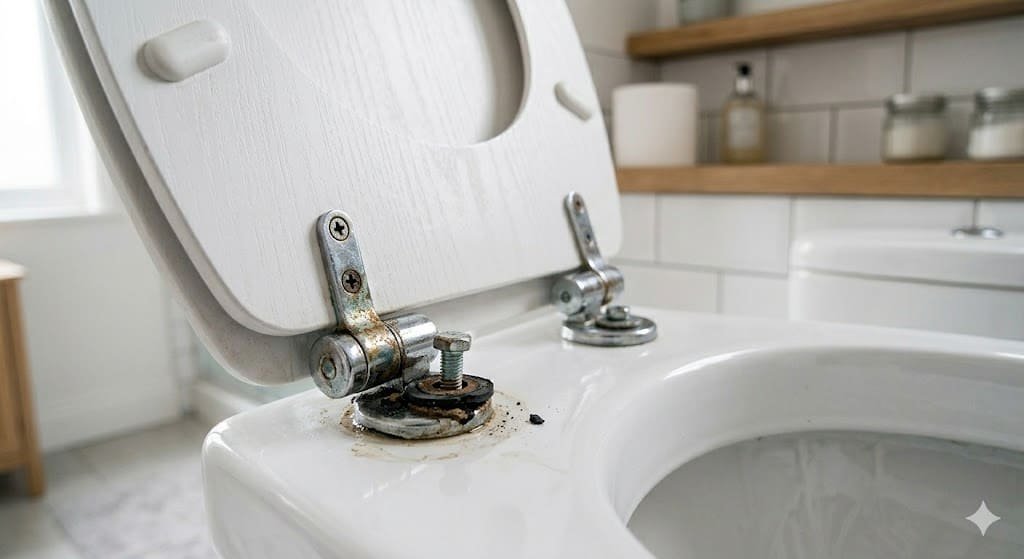
Rust or Dirt Around the Hinges
Dust, grime, moisture, and rust can build up around the hinge area. This buildup increases friction and may cause the toilet seat to squeak whenever it moves. Regular cleaning can often reduce or prevent this problem.
Understanding these common causes makes it easier to identify the problem and decide how to fix a squeaky toilet seat properly.
Tools and Materials You May Need
Before learning how to fix a squeaky toilet seat, it helps to gather a few basic tools and supplies. Most of these items are commonly found at home, and you may only need one or two depending on the cause of the squeak.
Screwdriver
A flathead or Phillips screwdriver is usually needed to tighten the toilet seat bolts. Loose hinges are one of the most common reasons a toilet seat starts squeaking.
Adjustable wrench
Some toilet seat nuts are located underneath the bowl and may require an adjustable wrench to hold them in place while tightening the bolts.
Silicone Spray or Lubricant
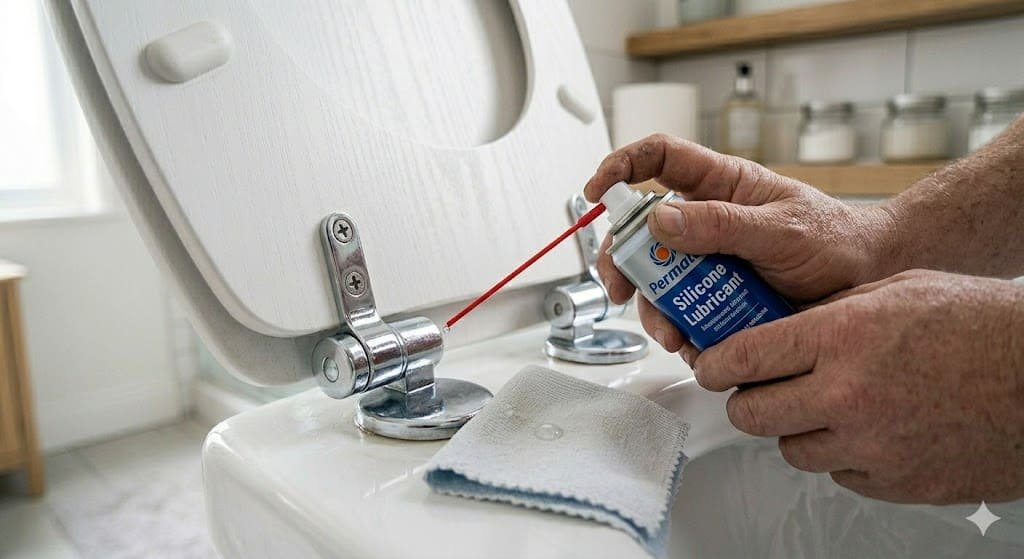
A small amount of silicone-based lubricant can reduce friction between moving hinge parts and stop the squeaking sound. Avoid heavy grease that can attract dirt over time.
Replacement Washers
Worn or damaged rubber washers can create movement and noise. Replacing them can improve stability and help keep the seat quiet.
Cleaning Cloth or Paper Towels
Cleaning the hinges before making repairs removes dust, dirt, and moisture build-up that may contribute to squeaking.
Mild Bathroom Cleaner
A gentle cleaner helps remove grime around the hinges and mounting area without damaging plastic or metal parts.
Having these tools ready will make the process of how to fix a squeaky toilet seat faster, easier, and more effective.
How to Fix a Squeaky Toilet Seat Step by Step
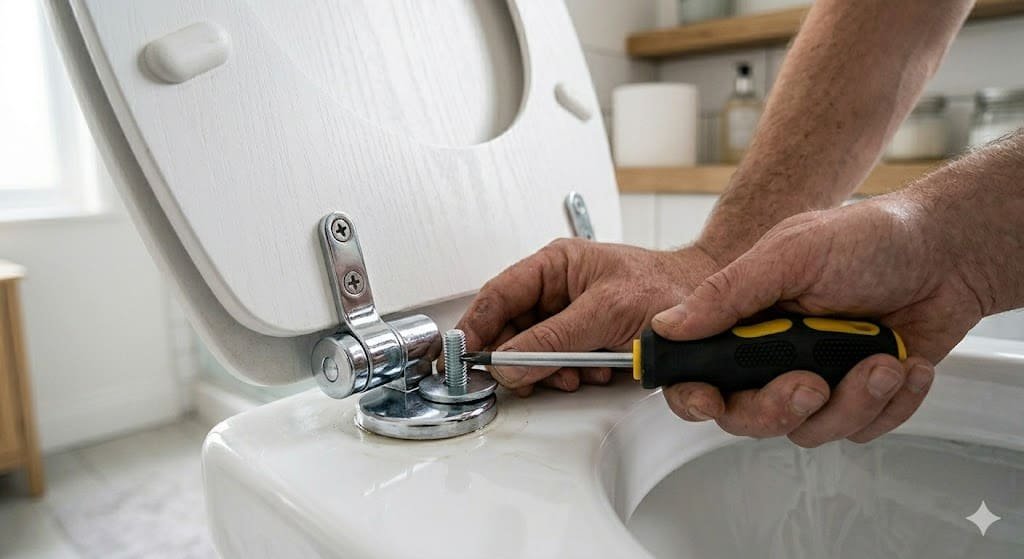
If you want to learn how to fix a squeaky toilet seat, the good news is that it usually takes only a few simple tools and a few minutes. Most squeaks come from loose fittings, dry hinges, or worn-out washers. Follow these steps in order to solve the problem effectively.
Step 1 – Inspect the toilet seat hinges.
Start by checking where the squeaking is coming from. Open and close the seat slowly and listen closely. Look at the hinges and mounting points to see if anything is loose, cracked, or moving more than it should.
Step 2 – Tighten the mounting bolts.
Use a screwdriver or wrench to gently tighten the bolts under the seat. This is one of the most common fixes when learning how to fix a squeaky toilet seat. Be careful not to over-tighten, as this can crack plastic parts or make the seat uneven.
Step 3 – Clean the Hinges and Surrounding Area.
Dirt, dust, and grime can increase friction and cause noise. Wipe the hinges, bolts, and contact areas with a damp cloth and mild cleaner. Make sure everything is dry before moving to the next step.
Step 4 – Apply Lubricant to Moving Parts
Apply a small amount of silicone spray or a plastic-safe lubricant to the hinges and moving joints. This reduces friction and often stops the squeaking immediately. Avoid using heavy oils that can damage plastic or attract dirt.
Step 5 – Replace Worn-Out Washers or Hinges
If the squeaking continues, the rubber washers or hinges may be worn out. Install brand-new replacement parts for any components that are worn out or broken. This step is important if you are seriously trying to master how to fix a squeaky toilet seat for long-term results.
Step 6 – Test the toilet seat.
Finally, open and close the seat several times to check if the noise is gone. If it still squeaks, recheck the bolts and lubrication to ensure everything is properly adjusted.
By following these steps carefully, you can usually eliminate the squeak quickly and restore smooth, silent operation.
How to Stop a Toilet Seat from Squeaking Again
Once you’ve learned how to fix a squeaky toilet seat, the next step is making sure the problem doesn’t come back. Regular maintenance and a few simple habits can keep your toilet seat quiet and stable for a long time.
Start by keeping the hinges clean. Dust, soap residue, and moisture can build up over time and create friction that leads to squeaking. Wipe the hinge area every week with a damp cloth to prevent dirt from settling.
You should also check the bolts and fittings regularly. Even if the seat feels fine, small movements from daily use can slowly loosen the hardware. Tighten the bolts every few months, but avoid over-tightening, as this can damage the plastic parts and actually make the squeaking worse.
These easy maintenance habits can help stop your toilet seat from squeaking:
- Clean around the hinges regularly to remove dirt and grime
- Tighten loose bolts every 2–3 months to maintain stability
- Avoid slamming the toilet seat down, as impact can loosen fittings.
- Use silicone-based lubricant occasionally on moving parts
- Replace cheap or worn-out plastic washers before they fail
If you apply these steps consistently, you won’t just fix the issue—you’ll prevent it from returning. Proper care ensures your toilet seat stays quiet, stable, and long-lasting.
Common Mistakes to Avoid When Fixing a Squeaky Toilet Seat
When learning how to fix a squeaky toilet seat, many people rush into repairs and end up making the problem worse instead of solving it. Avoiding a few common mistakes can save you time and prevent unnecessary damage.
One of the biggest mistakes is over-tightening the bolts. While it may seem like tightening everything firmly will stop the noise, doing so can actually crack the plastic hinges or strip the screws, making the squeak even worse.
Another common error is using the wrong type of lubricant. Some people use heavy oils that are not suitable for plastic parts. This can attract dust and dirt, which leads to more friction and can increase the squeaking over time. A silicone-based spray is usually a safer option.
Many people also forget to clean the hinge area before fixing it. Dirt, grime, and buildup are often the real cause of the squeaking. If you skip cleaning, even proper tightening and lubrication may not fully solve the issue.
Ignoring worn-out parts is another mistake. If the washers or hinges are already damaged, no amount of tightening will fix the noise. In this case, replacing the faulty parts is necessary for a long-term solution.
Lastly, some people test the seat only once after fixing it. It’s important to open and close the seat several times and even apply slight pressure to ensure the squeak is fully gone.
By avoiding these mistakes, you can make the process of how to fix a squeaky toilet seat much easier and ensure a longer-lasting, noise-free result.
When Should You Replace the Toilet Seat?
While learning how to fix a squeaky toilet seat can solve most minor issues, there are situations where repair is no longer the best option. In some cases, replacing the toilet seat is faster, safer, and more cost-effective than repeatedly trying to fix the problem.
You should consider replacing your toilet seat if:
- There are visible cracks or breaks in the seat or lid.
Small cracks can grow over time and make the seat unsafe to use. - The hinges are damaged or corroded.
If the hinges are rusted, bent, or no longer hold the seat properly, tightening or lubricating won’t fix the issue. - The squeaking keeps coming back even after tightening and lubrication.
Persistent noise usually means internal parts are worn out beyond repair. - The seat feels unstable or shifts side to side.
This indicates worn fittings that can’t be securely fixed anymore. - The toilet seat is old and heavily worn.
Over time, plastic weakens and becomes more prone to noise and damage.
In these cases, replacing the seat is often a better long-term solution than repeatedly trying different fixes. A new toilet seat not only eliminates squeaking but also improves comfort, hygiene, and overall bathroom appearance.
FAQs
Why is my toilet seat squeaking when I sit down?
A squeaky toilet seat usually happens due to loose hinges, worn rubber washers, or friction between plastic and metal parts. If you’re learning how to fix a squeaky toilet seat, this is often the first issue to check.
Can I fix a squeaky toilet seat without replacing it?
Yes, in most cases you can. Tightening the bolts, cleaning the hinges, and adding a small amount of lubricant are enough to stop the noise without replacing the seat.
What is the fastest way to fix a squeaky toilet seat?
The quickest method for how to fix a squeaky toilet seat is to tighten the mounting bolts under the seat. If the squeak continues, apply a silicone-based lubricant to the hinge area.
Can I use WD-40 on a squeaky toilet seat?
Yes, but it is not always the best option. WD-40 can temporarily reduce squeaking, but silicone spray is better for long-term results because it is safer for plastic parts.
How do I know if I need to replace my toilet seat instead of repairing it?
If the seat has cracks, broken hinges, or still squeaks after tightening and lubricating, replacement is the better option. In such cases, learning how to fix a squeaky toilet seat may not be enough.
How often should I maintain my toilet seat to prevent squeaking?
Light maintenance every 2–3 months is enough. Tighten loose bolts and clean the hinge area regularly to avoid future squeaking issues.
Can a squeaky toilet seat lead to bigger bathroom problems?
No, it is usually a minor issue. However, ignoring it can lead to loose fittings over time, which may cause instability or further damage.
Conclusion
Fixing a noisy toilet seat is usually quick, simple, and inexpensive once you understand the basics of how to fix a squeaky toilet seat. In most cases, the problem comes down to loose bolts, dirty hinges, or worn-out washers—all of which can be handled with basic household tools.
By tightening the fittings, cleaning the hinge area, and using a suitable lubricant, you can remove the squeak in just a few minutes. Regular maintenance will also help prevent the noise from coming back and keep your toilet seat stable and comfortable to use.
If the squeaking continues even after all repairs, it may be a sign that the seat is old or damaged and needs replacement. Otherwise, a few simple adjustments are usually enough to restore quiet, smooth operation.
If you want a complete guide on Common Toilet Seat Problems and Their Solution and how to choose the right one for your bathroom, check out our latest detailed post for expert insights and easy buying tips.