
Introduction
The Ultimate Guide to Toilet Seats is designed to help you understand everything you need to know before choosing the right toilet seat for your bathroom. While it may seem like a small detail, the right toilet seat can greatly improve comfort, hygiene, and daily usability.
In this guide, you’ll learn about different types of toilet seats, materials, sizes, features, and how to choose the best one for your needs. Whether you are upgrading an old seat or buying a new one, this Ultimate Guide to Toilet Seats will make the decision simple and clear.
Table of Contents
What Is a Toilet Seat?
A toilet seat is a removable or fixed hinged cover that is placed on top of a toilet bowl. Its main purpose is to provide a comfortable and hygienic surface for users while sitting. It also helps improve cleanliness in the bathroom by covering the toilet bowl when it is not in use.

A typical toilet seat is commonly crafted from materials such as plastic, wood, or durable thermoset resin, and is built to sit firmly on a variety of toilet bowl shapes and sizes. Most modern designs also include a lid, which is the upper cover that can be closed for hygiene and appearance.
In simple terms, the Ultimate Guide to Toilet Seats starts with understanding that a toilet seat is not just a basic bathroom accessory—it plays an important role in comfort, hygiene, and overall bathroom experience.
Toilet seats are attached to the toilet bowl using hinges, which allow them to be lifted or closed easily. These hinges can vary in quality, with some offering features like soft-close mechanisms or quick-release systems for easier cleaning.
Different homes and bathrooms use different types of toilet seats depending on design, comfort needs, and budget. While it may seem like a small detail, choosing the right toilet seat can significantly improve daily bathroom use.
Understanding this basic definition is the first step in making an informed decision when exploring the Ultimate Guide to Toilet Seats and selecting the best option for your needs.
Types of Toilet Seats Explained
Understanding the different types of toilet seats is an important part of the Ultimate Guide to Toilet Seats, because each type offers different levels of comfort, hygiene, and functionality. Choosing the right one depends on your bathroom needs, budget, and personal preference.

Standard Toilet Seats
Standard toilet seats are the type most frequently used in residential bathrooms. They are simple in design, affordable, and straightforward to install. These seats usually come with a basic hinge system and may or may not include a lid.
Soft-Close Toilet Seats
Soft-close toilet seats are designed to close slowly and quietly without slamming. This feature helps reduce noise, prevents damage, and increases safety—especially in homes with children. They are a popular upgrade in modern bathrooms.
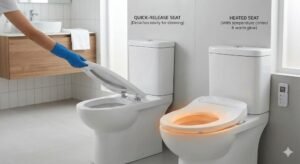
Quick-Release Toilet Seats
Quick-release toilet seats are made for easy cleaning. They can be removed from the hinges with a simple mechanism, allowing you to clean hard-to-reach areas more effectively. This makes them a hygienic choice for many households.
Heated Toilet Seats
Heated toilet seats provide warmth for extra comfort, especially in colder climates. They are usually powered electrically and are often found in premium bathroom setups. These seats add a touch of luxury to everyday use.
Smart / Bidet Toilet Seats
Smart/Bidet Toilet Seats toilet seats come with advanced features such as built-in bidet functions, water temperature control, air drying, and even remote controls. They are designed for maximum hygiene and comfort, making them one of the most advanced options in the Ultimate Guide to Toilet Seats.
Heavy-Duty Toilet Seats
Heavy-duty toilet seats are built for strength and durability. They are commonly used in public places or homes where extra support is needed. These seats are made from reinforced materials to handle higher weight and frequent use.
Each type of toilet seat serves a different purpose, and understanding these options helps you make a better decision when following the Ultimate Guide to Toilet Seats for your bathroom upgrade.
If you want a complete guide on types of toilet seats see our latest post.
Toilet seat materials: which one is best?
Choosing the right material is a key part of the Ultimate Guide to Toilet Seats because the material directly affects comfort, durability, hygiene, and maintenance. Different materials offer different advantages, so the “best” one depends on how and where you plan to use it.
Plastic Toilet Seats
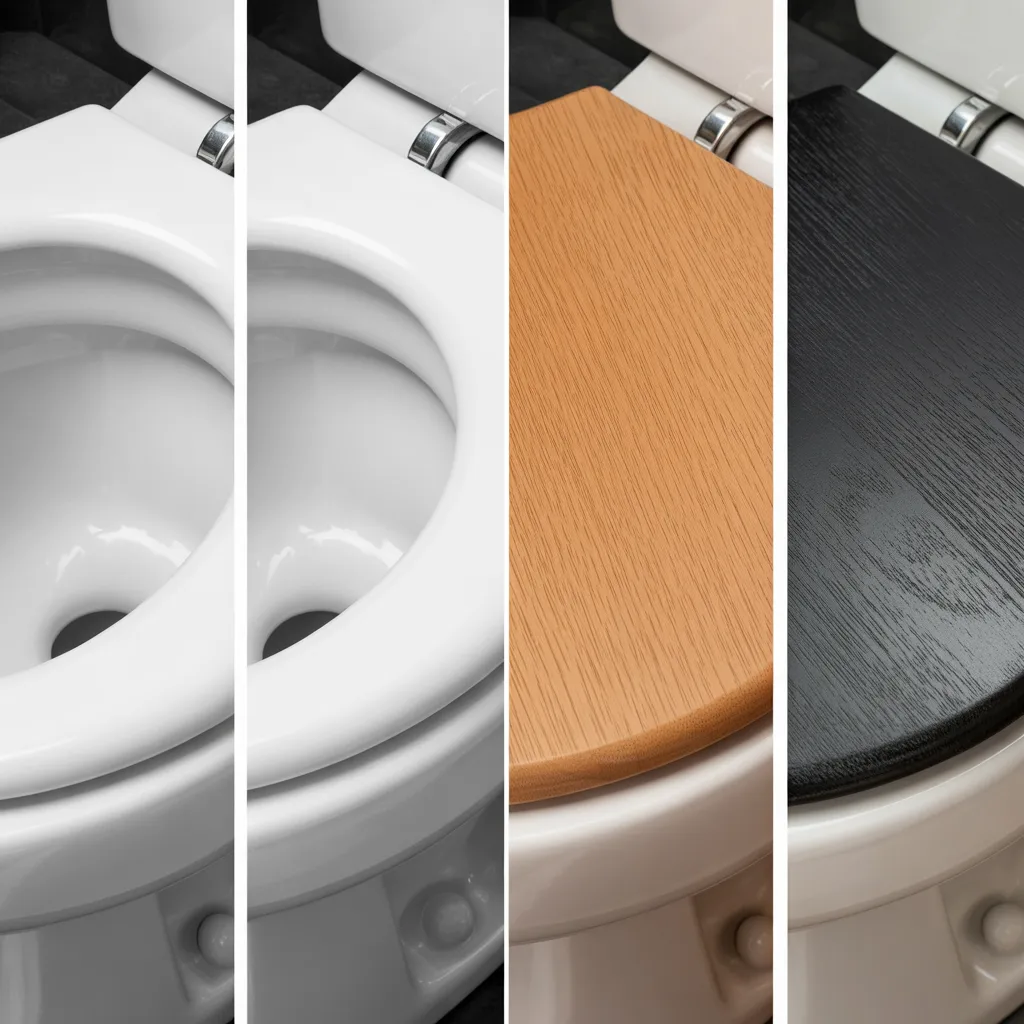
Plastic is the most common material used in toilet seats. It is lightweight, affordable, and simple to clean. Plastic seats are also resistant to moisture, which makes them suitable for most bathrooms. However, lower-quality plastic can scratch or discolour over time.
Wood Toilet Seats
Wood toilet seats offer a more traditional and premium look. They feel solid and comfortable when sitting. They are usually coated with a protective layer to resist moisture, but they require more care compared to plastic, as prolonged exposure to water can cause damage.
Thermoset Toilet Seats
Thermoset seats are made from a hard, durable resin material that is highly resistant to scratches and stains. They are more rigid and long-lasting than standard plastic seats, making them a popular choice in modern homes. They also maintain their colour better over time.
Thermoplastic Toilet Seats
Thermoplastic seats are flexible and lightweight. They are easy to manufacture and generally more affordable. While they are durable enough for regular home use, they are slightly less rigid than thermoset options.
Stainless Steel Hinges (Important Feature)
Although not the seat material itself, hinges play an important role in durability. Stainless steel hinges resist rust and corrosion, making the toilet seat more stable and long-lasting. Premium-grade hinges can greatly increase how long a seat lasts.
In the Ultimate Guide to Toilet Seats, there is no single “best” material for everyone. If you want affordability, plastic is a solid choice. For durability, thermoset is often the best option. For style, wood works well. The right choice depends on balancing budget, comfort, and long-term use.
If you want a complete guide on toilet seat materials and how to choose the right one for your bathroom, check out our latest detailed post for expert insights and easy buying tips.
Toilet Seat Shapes & Sizes Guide
Choosing the correct shape and size is a key part of the Ultimate Guide to Toilet Seats, because even the best toilet seat will not work properly if it doesn’t fit your toilet bowl. A proper fit ensures comfort, stability, and hygiene.
Round Toilet Seats
Round toilet seats are shorter and more compact in shape. They are commonly found in older bathrooms or smaller spaces. Because they take up less room, they are a good option for tight bathrooms where space is limited. However, they may offer slightly less seating comfort compared to elongated designs.
Elongated Toilet Seats
Elongated toilet seats have a stretched design and feature a more oval, extended shape compared to standard models. They are widely used in modern bathrooms because they provide better comfort and a more ergonomic sitting position. These seats are especially popular in newer homes and are often recommended in the Ultimate Guide to Toilet Seats for everyday comfort.
How to Measure Your Toilet Seat Correctly
Before buying a replacement seat, accurate measurement is essential. To get the correct size:

- Measure from the centre of the mounting holes at the back of the toilet
- Extend the measurement to the front edge of the toilet bowl
- Also, take a width measurement at the bowl’s broadest section.
These measurements help you determine whether you need a round or elongated seat and ensure a perfect fit. Even a small measurement mistake can result in an unstable or uncomfortable seat.
If you want complete guide on How to Measure Your Toilet Seat Correctly see our post.
Understanding toilet seat shapes and sizes is a simple but important step in the Ultimate Guide to Toilet Seats, helping you avoid fitting issues and choose a seat that matches both your toilet and comfort needs.
If you want a complete guide on toilet shapes see our latest post
A Complete Buying Guide: How to Select the Right Toilet Seat for Your Bathroom
Choosing the right option is a key part of the Ultimate Guide to Toilet Seats, because the best toilet seat is not just about looks—it directly affects comfort, hygiene, durability, and daily convenience.
Check the Correct Size and Shape
Before buying a toilet seat, you must confirm whether your toilet is round or elongated. A wrong fit will cause instability and discomfort. Always measure your bowl length and width to ensure a perfect match.
Focus on Comfort
Comfort matters more than most people realise. A well-designed toilet seat should feel stable, smooth, and properly balanced. If multiple people use the bathroom, choosing an ergonomic design becomes even more important.
Choose the Right Material
Materials affect both durability and hygiene. Plastic seats are lightweight and affordable, while wood offers a more solid feel. Thermoset materials are more durable and resistant to scratches and stains, making them a strong long-term choice in the Ultimate Guide to Toilet Seats.
Look for Essential Features
Modern toilet seats come with helpful features such as soft-close lids, quick-release buttons, and anti-bacterial coatings. These features improve hygiene and make cleaning much easier.
Consider Durability and Build Quality
A good toilet seat should last for years without cracking, loosening, or discolouring. Always check hinge quality and overall construction before buying, as these are common weak points.
Match Your Budget
Toilet seats come in different price ranges. Basic models are affordable, while premium smart seats offer advanced features. The best choice is the one that balances quality and price according to your needs.
Ensure Easy Maintenance
A good toilet seat should be easy to clean and maintain. Quick-release models are especially useful because they allow you to clean hidden areas easily and keep your bathroom more hygienic.
By considering these factors, you can confidently choose the right product using this Ultimate Guide to Toilet Seats, ensuring better comfort, hygiene, and long-term value for your bathroom.
IF you want a complete guide on How to Select the Right Toilet Seat see our latest post
Toilet Seat Features You Should Look For
When choosing the right option from the Ultimate Guide to Toilet Seats, it’s not just about the type or material—features play a major role in comfort, hygiene, and long-term usability. The right features can make your daily bathroom experience much easier and more convenient.
Soft-Close Mechanism
A soft-close feature prevents the toilet seat from slamming shut. It closes slowly and quietly, reducing noise and preventing damage to the seat and toilet bowl. This is particularly helpful in households with families.
Quick-Release System
A quick-release toilet seat allows you to remove the seat easily from its hinges. This makes deep cleaning faster and helps you clean hidden areas where dirt and bacteria can build up.
Anti-Bacterial Coating
Some modern toilet seats come with an anti-bacterial surface that helps reduce the growth of germs. This feature improves hygiene and keeps the bathroom cleaner for longer periods.
Easy-Clean Design
An easy-clean design includes smooth surfaces and minimal gaps between the seat and hinges. This reduces dirt buildup and makes regular cleaning simple and more effective.
Strong and Durable Hinges
High-quality hinges ensure the toilet seat stays stable and secure over time. Stainless steel or reinforced plastic hinges are commonly used for better durability and resistance to rust.
Non-Slip Stability
A good toilet seat should stay firmly in place without shifting during use. Non-slip bumpers or secure mounting systems help improve safety and comfort.
Choosing the right features is an essential part of the Ultimate Guide to Toilet Seats, as they directly impact hygiene, durability, and everyday convenience. A well-equipped toilet seat can significantly improve your overall bathroom experience.
See our complete guide on toilet seat features for comfort, hygiene and style.
Step-by-Step Installation Guide for Fitting a Toilet Seat
Installing a toilet seat is a simple DIY task that most people can complete in a few minutes without professional help. In the Ultimate Guide to Toilet Seats, understanding the installation process is important because the correct fitting ensures comfort, safety, and long-term durability.

Step 1: Remove the Old Toilet Seat
Start by lifting the old seat and locating the bolts at the back of the toilet bowl. They’re typically concealed beneath small plastic covers.
Unscrew the nuts underneath and remove the old seat completely.
Step 2: Clean the toilet surface.
Before installing the new seat, clean the area around the bolt holes. This removes dirt and bacteria and ensures a secure fit for the new installation.
Step 3: Position the New Toilet Seat
Place the new toilet seat on the bowl, aligning the hinges with the mounting holes. Make sure it is centred properly so it sits evenly on both sides.
Step 4: Secure the Bolts
Insert the bolts through the hinge holes and tighten the nuts underneath the toilet bowl. Be careful not to over-tighten, as this can damage the seat or the ceramic surface.
Step 5: Check Stability and Alignment
Once installed, gently test the seat by lifting and sitting it down. Ensure it is stable, does not wobble, and closes properly.
Step 6: Attach Any Covers or Caps
If your toilet seat includes decorative or protective caps for the bolts, snap them into place for a clean finish.
Proper installation is a key part of the Ultimate Guide to Toilet Seats, as even a high-quality seat will not perform well if it is not fitted correctly. Taking a few extra minutes during installation ensures long-lasting comfort and hygiene in your bathroom.
How to Clean and Maintain Toilet Seats Properly
Proper cleaning and maintenance are essential to keep your bathroom hygienic and extend the life of your toilet seat. In the Ultimate Guide to Toilet Seats, understanding how to care for your seat correctly is just as important as choosing the right one.

Daily Cleaning Routine
For everyday hygiene, wipe the toilet seat with a mild bathroom cleaner or disinfectant wipes. This helps remove germs, dust, and light stains. Always clean both the top and underside of the seat, as bacteria can build up in hidden areas.
Deep Cleaning Method
Once a week, perform a deeper clean. Remove the toilet seat if it has a quick-release feature, and wash it with warm water and a gentle soap or bathroom-safe cleaner. Use a soft sponge to avoid scratching the surface. Rinse thoroughly and dry before reattaching.
Safe Cleaning Products
Avoid harsh chemicals like strong bleach or abrasive cleaners, especially on plastic or wooden seats. These can damage the surface and reduce the lifespan of your toilet seat. Instead, use mild disinfectants that are safe for bathroom surfaces.
Preventing Stains and Yellowing
To prevent discolouration, clean spills and stains immediately. Regular cleaning prevents buildup of hard water marks and yellowing, especially on lighter-coloured seats. Keeping the bathroom well-ventilated also helps reduce moisture damage.
Maintenance Tips for Longevity
Check the hinges regularly to ensure they are tight and stable. Loose fittings can cause wobbling or cracking over time. If your seat has a soft-close mechanism, avoid forcing it down, as this can damage the internal system.
By following these simple steps, you can keep your toilet seat clean, hygienic, and long-lasting. Maintenance is a key part of the Ultimate Guide to Toilet Seats, helping you protect both comfort and cleanliness in your bathroom.
See our new post for complete guide.
Common Toilet Seat Problems & Fixes
Even a good-quality toilet seat can develop issues over time. In the Ultimate Guide to Toilet Seats, it’s important to understand the most common problems and how to fix them quickly. Most of these issues are simple and do not require replacing the entire seat.
Loose Toilet Seat
A loose toilet seat is one of the most common problems. It usually happens when the bolts under the hinges become loose over time.
Fix: Tighten the bolts using a screwdriver or wrench. If they keep loosening, consider replacing them with locking nuts or rubber washers for a stronger hold.
Wobbling or Unstable Seat
If the seat moves side to side when you sit, it may not be properly aligned or the hinges may be worn out.
Fix: Ensure the seat is properly aligned, then evenly secure both hinge bolts. If the hinges are damaged, replacing them is the best solution.
Cracked or Broken Seat
Cracks usually occur due to heavy pressure or low-quality material. Once a seat is cracked, it cannot be repaired safely.
Fix: Replace the toilet seat completely. For better durability, choose strong materials like thermoset resin or reinforced plastic, as recommended in the Ultimate Guide to Toilet Seats.
See our complete guide on Common Toilet Seat Problems & Fixes.
Stuck or Rusty Hinges
Hinges can become stiff or rusty due to moisture in the bathroom. This makes it difficult to open or close the seat smoothly.
Fix: Apply a small amount of lubricant to the hinges. If rust is severe, replacing the hinges or the entire seat is a better option.
Slamming Seat Noise
If your toilet seat slams shut loudly, it probably means it isn’t equipped with a soft-close mechanism.
Fix: Upgrade to a soft-close toilet seat, which prevents noise and improves safety—especially useful for families.
By understanding these common issues and their solutions, you can extend the life of your toilet seat and maintain better hygiene. This practical knowledge is a key part of the Ultimate Guide to Toilet Seats, helping you keep your bathroom comfortable and problem-free.
Toilet Seat Buying Mistakes to Avoid
When following the Ultimate Guide to Toilet Seats, it’s just as important to know what not to do as it is to know what to choose. Many people end up with uncomfortable, low-quality, or incompatible toilet seats simply because they overlook a few key details. These are the typical errors you’ll want to steer clear of:
1. Buying the Wrong Size
One of the biggest mistakes is not measuring the toilet bowl before buying. Toilet seats usually come in round or elongated shapes, and choosing the wrong one will result in poor fit, discomfort, and instability.
2. Ignoring Material Quality
Not all toilet seats are made the same. Choosing very cheap plastic or low-quality wood can lead to cracking, discolouration, and a short lifespan. In the Ultimate Guide to Toilet Seats, material quality is a key factor in long-term durability.
3. Overlooking Hinge Quality
Many buyers focus only on appearance and ignore the hinges. Weak hinges can loosen over time, causing wobbling or breakage. Strong stainless-steel or reinforced hinges provide better stability and longer life.
4. Not Considering Comfort Features
Skipping features like soft-close lids or ergonomic design can affect daily comfort. Small upgrades can make a big difference in noise reduction and user experience.
5. Choosing Style Over Function
While design matters, prioritising looks over practicality often leads to regret. A stylish seat that is uncomfortable or hard to clean is not a good long-term choice.
6. Forgetting Ease of Cleaning
Some toilet seats are difficult to clean due to fixed hinges or complex designs. In the Ultimate Guide to Toilet Seats, hygiene is a top priority, so always choose models that allow easy maintenance or quick removal.
7. Not Checking Compatibility
Different toilets have different mounting systems. If you don’t check compatibility before buying, you may end up with a seat that doesn’t install properly.
Avoiding these common mistakes will help you choose a toilet seat that is comfortable, durable, and easy to maintain. A careful decision ensures you get the best value while following the Ultimate Guide to Toilet Seats.
Best Toilet Seat Types for Different Bathrooms
Choosing the right option becomes easier when you match the toilet seat type to the bathroom it will be used in. In the Ultimate Guide to Toilet Seats, this step is important because different spaces have different needs in terms of comfort, durability, and usage frequency.
Family Bathroom
For a family bathroom, durability and safety matter most. Soft-close toilet seats are a great choice because they prevent slamming and reduce noise. Quick-release seats are also useful since they make cleaning easier in a high-usage environment.
Guest Bathroom
In a guest bathroom, appearance and comfort are more important than advanced features. A clean, simple standard toilet seat or a soft-close seat works best. It gives a neat look and is easy for any guest to use.
Master Bathroom
For a master bathroom, comfort and luxury features are often preferred. This is where heated toilet seats or smart/bidet toilet seats fit best. They add extra comfort and a modern feel, which enhances the overall bathroom experience.
Small Apartment Bathroom
In smaller spaces, practicality is key. A standard toilet seat or a slim soft-close seat is ideal because it saves space and keeps things simple. Easy installation and maintenance are also important in compact bathrooms.
Public or High-Usage Bathroom
For shared or public spaces, strength and durability are essential. Heavy-duty toilet seats are the best option here, as they are designed to handle frequent use and resist wear and tear.
Matching the right seat to the right space ensures better performance, longer lifespan, and improved hygiene. This practical approach is a key part of the Ultimate Guide to Toilet Seats, helping you make a smarter and more confident choice.
Toilet Seat Price Guide (What You Should Expect)
When buying a toilet seat, price is one of the most important factors to consider. In the Ultimate Guide to Toilet Seats, it’s important to understand that prices can vary widely based on material, features, and build quality.
Budget Toilet Seats ($10 – $30)
These are the most basic options and usually made from standard plastic. They are lightweight, simple, and easy to install. Budget toilet seats are ideal for temporary use, rental properties, or low-traffic bathrooms. However, they may not last as long and can feel less sturdy over time.
Mid-Range Toilet Seats ($30 – $80)
This price bracket tends to be the top choice among most homeowners. These seats often include better materials and useful features like soft-close lids or quick-release systems for easy cleaning. According to market data, this range offers the best balance between comfort, durability, and price in the Ultimate Guide to Toilet Seats.
Premium Toilet Seats ($80 – $200)
Premium models offer higher-quality materials such as moulded wood, reinforced plastic, or advanced thermoset resin. Many also include enhanced comfort features like anti-bacterial coatings and stronger hinges. These seats are designed for long-term use and better aesthetics.
Smart and Luxury Toilet Seats ($200 – $600+)
At the top end, you’ll find smart toilet seats with advanced features such as heated seating, built-in bidet functions, air drying, and remote controls. These are often used in luxury bathrooms and modern smart homes. Prices can go even higher depending on brand and technology.
In general, basic toilet seats start around $10, while feature-rich or smart models can exceed $400–$600 depending on the technology included.
Final Takeaway
For most users following the Ultimate Guide to Toilet Seats, the best value usually lies in the mid-range category ($30–$80), where you get a good mix of durability, comfort, and practical features without overspending.
See our complete guide on Toilet Seat Price Guide for selecting a best toilet seat for yourself.
FAQs
How long does a toilet seat last?
A toilet seat usually lasts between 3 and 7 years, depending on the material and usage. High-quality seats made from durable materials like thermoset or wood tend to last longer than basic plastic ones. Regular cleaning and proper handling also extend their lifespan.
What is the most durable toilet seat material?
Thermoset resin and solid wood are generally considered the most durable materials. Thermoset is resistant to scratches, stains, and cracks, making it a strong choice in the Ultimate Guide to Toilet Seats for long-term use.
Are soft-close toilet seats worth it?
Yes, soft-close toilet seats are worth it for most households. They prevent loud slamming, reduce wear and tear, and improve safety. They are especially useful in homes with children or shared bathrooms.
Can I replace a toilet seat myself?
Yes, replacing a toilet seat is a simple DIY task. Most modern toilet seats come with basic tools or quick-install systems. In most cases, you only need a screwdriver and a few minutes to complete the installation.
What size toilet seat should I buy?
Toilet seats come in two main sizes: round and elongated. You should measure your toilet bowl before buying. Choosing the correct size is an important step in the Ultimate Guide to Toilet Seats to ensure proper fit and comfort.
How do I clean a toilet seat properly?
Use mild soap or a non-abrasive cleaner with warm water. Avoid harsh chemicals that can damage the surface. Regular cleaning helps maintain hygiene and extends the life of your toilet seat.
Final Thoughts – Which Toilet Seat Should You Choose?
Choosing the right option from the many available types can feel confusing, but it becomes much easier when you focus on your specific needs. In this Ultimate Guide to Toilet Seats, the main goal is to help you match the right toilet seat with your comfort, budget, and bathroom setup.
If you want a simple and budget-friendly option, a standard toilet seat is usually enough for everyday use. For better comfort and noise control, a soft-close toilet seat is a smart upgrade that prevents slamming and improves durability.
If hygiene and easy maintenance are your priority, a quick-release toilet seat is a practical choice because it makes cleaning much easier. On the other hand, if you are looking for comfort and luxury, a heated toilet seat or a smart bidet toilet seat can significantly improve your bathroom experience with advanced features.
For high-traffic areas or stronger durability needs, a heavy-duty toilet seat is the most reliable option.
In the end, the best choice depends on how you use your bathroom and what features matter most to you. The Ultimate Guide to Toilet Seats is not about picking the most expensive option—it is about selecting the one that fits your lifestyle, comfort level, and hygiene expectations.
A well-chosen toilet seat may seem like a small detail, but it can make a noticeable difference in daily comfort and bathroom quality.
Conclusion
A toilet seat may look like a simple bathroom item, but as this Ultimate Guide to Toilet Seats shows, it plays an important role in comfort, hygiene, and overall bathroom experience. From basic standard designs to advanced smart seats, each option offers different benefits depending on your needs.
The key is not to choose randomly, but to consider factors like material, shape, features, and durability. When you understand these basics, it becomes much easier to pick a toilet seat that fits your bathroom perfectly and lasts longer.
Whether you are upgrading your current seat or buying one for a new bathroom, using this Ultimate Guide to Toilet Seats will help you make a practical and informed decision. A good choice today can improve your daily comfort for years to come.