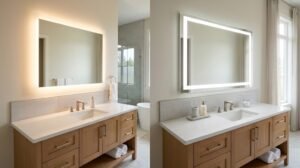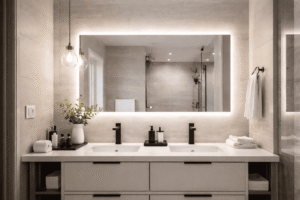

Introduction
Choosing the right mirror can make a big difference in how your bathroom looks and functions. In this Ultimate Guide to Bathroom Mirrors, you’ll learn how to choose the right mirror based on its size, shape, style, lighting, materials, features, and installation requirements.
Whether you are updating a small bathroom, designing a modern vanity area, or choosing a mirror for a large double vanity, this guide will help you understand the different options and make a more confident buying decision.
Table of Contents
What Is a Bathroom Mirror?
A bathroom mirror is a mirror designed for use in a bathroom, typically installed above a sink or vanity. While it serves the practical purpose of helping with daily tasks such as grooming, shaving, applying makeup, and brushing teeth, it can also play an important role in the overall look and functionality of the space.
Bathroom mirrors come in many different sizes, shapes, styles, and designs. Common options include framed and frameless mirrors, round and rectangular mirrors, LED mirrors, medicine cabinet mirrors, and mirrors with features such as built-in lighting or anti-fog technology.
Unlike a regular decorative mirror, a bathroom mirror should be suitable for a humid environment. Features such as moisture-resistant backing, durable frames, and quality glass can help improve its performance and lifespan.
When choosing a bathroom mirror, it is important to consider the size of your vanity, the available wall space, your bathroom style, lighting needs, and the features you want. In this Ultimate Guide to Bathroom Mirrors, we’ll explore these factors to help you understand the different options and choose a mirror that suits your bathroom.
Why Choosing the Right Bathroom Mirror Matters
A bathroom mirror is more than just a practical accessory. The right mirror can improve your daily routine, make the space feel brighter and larger, and enhance the overall appearance of your bathroom. Size, shape, placement, lighting, and features can all affect how well a mirror works in your space.
Improves Daily Functionality
One of the main purposes of a bathroom mirror is to make everyday tasks easier. A properly sized and positioned mirror provides a clear view for grooming, shaving, applying makeup, styling hair, and other daily routines.
Depending on your needs, you may also benefit from features such as built-in lighting, magnification, anti-fog technology, or storage. Choosing the right option can make your bathroom more convenient and comfortable to use.
Makes a Small Bathroom Look Larger
Mirrors can create the illusion of more space by reflecting light and surrounding areas. This makes them especially useful in small or narrow bathrooms.
A larger mirror, particularly one placed above the vanity, can make the room feel more open and less confined. Frameless and full-width mirrors can also create a cleaner, more spacious appearance.
Enhances Natural and Artificial Light
A well-placed bathroom mirror can help distribute light throughout the room. It can reflect natural light from a window or amplify artificial light from vanity fixtures and other sources.
This can make the bathroom feel brighter while also improving visibility around the sink and vanity. Mirrors with built-in LED lighting can provide additional illumination for detailed tasks such as shaving or applying makeup.
Complements Your Bathroom Style
The right mirror can also become an important design element. Its shape, frame, size, and finish can help tie together your vanity, fixtures, lighting, and overall décor.
For example, a sleek frameless mirror may suit a modern bathroom, while a wood-framed mirror can complement a farmhouse or traditional design. A round or arched mirror can add softness, while a rectangular mirror often creates a clean and structured look.
As you’ll learn throughout this Ultimate Guide to Bathroom Mirrors, choosing the right mirror involves balancing functionality with style. The best option should fit your space, meet your daily needs, and complement the overall design of your bathroom.
Types of Bathroom Mirrors

Bathroom mirrors are available in a wide range of designs, sizes, and features. Some are simple and decorative, while others include lighting, storage, magnification, or smart technology. Understanding the different types can make it easier to choose a mirror that fits your bathroom, vanity, and daily needs.
In this Ultimate Guide to Bathroom Mirrors, here are the most common types of bathroom mirrors to consider.
Framed Bathroom Mirrors
Framed bathroom mirrors have a border made from materials such as wood, metal, aluminum, plastic, or engineered materials. The frame can add color, texture, and character to the bathroom while helping the mirror match the overall décor.
They are available in many styles, from simple modern designs to rustic, traditional, and decorative options. A framed mirror can also work as a statement piece above the vanity.
Best for: Bathrooms where style and decorative detail are important.
Frameless Bathroom Mirrors
Frameless bathroom mirrors have no visible outer frame, creating a clean and simple appearance. They are popular in modern, minimalist, and contemporary bathrooms.
Because there is no bulky frame, a frameless mirror can make a small bathroom feel more open. These mirrors are also available in many shapes, including rectangular, round, oval, and custom designs.
Best for: Small, modern, and minimalist bathrooms.
LED Bathroom Mirrors
LED bathroom mirrors include built-in LED lights around the edges, behind the mirror, or on the front surface. They provide additional lighting around the vanity and can improve visibility for tasks such as shaving, applying makeup, and grooming.
Many models include useful features such as touch controls, dimmable lighting, adjustable color temperature, and anti-fog functions.
Best for: Bathrooms that need additional task lighting and modern functionality.
Backlit Bathroom Mirrors
Backlit mirrors have lights installed behind the mirror. The light reflects onto the wall around the edges, creating a soft and attractive glow.
This type of lighting is often used to create ambiance and add a modern or luxurious appearance to the bathroom. However, backlighting may not always provide enough direct light for detailed grooming tasks on its own.
Best for: Modern bathrooms where ambient lighting and appearance are important.
Lighted Bathroom Mirrors
A lighted bathroom mirror is a broad category that includes mirrors with built-in lighting. Unlike backlit mirrors, the lights may be positioned on the front or integrated around the edges to provide more direct illumination.
These mirrors can reduce the need for separate vanity lighting, depending on the design and brightness. They are particularly useful in bathrooms with limited natural light.
Best for: Bathrooms where better visibility and integrated lighting are priorities.
Medicine Cabinet Mirrors
A medicine cabinet mirror combines a reflective surface with hidden storage. The mirror is usually attached to a cabinet that can store toiletries, medications, grooming products, and other small bathroom essentials.
Medicine cabinet mirrors are especially useful in smaller bathrooms where storage space is limited. They can be surface-mounted or recessed into the wall for a more streamlined appearance.
Best for: Small bathrooms or anyone who needs extra storage.
Vanity Mirrors
A vanity mirror is designed to be installed above a bathroom sink or vanity. It is usually sized to complement the width and height of the vanity below it.
Vanity mirrors can be framed, frameless, lighted, round, rectangular, or available in many other designs. The main goal is to provide a practical reflection while creating a balanced appearance above the sink.
Best for: Almost any bathroom, especially when choosing a mirror based on vanity size and layout.
Pivot Bathroom Mirrors
Pivot bathroom mirrors are mounted on brackets that allow the mirror to tilt forward or backward. This makes it possible to adjust the viewing angle based on the user’s height or personal preference.
In addition to being practical, pivot mirrors can add a distinctive design element. They are available in both traditional and modern styles, often with metal brackets and frames.
Best for: Bathrooms shared by people of different heights or those looking for an adjustable mirror.
Smart Bathroom Mirrors
Smart bathroom mirrors include technology that provides additional features beyond a standard reflection. Depending on the model, these features may include touch controls, built-in lighting, anti-fog systems, Bluetooth connectivity, clocks, temperature displays, and other digital functions.
Smart mirrors can offer convenience and a modern appearance, but they are usually more expensive than standard mirrors and may require electrical installation.
Best for: Tech-focused and modern bathrooms where convenience and advanced features are important.
Magnifying Bathroom Mirrors
Magnifying bathroom mirrors provide a closer and more detailed view. They are commonly used for tasks such as applying makeup, shaving, skincare, and other precision grooming.
Some are wall-mounted, while others are attached to an adjustable arm. Many magnifying mirrors also include built-in lighting and may have one side with a standard reflection and another with magnification.
Best for: Detailed grooming, makeup application, and close-up tasks.
Choosing between these different options depends on your available space, bathroom style, lighting needs, storage requirements, and budget. As this Ultimate Guide to Bathroom Mirrors continues, you’ll learn how to compare mirror sizes, shapes, features, and styles to find the best option for your bathroom.
If you want a complete guide on bathroom mirror types, See our latest post on Bathroom mirror types explained.
Bathroom Mirror Shapes
The shape of a bathroom mirror can have a big impact on both functionality and appearance. While rectangular mirrors are the most common choice, round, oval, arched, and asymmetrical designs can create a completely different look.
When choosing a mirror shape, consider the size of your vanity, available wall space, and overall bathroom style. In this Ultimate Guide to Bathroom Mirrors, here are the most popular bathroom mirror shapes and where they work best.
Rectangular Bathroom Mirrors
Rectangular bathroom mirrors are one of the most popular and versatile options. Their straight lines create a clean and balanced appearance, making them suitable for many bathroom styles.
They work particularly well above rectangular vanities and can be installed vertically or horizontally. A horizontal rectangular mirror can make a vanity area appear wider, while a vertical mirror may help create the impression of additional height.
Rectangular mirrors are available in framed, frameless, LED, and medicine cabinet designs.
Best for: Most bathroom styles, especially modern, traditional, and minimalist spaces.
Round Bathroom Mirrors
Round bathroom mirrors have a softer appearance than rectangular mirrors. Their curved shape can help balance the straight lines commonly found in vanities, cabinets, tiles, and countertops.
They are a popular choice for modern and contemporary bathrooms and can also work well in small spaces. However, because of their shape, a round mirror may provide less reflective surface area than a rectangular mirror of similar overall dimensions.
A round mirror can work especially well above a single-sink vanity or as a pair above a double vanity.
Best for: Modern, contemporary, minimalist, and smaller bathrooms.
Oval Bathroom Mirrors
Oval bathroom mirrors offer a balance between the structure of a rectangular mirror and the softness of a round one. Their elongated shape can make them a practical choice when you want more vertical or horizontal reflective space.
A vertically mounted oval mirror can create the appearance of higher ceilings, while a horizontal oval mirror can provide a wider view. Oval mirrors are often used in traditional, transitional, and elegant bathroom designs.
Best for: Traditional, transitional, and elegant bathroom styles.
Arched Bathroom Mirrors
Arched bathroom mirrors combine straight sides with a curved top. This creates a distinctive appearance while maintaining a practical amount of reflective surface.
They are available in simple frameless designs as well as decorative framed styles. Arched mirrors can add height and visual interest to the vanity area and are often used as a focal point in the bathroom.
They work particularly well in modern, transitional, farmhouse, and classic bathroom designs.
Best for: Bathrooms where you want a stylish focal point without sacrificing functionality.
Irregular and Asymmetrical Mirrors
Irregular and asymmetrical mirrors have unconventional shapes that do not follow a traditional rectangular, round, or oval design. These may include organic, wavy, curved, or geometric forms.
They can add personality and create a strong visual statement, especially in modern and artistic bathrooms. However, because their shapes are less traditional, it is important to consider their size and placement carefully to ensure they remain practical for everyday use.
These mirrors are often chosen primarily for their decorative appeal and work best when the surrounding bathroom design supports their unique shape.
Best for: Modern, contemporary, artistic, and statement-focused bathroom designs.
The best bathroom mirror shape depends on the look you want to achieve and how the mirror will be used. Rectangular mirrors offer versatility and maximum reflective space, while round and oval designs create a softer appearance. Arched and asymmetrical mirrors can add more personality and visual interest. As you continue through this Ultimate Guide to Bathroom Mirrors, size and placement will help you narrow down which shape works best for your specific bathroom.
How to Choose the Right Bathroom Mirror Size
Choosing the right bathroom mirror size is important for both functionality and appearance. A mirror that is too small may look out of proportion above the vanity, while one that is too large can overwhelm the wall or surrounding fixtures.
The best size depends mainly on your vanity width, number of sinks, available wall space, and the overall layout of your bathroom. In this Ultimate Guide to Bathroom Mirrors, use the following guidelines to help you choose a mirror that looks balanced and provides enough reflective space for everyday use.
Bathroom Mirror Size Chart
A common guideline is to choose a mirror that is slightly narrower than the vanity below it. This usually creates a balanced and visually appealing layout.
| Vanity Type or Size | Recommended Mirror Width | Best Approach |
|---|---|---|
| Small vanity | Slightly narrower than the vanity | Keep the design simple to avoid overcrowding |
| Single-sink vanity | Usually narrower than the vanity | Center one mirror above the sink |
| Double-sink vanity | One large mirror or two separate mirrors | Align mirrors with the sink layout |
| Large vanity | Larger mirror or multiple mirrors | Maintain balanced spacing and proportions |
Mirror Width Compared With Vanity Width
For most bathrooms, the mirror should not extend significantly beyond the edges of the vanity. Choosing a mirror that is somewhat narrower than the vanity often creates a cleaner and more balanced appearance.
However, this is a design guideline rather than a strict rule. A full-width mirror or oversized mirror may work well in certain modern bathrooms, especially when the wall layout and lighting support the design.
Single-Sink Vanity Mirror Sizing
For a single-sink vanity, one mirror is usually centered above the sink. The mirror should provide enough width and height for comfortable daily use without appearing too small or too large for the vanity.
Consider the vanity width, faucet position, lighting fixtures, and available wall space when choosing the final size.
Double-Sink Vanity Mirror Sizing
Double vanities generally work with two main options: one large mirror spanning much of the vanity or two separate mirrors, with each one centered above a sink.
Two individual mirrors can create a symmetrical appearance, while one large mirror can make the space feel more open. The best choice often depends on the bathroom style and the amount of wall space available.
Small Bathroom Mirror Sizes
In a small bathroom, it is important to avoid choosing a mirror that makes the vanity area feel crowded. A mirror that is properly proportioned to the vanity can help maintain visual balance.
At the same time, a larger mirror can reflect more light and create the impression of additional space. Frameless mirrors are often useful in smaller bathrooms because they provide reflective surfaces without adding visual bulk.
Large Bathroom Mirror Sizes
Large bathrooms and wide vanities can accommodate oversized mirrors, double mirrors, or full-width designs. A mirror that is too small may look lost on a large wall, so it is important to consider the scale of the entire vanity area.
For a large double vanity, two matching mirrors can create balance, while a single wide mirror can provide a more seamless and open appearance.
Should a Bathroom Mirror Be Wider Than the Vanity?
In most cases, a bathroom mirror should be the same width as or slightly narrower than the vanity. This usually creates a balanced look and helps define the vanity area.
A mirror that is significantly wider than the vanity can sometimes look out of proportion. However, there are exceptions. For example, a wall-to-wall or full-width mirror may work well in a modern bathroom or above a long double vanity.
Instead of following one strict rule, consider the overall wall space, lighting, vanity size, and surrounding design elements. The goal is to create a layout that looks intentional and provides enough reflective space.
How Tall Should a Bathroom Mirror Be?
The ideal height of a bathroom mirror depends on the available wall space and the height of the people using it. The mirror should be tall enough to provide a comfortable view of the face and upper body during daily tasks.
A taller mirror can also make a bathroom feel more spacious by drawing the eye upward. However, you should leave enough room for lighting fixtures, cabinets, or other elements above and around the mirror.
When choosing mirror height, consider:
- The height of the vanity and backsplash
- The ceiling height
- The location of vanity lighting
- The height of the people using the bathroom
- The overall proportions of the wall
How High Should You Hang a Bathroom Mirror?
A bathroom mirror is usually positioned above the vanity and centered with the sink or vanity area. The exact installation height depends on the mirror size, backsplash, faucet, lighting, and the height of the users.
Before installing the mirror, hold it or mark its position on the wall to see how it fits within the available space. Make sure it provides a comfortable viewing height while maintaining balanced spacing between the vanity, mirror, and any lighting fixtures.
If multiple people with different heights will use the bathroom, positioning the mirror to accommodate the widest range of users can improve everyday functionality.
Choosing the right size and placement can make a major difference in how your bathroom looks and functions. As you continue through this Ultimate Guide to Bathroom Mirrors, you can use these basic sizing principles alongside your preferred mirror shape, style, and features to find the best fit for your space.
Bathroom Mirror Size Guide by Vanity Width

Choosing the right mirror width is one of the most important steps when designing a bathroom vanity area. As a general rule, a bathroom mirror is usually the same width as or slightly narrower than the vanity. This helps create a balanced appearance while leaving some visual space on both sides.
The following chart provides general sizing ranges to help you choose a suitable mirror. In this Ultimate Guide to Bathroom Mirrors, remember that these measurements are guidelines rather than strict rules. Wall space, lighting, mirror shape, and personal preference can all affect the best size for your bathroom.
| Vanity Width | Recommended Mirror Width |
|---|---|
| 24 inches | 18–22 inches |
| 30 inches | 22–28 inches |
| 36 inches | 28–34 inches |
| 48 inches | 36–46 inches |
| 60 inches | 48–58 inches |
| 72 inches | 60–70 inches |
For a 24-inch vanity, a mirror around 18 to 22 inches wide usually creates a balanced look without overwhelming the space.
A 30-inch vanity generally works well with a mirror between 22 and 28 inches wide. This leaves a small amount of space between the mirror and the vanity edges.
For a 36-inch vanity, a mirror around 28 to 34 inches wide is often a suitable choice. This size provides enough reflective surface while maintaining good proportions.
With a 48-inch vanity, you have more flexibility. A mirror between 36 and 46 inches wide can work well, depending on the available wall space and the overall bathroom design.
For a 60-inch vanity, a wider mirror in the 48- to 58-inch range can create a balanced appearance. If the vanity has two sinks, you may also choose two separate mirrors instead of one large mirror.
A 72-inch vanity can accommodate a large mirror between 60 and 70 inches wide, or two individual mirrors positioned above each sink. The best option depends on whether you prefer a seamless look or a more symmetrical design.
A Few Important Things to Consider
When using a bathroom mirror size chart, do not rely on vanity width alone. Also consider:
- Sink placement: The mirror should align well with the sink or sinks below.
- Lighting: Leave enough space for wall sconces or other vanity lighting.
- Mirror shape: Round, oval, and arched mirrors may need different sizing considerations than rectangular mirrors.
- Wall space: Make sure the mirror does not make the wall feel crowded.
- Bathroom style: Oversized mirrors may suit modern bathrooms, while smaller framed mirrors can work well in traditional spaces.
Ultimately, the goal is to choose a mirror that looks proportional to the vanity and provides enough reflective space for everyday use. As explained throughout this Ultimate Guide to Bathroom Mirrors, the right size should balance practicality, available space, and overall bathroom design.
Bathroom Mirror Styles
Bathroom mirrors come in many different styles, and the right choice can help bring the entire bathroom design together. The mirror’s shape, frame, finish, and features can all influence its overall appearance.
When choosing a style, consider your vanity, faucets, lighting, wall finishes, and the general look you want to achieve. In this Ultimate Guide to Bathroom Mirrors, here are some of the most popular bathroom mirror styles.
Modern Bathroom Mirrors
Modern bathroom mirrors typically feature clean lines, simple shapes, and contemporary finishes. Frameless mirrors, thin metal frames, round mirrors, and LED designs are common choices.
Colors and finishes are usually kept simple, with options such as black, chrome, brushed nickel, or other neutral tones. Modern mirrors often focus on both appearance and functionality, making them a good choice for updated and contemporary bathrooms.
Best for: Contemporary bathrooms with clean lines and simple finishes.
Traditional Bathroom Mirrors
Traditional bathroom mirrors often have more decorative details than modern designs. They may feature wider frames, detailed edges, ornamental patterns, or classic finishes.
Common frame materials include wood and metal, while finishes may include bronze, gold, antique-inspired tones, or painted surfaces. Rectangular and oval shapes are popular choices for traditional bathrooms.
Best for: Classic and elegant bathrooms with detailed vanities and fixtures.
Farmhouse Bathroom Mirrors
Farmhouse bathroom mirrors are designed to create a warm, comfortable, and rustic appearance. Wood frames, distressed finishes, natural textures, and simple decorative details are common features.
Popular choices include rectangular mirrors with thick wooden frames, arched mirrors, and designs with black metal accents. A farmhouse mirror can work especially well with wood vanities, neutral colors, and vintage-inspired fixtures.
Best for: Rustic, country, and modern farmhouse bathrooms.
Industrial Bathroom Mirrors
Industrial bathroom mirrors often combine simple designs with raw-looking materials. Black or dark metal frames, exposed hardware, and grid-style designs are commonly associated with this style.
Rectangular mirrors are particularly popular, although round and arched designs with metal frames can also work well. Industrial mirrors often pair nicely with concrete, brick, dark fixtures, and wood elements.
Best for: Urban, loft-style, and modern industrial bathrooms.
Minimalist Bathroom Mirrors
Minimalist bathroom mirrors focus on simplicity and functionality. They usually have clean shapes, little or no decoration, and a neutral appearance.
Frameless mirrors are a popular choice, but thin-frame rectangular, round, or oval mirrors can also fit a minimalist design. The goal is to avoid unnecessary visual clutter and create a clean, open feel.
Minimalist mirrors can be especially useful in small bathrooms because their simple design helps the space feel less crowded.
Best for: Small, modern, and clutter-free bathrooms.
Luxury Bathroom Mirrors
Luxury bathroom mirrors are designed to create a high-end appearance while often including premium features. These may include integrated LED lighting, anti-fog technology, touch controls, dimmable lights, and adjustable color temperatures.
Luxury designs may also feature large or custom sizes, high-quality frames, unique shapes, and premium finishes such as brushed metal or decorative gold tones. Smart technology and high-quality materials can further enhance the overall experience.
Best for: High-end bathrooms, modern renovations, and homeowners looking for premium features.
The best style depends on the overall design of your bathroom and the look you want to create. A modern or minimalist mirror may suit a clean contemporary space, while farmhouse, traditional, or industrial designs can add more character. As you continue through this Ultimate Guide to Bathroom Mirrors, consider combining the right style with the correct size, shape, and features to create a mirror that is both practical and visually appealing.
If you want a complete guide on bathroom mirror styles, See our latest post on bathroom mirror styles.
Framed vs Frameless Bathroom Mirrors
Choosing between framed and frameless bathroom mirrors often comes down to style, maintenance, budget, and the overall design of your bathroom. Both options can provide a clear reflection and work well above a vanity, but they create very different visual effects.
A framed mirror has a visible border around the glass, while a frameless mirror has exposed edges and a simpler appearance. Use the comparison below to understand the main differences before making your choice.
| Feature | Framed Bathroom Mirror | Frameless Bathroom Mirror |
|---|---|---|
| Appearance | Decorative and available in many styles | Clean, simple, and modern |
| Durability | Frame can add protection to the mirror edges | Edges are more exposed and require careful handling |
| Cleaning | Frame may require extra cleaning around its edges | Generally easy to wipe and clean |
| Cost | Wide price range depending on frame material | Often more affordable for basic designs |
| Installation | Can be heavier depending on the frame | Usually simpler for lightweight models |
| Best for | Traditional, farmhouse, luxury, and decorative bathrooms | Modern, minimalist, and small bathrooms |
Appearance
Framed bathroom mirrors add a defined border around the reflective surface. The frame can introduce color, texture, and contrast, making the mirror an important decorative feature.
Frameless mirrors have a cleaner and less noticeable appearance. Their simple design can make the vanity area feel more open and works particularly well with contemporary or minimalist bathroom décor.
Durability
The durability of either option depends heavily on the quality of the mirror, backing, frame, and mounting hardware.
A good-quality frame can help protect the edges of a mirror from accidental bumps. However, some frame materials may be affected by prolonged exposure to moisture if they are not designed for bathroom environments.
Frameless mirrors have exposed edges, so they need to be handled and installed carefully. A quality bathroom-rated mirror with properly finished edges can still provide excellent long-term performance.
Cleaning
Frameless mirrors are generally straightforward to clean because there are fewer edges and decorative surfaces where dust and moisture can collect. Simply use an appropriate glass-cleaning method and avoid excessive moisture around the mirror’s backing.
Framed mirrors may require additional cleaning around the frame. Depending on the material, the frame may need a separate cleaning method, particularly if it has wood, textured surfaces, or decorative details.
Cost
The cost of a framed or frameless bathroom mirror varies considerably depending on its size, glass quality, materials, features, and brand.
Basic frameless mirrors can be an economical option, while decorative or custom-framed mirrors can cost considerably more. However, premium frameless mirrors with LED lighting, anti-fog technology, or other features can also be expensive.
Rather than choosing based solely on price, consider the mirror’s construction, bathroom suitability, installation requirements, and features.
Installation
Both types can be installed using appropriate mounting hardware, but the installation method depends on the mirror’s size, weight, wall type, and design.
Some framed mirrors have mounting brackets or hanging hardware attached to the frame. Frameless mirrors may use clips, brackets, mounting plates, or adhesive systems designed specifically for mirrors.
Large or heavy mirrors should be installed with suitable hardware and, when necessary, professional assistance. Always follow the manufacturer’s installation instructions.
Best Bathrooms for Each
Framed bathroom mirrors are a good choice when you want the mirror to contribute strongly to the room’s décor. They work especially well in traditional, farmhouse, industrial, and luxury bathrooms where the frame can complement other finishes.
Frameless bathroom mirrors are ideal when you prefer a clean and understated appearance. They are particularly suitable for modern, minimalist, contemporary, and smaller bathrooms where a visually lighter design can help the space feel more open.
Which Should You Choose?
There is no single best option for every bathroom. Choose a framed mirror if you want decorative detail, a defined border, or a stronger design statement. Choose a frameless mirror if you prefer simplicity, easy visual integration, and a clean contemporary appearance.
As part of this Ultimate Guide to Bathroom Mirrors, consider your bathroom’s style, available space, maintenance needs, budget, and installation requirements before making the final decision.
If you’re deciding between a decorative frame and a clean, frameless design, the differences go beyond appearance. Our guide to framed vs frameless bathroom mirrors compares the two options by style, maintenance, durability, installation, and suitability for different bathroom spaces.
If you’re deciding between a decorative frame and a clean, frameless design, the differences go beyond appearance. Our guide to framed vs frameless bathroom mirrors compares the two options by style, maintenance, durability, installation, and suitability for different bathroom spaces.
LED vs Regular Bathroom Mirrors

When choosing a bathroom mirror, one important decision is whether you want a traditional mirror or one with built-in LED lighting. Regular mirrors provide a simple reflective surface, while LED bathroom mirrors combine the mirror with integrated lighting and, in some models, additional features such as dimming and anti-fog functions.
The better option depends on your bathroom’s lighting, budget, installation requirements, and how much functionality you want. The comparison below highlights the main differences.
| Feature | LED Bathroom Mirror | Regular Bathroom Mirror |
|---|---|---|
| Built-in lighting | Integrated LED lights | No built-in lighting |
| Energy efficiency | LEDs generally use relatively little electricity | No electricity required for the mirror itself |
| Visibility | Can improve visibility around the face and vanity | Depends on separate bathroom lighting |
| Installation | May require electrical connection | Usually simpler |
| Price | Usually more expensive | Generally more affordable |
| Maintenance | LEDs and electrical components may eventually need attention | Mainly requires routine glass cleaning |
| Long-term value | Useful if you want integrated lighting and added features | Good choice for simplicity and lower upfront cost |
Built-In Lighting
The main advantage of an LED bathroom mirror is its integrated lighting. LEDs may be positioned around the mirror’s edges, behind the glass, or in specific sections designed to illuminate the face.
This can provide useful lighting for shaving, applying makeup, grooming, and other detailed tasks. Some models also offer adjustable brightness or color temperature, allowing you to customize the lighting.
A regular mirror does not have built-in lighting, so it relies on ceiling lights, wall sconces, or separate vanity fixtures.
Energy Efficiency
LED lighting is generally energy-efficient compared with many older types of lighting. However, the actual energy consumption of an LED bathroom mirror depends on its wattage, size, brightness, and how long the lights are used.
A regular mirror does not consume electricity because the mirror itself has no lighting system. If you already have efficient bathroom lighting, a regular mirror may be sufficient without adding another electrical load.
Visibility
An LED mirror can improve visibility around the vanity by providing light closer to your face. This can be particularly useful in bathrooms with limited natural light or poorly positioned overhead lighting.
Regular mirrors can also provide excellent visibility when paired with well-positioned vanity lights. In fact, good external lighting may be preferable if you want more flexibility in controlling the direction and intensity of the light.
Installation
Regular bathroom mirrors are generally easier to install because they do not require an electrical connection. Depending on their size and weight, they may be mounted using clips, brackets, mounting hardware, or other suitable systems.
LED bathroom mirrors may require access to an electrical connection and additional installation steps. Hardwired models should be installed according to local electrical requirements, and professional installation may be appropriate when electrical work is involved.
Always follow the manufacturer’s installation instructions.
Price
Regular mirrors are usually available at a lower starting price because they have a simpler design and fewer components.
LED bathroom mirrors generally cost more because they combine the mirror with an integrated lighting system and may include additional features such as touch controls, dimming, anti-fog technology, or adjustable lighting.
When comparing prices, consider the total cost of the mirror and any installation or electrical work that may be required.
Maintenance
Both types of mirrors need regular cleaning to remove water spots, fingerprints, and bathroom residue.
A regular mirror has fewer components to maintain. With an LED mirror, you also need to consider the lighting system, switches, wiring, and other electronic components. Quality LED systems can provide long service, but electrical components may eventually require repair or replacement.
Avoid allowing excessive water or cleaning solution to enter electrical components, and follow the manufacturer’s care instructions.
Long-Term Value
The long-term value of an LED or regular mirror depends on your needs. An LED mirror can be worthwhile if you want integrated lighting, a cleaner vanity setup, and additional features without installing separate light fixtures.
A regular mirror may offer better value if you already have effective bathroom lighting and prefer a simple, inexpensive, and easy-to-maintain solution.
For this Ultimate Guide to Bathroom Mirrors, the key takeaway is simple: choose an LED mirror when integrated lighting and extra features are important to you; choose a regular mirror when simplicity, flexibility, and lower upfront cost matter more.
Backlit vs Front-Lit Bathroom Mirrors
Backlit and front-lit bathroom mirrors both use integrated lighting, but they direct light differently. Understanding how each system works can help you choose a mirror that provides the right combination of visibility, style, and functionality.
In this Ultimate Guide to Bathroom Mirrors, the main difference is simple: backlit mirrors produce light from behind the mirror, while front-lit mirrors direct light toward the user from the front or around the reflective surface.
| Feature | Backlit Bathroom Mirror | Front-Lit Bathroom Mirror |
|---|---|---|
| Light position | Behind the mirror | On or around the front of the mirror |
| Main purpose | Ambient and decorative lighting | Direct task lighting |
| Facial illumination | Usually softer | Usually stronger and more direct |
| Appearance | Creates a halo-like glow | Provides visible illumination around the face |
| Best for | Ambiance and modern design | Grooming, makeup, and shaving |
| Main advantage | Stylish, soft lighting | Better direct visibility |
| Main drawback | May not provide enough task lighting alone | Can look brighter and more prominent |
How Each Lighting System Works
Backlit bathroom mirrors have LED lights positioned behind the mirror. The light shines toward the wall and around the edges, creating a soft glow behind the glass.
This design gives the mirror a floating or halo effect and can add depth to the bathroom. However, the light is not always directed toward your face, so the mirror may need to be combined with other lighting for detailed grooming.
Front-lit bathroom mirrors position the light on the front-facing area of the mirror or around its edges so that more light reaches the user. This can provide clearer illumination for tasks performed directly in front of the mirror.
Some models combine front and back lighting to provide both task illumination and decorative ambient light.
Which Provides Better Illumination?
For detailed tasks such as shaving, applying makeup, or skincare, front-lit mirrors generally provide more direct illumination because the light is aimed toward the user.
Backlit mirrors can provide attractive ambient lighting, but their effectiveness for grooming depends on the design, brightness, and position of the LEDs.
If visibility is your top priority, look for a mirror with sufficient brightness and even light distribution. A bathroom with good additional vanity lighting may also work well with a backlit design.
Best Use Cases
Backlit bathroom mirrors are best for:
- Creating a soft and relaxing atmosphere
- Modern and contemporary bathrooms
- Decorative vanity lighting
- Bathrooms where ambient lighting is important
- Creating a floating or halo effect
Front-lit bathroom mirrors are best for:
- Makeup application
- Shaving and grooming
- Skincare routines
- Bathrooms with limited lighting
- Users who need clearer facial illumination
Advantages and Disadvantages
Backlit mirrors — advantages:
- Attractive modern appearance
- Soft and comfortable glow
- Creates visual depth
- Works well as accent lighting
- Can make the mirror appear to float against the wall
Backlit mirrors — disadvantages:
- May provide less direct facial illumination
- Often works best with additional bathroom lighting
- Light distribution varies between models
Front-lit mirrors — advantages:
- Better direct illumination for grooming
- Helps improve visibility around the face
- Useful in bathrooms with limited natural light
- Can reduce shadows when properly designed
Front-lit mirrors — disadvantages:
- May provide a stronger or more noticeable light
- Some designs can produce glare if poorly positioned
- The appearance may be less subtle than backlighting
Which Should You Choose?
Choose a backlit bathroom mirror if you prioritize ambiance, modern appearance, and soft decorative lighting. Choose a front-lit mirror if your main goal is clear visibility for makeup, shaving, and grooming.
If you want both benefits, consider a model that combines front and back lighting with adjustable brightness. As this Ultimate Guide to Bathroom Mirrors shows, the best choice depends on how you use your bathroom and the amount of lighting already available in the space.
For detailed guide, see our latest post to Backlit vs Front-Lit Bathroom Mirrors.
How to Choose a Bathroom Mirror for Your Vanity
The vanity is often the main focal point of a bathroom, so choosing a mirror that fits it properly is important for both function and appearance. The mirror should work with the vanity’s width, sink arrangement, wall space, lighting, and overall design.
There is no single mirror size or shape that works for every vanity. In this Ultimate Guide to Bathroom Mirrors, use the following guidelines to choose a mirror that suits your specific vanity setup.
Single-Sink Vanity
A single-sink vanity typically works well with one mirror centered directly above the sink. The mirror should be proportional to the vanity and leave enough space on the sides for a balanced appearance.
A rectangular mirror is a practical choice because it provides plenty of reflective surface, while round or oval mirrors can soften a vanity with straight lines.
For a more functional setup, consider an LED or lighted mirror if the vanity area does not have sufficient lighting.
Tip: Center the mirror with the sink rather than simply positioning it based on the edge of the vanity.
Double-Sink Vanity
A double-sink vanity gives you two main mirror options: one large mirror spanning both sinks or two separate mirrors positioned above each sink.
A single wide mirror can create a seamless, spacious appearance. Two individual mirrors can provide better symmetry and allow each sink to have its own dedicated reflection area.
When choosing two mirrors, make sure their sizes and spacing work with the position of the sinks, faucets, lighting fixtures, and available wall space.
Tip: If wall sconces are installed between or beside the mirrors, account for their width before selecting the mirror size.
Floating Vanity
A floating vanity is mounted to the wall rather than sitting directly on the floor. Its open space underneath creates a modern and visually lighter appearance.
Because floating vanities often have a minimalist design, frameless, round, rectangular, or LED bathroom mirrors can complement them particularly well. The mirror should maintain the clean proportions of the vanity without making the wall feel crowded.
Also consider the height of the floating vanity when determining where the mirror should be installed.
Tip: Keep the mirror and vanity visually aligned to maintain the clean appearance that makes floating vanities attractive.
Small Vanity
A small vanity requires careful consideration of both mirror size and surrounding space. A mirror that is too large can overwhelm the vanity, while one that is too small may not provide enough reflective surface.
A properly sized frameless or thin-framed mirror can help maintain an open appearance. Round and oval mirrors can also work well when you want to soften a compact vanity area.
An LED mirror can be particularly useful if wall space is limited because it combines reflection and lighting in one fixture.
Tip: Measure the vanity, wall space, and available lighting before choosing the mirror.
Large Vanity
Large vanities provide more flexibility when selecting a bathroom mirror. You can use one wide mirror, two individual mirrors, or even an oversized design if the wall has enough space.
For a large double vanity, two matching mirrors can create a balanced and symmetrical appearance. A single wide mirror can provide a more continuous look and may make the vanity area feel larger.
With a large vanity, pay attention to the relationship between the mirror, lighting fixtures, backsplash, cabinets, and ceiling height. The mirror should feel proportional to the entire wall rather than simply matching the vanity width.
Tip: For very wide vanities, consider the location of each sink and light fixture before deciding between one large mirror and two separate mirrors.
Final Vanity-Matching Tips
Before purchasing a mirror, measure the vanity width, sink position, wall height, available wall space, and lighting locations. Also consider whether the mirror’s shape and frame complement the vanity’s style.
The right combination of size, shape, and placement can make the vanity more functional while improving the overall appearance of the bathroom. As you continue through this Ultimate Guide to Bathroom Mirrors, use these guidelines alongside your preferred style and features to narrow down your best options.
Best Bathroom Mirror Features to Consider
Modern bathroom mirrors can offer much more than a basic reflective surface. Depending on your needs and budget, features such as anti-fog technology, built-in lighting, touch controls, and magnification can make the mirror more convenient to use.
However, not every feature is necessary for every bathroom. In this Ultimate Guide to Bathroom Mirrors, consider the following features before choosing a model.
Anti-Fog Function
An anti-fog function helps keep the mirror surface clearer when the bathroom becomes warm and humid, such as after a hot shower. Some mirrors use a built-in heating pad behind the glass to reduce condensation.
This feature can be particularly useful in bathrooms with poor ventilation or frequent humidity.
Best for: Busy bathrooms and spaces where mirrors frequently fog up.
Built-In LED Lighting
Built-in LED lighting provides illumination directly from the mirror. Depending on the design, LEDs may be positioned around the front edge, behind the mirror, or in specific areas of the glass.
Good lighting can improve visibility for shaving, makeup application, skincare, and other grooming tasks. Look for even light distribution rather than simply choosing the brightest option.
Best for: Bathrooms with limited lighting or users who want integrated vanity illumination.
Dimmable Lights
Dimmable lighting allows you to adjust the brightness of an LED bathroom mirror according to your needs. Brighter light can be useful for grooming, while lower brightness may be more comfortable during nighttime bathroom visits.
If you choose an illuminated mirror, dimming can provide more flexibility than a fixed-brightness system.
Best for: Users who want adjustable lighting for different times of day.
Adjustable Color Temperature
Some LED mirrors allow you to change the color temperature of the built-in lighting. Depending on the model, settings may range from warmer light to cooler, brighter light.
This can help you choose lighting that feels comfortable and suits different tasks. A neutral setting can be useful for everyday grooming, while warmer light may create a softer atmosphere.
Best for: Users who want more control over the appearance and feel of their bathroom lighting.
Touch Controls
Touch controls allow you to operate functions such as lighting, brightness, or anti-fog heating with a simple touch on the mirror.
They provide a clean appearance because you do not need a separate traditional switch on the mirror itself. However, electronic controls may require more care around moisture and should be used according to the manufacturer’s instructions.
Best for: Modern bathrooms where convenience and a clean design are priorities.
Motion Sensors
Motion sensors can automatically activate certain mirror functions when someone approaches. Depending on the model, the sensor may control lighting or other features.
This can be convenient when your hands are wet or occupied. However, sensor performance can vary, and some users may prefer a manual switch for greater control.
Best for: Hands-free convenience and modern bathroom setups.
Bluetooth and Smart Features
Some smart bathroom mirrors include Bluetooth connectivity, allowing compatible devices to connect to built-in speakers. Other models may offer features such as clocks, temperature displays, USB charging, or app-based controls.
These features can add convenience, but they are not essential for everyone. Additional technology can also increase the mirror’s price and installation complexity.
Best for: Users who want a connected, technology-focused bathroom.
Magnification
Magnification can provide a closer view for detailed tasks such as shaving, applying makeup, grooming eyebrows, or skincare.
Some mirrors include a dedicated magnifying section, while others use a separate adjustable magnifying mirror attached to the wall. Choose the magnification level based on your needs, as higher magnification generally provides a closer but smaller viewing area.
Best for: Detailed grooming and makeup application.
Shatter-Resistant Glass
Shatter-resistant or safety-oriented mirror glass is designed to reduce the risk of dangerous sharp fragments if the glass breaks. The exact construction varies between products, so check the manufacturer’s specifications before purchasing.
This can be an important consideration for households where safety is a priority.
Best for: Family bathrooms and situations where additional glass safety is important.
Which Features Do You Really Need?
The best features depend on how you use your bathroom. For most people, anti-fog functionality, good lighting, and appropriate mirror size can provide practical benefits. Features such as dimming, adjustable color temperature, touch controls, Bluetooth, and motion sensors are useful extras for those who want more convenience.
As part of this Ultimate Guide to Bathroom Mirrors, focus on features that solve a real problem rather than paying more for technology you are unlikely to use.
Which Material Is Ideal for a Bathroom Mirror?
The material used in a bathroom mirror affects its durability, appearance, moisture resistance, and maintenance needs. The mirror glass itself is important, but the backing and frame materials also matter because bathrooms are regularly exposed to humidity and temperature changes.
No single material is the perfect choice for every bathroom or situation. The right choice depends on your budget, bathroom conditions, desired appearance, and how long you expect the mirror to last. In this Ultimate Guide to Bathroom Mirrors, here are the main materials and construction options to consider.
Standard Glass
Standard mirror glass is the most common option for bathroom mirrors. It is typically made from glass with a reflective coating on the back that creates the mirror’s reflective surface.
It can provide a clear reflection at an affordable price and is available in many sizes and shapes. However, the quality of the glass, reflective coating, and backing can vary between products.
For a bathroom, look for a mirror specifically designed or suitable for humid environments rather than choosing based on appearance alone.
Best for: Everyday bathroom use and budget-conscious buyers.
Tempered Glass
Tempered glass is heat-treated to increase its strength compared with ordinary glass. If it breaks, it is designed to fragment into smaller pieces rather than large, sharp shards.
This can provide an additional safety benefit, although the exact safety characteristics depend on the product and applicable standards.
Tempered mirror glass can be a useful choice for bathrooms where additional safety is important, but it may cost more than basic mirror glass.
Best for: Bathrooms where increased glass safety is a priority.
Copper-Free Mirrors
Copper-free mirrors use a reflective coating system that does not rely on copper as part of the mirror’s protective layers. These mirrors are often marketed as having improved resistance to corrosion and edge deterioration.
This can be valuable in humid bathroom environments, where prolonged exposure to moisture can contribute to problems such as darkening or deterioration around the mirror edges.
When comparing products, check the manufacturer’s specifications rather than assuming that every copper-free mirror has identical construction or performance.
Best for: Humid bathrooms and buyers concerned about long-term edge durability.
Moisture-Resistant Backing
The backing protects the reflective coating on the rear of the mirror. A moisture-resistant backing can help protect the mirror from the humid conditions commonly found in bathrooms.
This is particularly important around exposed edges and areas where moisture may accumulate. However, moisture resistance does not mean the mirror should be exposed directly to water.
When purchasing a bathroom mirror, check whether the manufacturer specifies that the backing and overall construction are suitable for bathroom environments.
Best for: Bathrooms with frequent humidity and moisture exposure.
Different Frame Materials
The frame can significantly affect the mirror’s appearance, weight, durability, and maintenance requirements. Common bathroom mirror frame materials include wood, metal, aluminum, plastic, and MDF.
Wood
Wood frames can add warmth and natural character to a bathroom. They work particularly well with farmhouse, rustic, traditional, and transitional designs.
For humid environments, choose a properly finished or moisture-resistant wood frame because untreated wood can absorb moisture and may deteriorate over time.
Metal
Metal frames provide a strong, structured appearance and are available in finishes such as black, brass, bronze, chrome, and brushed metal.
They work well in modern, industrial, contemporary, and traditional bathrooms. The specific metal and finish can affect how well the frame handles moisture and corrosion.
Aluminum
Aluminum is lightweight and naturally resistant to rust, making it a practical option for humid environments. It is commonly used for modern and minimalist bathroom mirrors.
Aluminum frames are available in various finishes and can provide a clean appearance without adding excessive weight.
Plastic
Plastic frames are lightweight and can be an affordable alternative to metal or wood. They are available in many colors, shapes, and finishes.
A quality plastic frame can be practical for a bathroom because it is generally easy to clean and does not rust. However, construction quality can vary significantly between products.
MDF
MDF, or medium-density fiberboard, is an engineered wood product commonly used for decorative mirror frames. It can provide a smooth surface and can be finished in many colors and styles.
Because MDF is wood-based, moisture resistance is an important consideration. Look for a properly sealed or moisture-resistant frame if you plan to use it in a humid bathroom.
Which Material Is Best for a Bathroom Mirror?
For most bathrooms, the best choice is not simply the thickest or most expensive material. Look for quality mirror glass, suitable protective backing, moisture-resistant construction, and a frame material that matches the bathroom environment.
If safety is a major concern, consider safety-oriented glass construction. If humidity and long-term edge durability are priorities, a quality copper-free mirror with appropriate protective backing may be worth considering.
For the frame, aluminum and properly finished metal can be practical choices for humid spaces, while sealed wood, MDF, or quality plastic can work well when their construction is appropriate for bathroom use.
As this Ultimate Guide to Bathroom Mirrors shows, the best mirror material is the one that balances durability, moisture resistance, safety, appearance, and your budget.
How to Choose a Bathroom Mirror for a Small Bathroom
Choosing a bathroom mirror for a small space requires a balance between size, functionality, and visual appearance. The right mirror can reflect light, make the room feel more open, and provide useful functionality without taking up additional floor space.
A small bathroom does not necessarily need a small mirror. In many cases, a carefully selected larger mirror can make the room feel more spacious. In this Ultimate Guide to Bathroom Mirrors, consider these practical tips when choosing a mirror for a compact bathroom.
Use Larger Mirrors to Create Visual Space
A larger mirror can reflect more of the bathroom and bounce natural or artificial light around the room. This can create the visual impression of a larger, more open space.
Consider a mirror that is wide enough to complement the vanity without overwhelming the wall. A full-width mirror can work particularly well above a compact vanity if there is enough wall space.
Consider Frameless Designs
Frameless bathroom mirrors have a simple appearance and can help reduce visual clutter. Without a thick frame surrounding the reflective surface, the mirror can blend more naturally into the wall.
This makes frameless designs particularly suitable for minimalist and contemporary small bathrooms. A thin-framed mirror can provide a similar effect while adding a small amount of decorative detail.
Use Mirrors With Built-In Lighting
An LED bathroom mirror can combine reflection and lighting in a single fixture. This can be especially useful in a small bathroom where wall space is limited.
Built-in lighting can improve visibility around the vanity while reducing the need for separate lighting fixtures. Some models also include features such as dimming and anti-fog functionality.
However, make sure the mirror provides sufficient illumination for your needs and that installation requirements are suitable for your bathroom.
Choose Shapes Carefully
The shape of the mirror can influence how spacious the bathroom feels. Rectangular mirrors provide plenty of reflective surface and can work well above narrow vanities.
Round and oval mirrors can soften the straight lines of a compact bathroom and add visual interest without making the space feel overly busy. An arched mirror can also draw the eye upward and create a sense of height.
Choose a shape that complements the vanity and leaves enough clearance around faucets, lighting, cabinets, and other fixtures.
Consider Storage Mirrors or Medicine Cabinets
If storage space is limited, a medicine cabinet with a mirrored front can provide two functions in one fixture. It gives you a reflective surface while providing hidden storage for toiletries, grooming products, and other essentials.
A recessed medicine cabinet can save visual space by fitting into the wall, provided the wall structure allows for proper installation. Surface-mounted options can be easier to install when recessing is not practical.
Final Tips for Small Bathrooms
When selecting a mirror for a small bathroom, prioritize reflective surface, appropriate proportions, useful lighting, and efficient use of wall space. Avoid choosing a mirror solely because it is small; the goal is to make the bathroom feel comfortable and functional.
A properly sized frameless, LED, or storage mirror can make a significant difference in a compact space. As this Ultimate Guide to Bathroom Mirrors explains, the best choice is one that complements your vanity while helping the bathroom feel brighter, more open, and easier to use.
How to Choose a Bathroom Mirror for a Large Bathroom
A large bathroom gives you more freedom when choosing a mirror, but a mirror that is too small can look out of proportion on a wide vanity or large wall. The key is to choose a design that matches the scale of the room while providing enough reflection and fitting naturally with the vanity, lighting, and other fixtures.
In this Ultimate Guide to Bathroom Mirrors, these options can help you choose the right mirror for a large bathroom.
Oversized Mirrors
Oversized mirrors can make a large bathroom feel more open and visually connected. They are particularly effective above wide vanities because they provide a generous reflective surface without leaving large areas of empty wall.
Before choosing an oversized mirror, measure the available wall space carefully. Make sure there is enough room for lighting, cabinets, faucets, and other fixtures.
Best for: Wide vanities, spacious walls, and contemporary bathrooms.
Double Mirrors
Two separate mirrors are a practical choice for a bathroom with a double vanity. Each mirror can be centered above its corresponding sink, creating a balanced and organized appearance.
Matching the two mirrors in size, shape, and finish can create symmetry. You can also choose slightly different designs if you want a more personalized look, but they should still complement the overall bathroom style.
Best for: Double-sink vanities and bathrooms where symmetry is important.
Statement Mirrors
A statement mirror is designed to attract attention and become a major decorative element in the bathroom. It may feature an unusual shape, bold frame, distinctive finish, or integrated lighting.
Because the mirror itself becomes a focal point, keep the surrounding décor relatively balanced. A statement mirror works particularly well when you want to add personality without replacing other major bathroom fixtures.
Best for: Luxury, contemporary, eclectic, and design-focused bathrooms.
Full-Width Mirrors
A full-width mirror extends across most or all of the wall above a vanity. This design can create a seamless appearance and make the bathroom feel wider.
It works particularly well with long vanities and double-sink setups. However, the mirror should be planned around wall-mounted lighting, electrical outlets, cabinets, and other features before installation.
Best for: Long vanities, double vanities, and modern bathroom layouts.
Matching Multiple Vanity Mirrors
Large bathrooms with multiple vanities may benefit from matching mirrors above each vanity. Using the same shape, size, frame, and finish creates visual consistency throughout the space.
For example, matching round mirrors can add softness, while matching rectangular mirrors can create a more structured appearance. If the bathroom has separate vanity areas, consistent mirror designs can help make the overall space feel cohesive.
Best for: Large bathrooms with multiple vanity areas or separate sink stations.
Choosing the Right Option
When selecting a mirror for a large bathroom, consider the scale of the entire room rather than focusing only on the vanity. A wide wall may suit an oversized or full-width mirror, while a double vanity can benefit from two individual mirrors.
Also consider mirror shape, frame style, lighting, ceiling height, wall space, and installation requirements. The goal is to create a balanced arrangement where the mirror feels appropriately sized without dominating the room.
As part of this Ultimate Guide to Bathroom Mirrors, remember that a large bathroom does not necessarily require the largest possible mirror. The best choice is the one that fits the available space, supports your daily needs, and complements the proportions of the vanity and room.
Bathroom Mirror Placement Guide
Even a high-quality bathroom mirror can look awkward if it is installed at the wrong height or position. Proper placement helps create a balanced appearance while making the mirror comfortable to use for everyday grooming.
Before drilling into the wall, consider the vanity height, sink position, mirror size, lighting, backsplash, ceiling height, and the height of the people who will use the bathroom. In this Ultimate Guide to Bathroom Mirrors, the following placement guidelines can help you find the right position.
How High Should a Bathroom Mirror Be?
There is no single height that works for every bathroom. The ideal position depends on the mirror’s size and the height of the people using it.
As a general approach, position the mirror so that the average user can comfortably see their face and upper body without bending or stretching. A bathroom mirror is typically installed above the vanity, with its lower edge positioned above the faucet and backsplash when applicable.
For a household with users of different heights, choose a position that provides a comfortable viewing range for everyone.
How Much Space Should Be Between the Sink and Mirror?
The distance between the sink and mirror depends on the sink design, faucet height, backsplash, and mirror size.
In most installations, the mirror begins above the backsplash or faucet area rather than sitting directly against the sink. Leaving enough clearance prevents the mirror from looking crowded and helps protect it from water splashes.
Before installation, check the height of the faucet and backsplash. The mirror should also be positioned so it does not interfere with the faucet, wall-mounted accessories, or lighting.
How Far Should a Mirror Be From the Ceiling?
The space between the top of the mirror and ceiling depends on the mirror’s height, vanity position, ceiling height, and overall wall design.
A mirror does not necessarily need to reach the ceiling. Leaving some wall space above it can create a balanced appearance and provide room for lighting fixtures or other bathroom features.
In bathrooms with tall ceilings, a taller mirror can help fill vertical space. In smaller bathrooms, using more vertical mirror surface can also make the room feel taller.
Should the Mirror Be Centered Over the Vanity?
In most cases, yes. Centering the bathroom mirror over the vanity creates a balanced and intentional appearance.
For a single-sink vanity, the mirror is usually centered with the sink and faucet. If the vanity has an offset sink, consider the sink’s position rather than simply centering the mirror over the entire vanity.
The mirror should also work with the location of wall sconces, electrical outlets, cabinets, and other fixtures.
Where Should Mirrors Be Placed With Double Sinks?
For a double-sink vanity, you generally have two main options: one large mirror over both sinks or two separate mirrors, with each one centered above a sink.
Two matching mirrors can create symmetry and give each sink its own dedicated mirror area. A single wide mirror can create a more continuous appearance and make the vanity wall feel larger.
If you use two mirrors, leave enough space between them for any central lighting fixture, faucet arrangement, or other wall features. Make sure both mirrors are installed at the same height for a cohesive appearance.
Final Placement Tips
Before permanently installing your mirror:
- Measure the vanity and available wall space.
- Mark the proposed mirror position with removable tape.
- Check the viewing height for the main users.
- Account for the backsplash and faucet.
- Plan around wall sconces and other lighting.
- Check for electrical wiring and plumbing before drilling.
- Follow the manufacturer’s mounting instructions.
The correct placement can make a significant difference to both the appearance and usability of your bathroom. As this Ultimate Guide to Bathroom Mirrors shows, the best position is one that provides a comfortable viewing angle while maintaining balanced proportions with the vanity, lighting, and surrounding space.
How to Install a Bathroom Mirror
Installing a bathroom mirror can be a simple project, but the correct method depends on the mirror’s size, weight, mounting system, and wall type. Small mirrors may be easy to install with basic hardware, while large, heavy, or illuminated mirrors may require additional support or professional installation.
In this Ultimate Guide to Bathroom Mirrors, the following steps provide a basic overview of how to install a bathroom mirror safely and securely.
Tools You May Need
The exact tools and materials depend on the mirror and mounting system. Common items may include:
- Tape measure
- Pencil or removable marking tape
- Level
- Stud finder
- Drill and suitable drill bits
- Screwdriver
- Wall anchors or mounting screws
- Mirror clips or mounting brackets
- Safety gloves and protective eyewear
Always check the manufacturer’s instructions before starting, as some mirrors require specific hardware.
Measure and Mark the Placement
Start by measuring the vanity, mirror, and available wall space. Decide where the mirror should be positioned and mark the proposed location lightly on the wall.
Use a level to make sure the mirror will be straight. It can also help to mark the top, bottom, and side edges with removable tape before drilling.
Consider the position of the sink, faucet, backsplash, and lighting fixtures. The mirror should be comfortable to use and visually balanced with the vanity below it.
Check the Wall Type
Before drilling, identify the type of wall you are working with. Common bathroom wall materials include drywall, plaster, tile, and masonry.
The wall type affects the type of drill bit, anchor, and mounting hardware you may need. If possible, locate wall studs, especially when installing a large or heavy mirror.
Also check for possible electrical wiring or plumbing behind the installation area before drilling.
Install Mounting Hardware
Install the mounting brackets, clips, screws, or other hardware according to the manufacturer’s instructions. Make sure the hardware is suitable for both the wall type and the weight of the mirror.
Use a level to check that the mounting points are aligned correctly before fully tightening the hardware.
Avoid relying on unsuitable anchors or lightweight hardware for a heavy mirror. If you are unsure whether the wall and mounting system can safely support the mirror, consult a qualified professional.
Secure the Mirror
Once the mounting hardware is in place, carefully position the mirror and secure it according to its specific mounting system. Depending on the design, this may involve placing the mirror onto brackets, tightening clips, or attaching it to a mounting plate.
Large or heavy mirrors are easier and safer to install with another person. Avoid forcing the mirror into position, as excessive pressure can damage the glass or mounting hardware.
If you are installing an LED or smart bathroom mirror, complete any electrical connections according to the manufacturer’s instructions and applicable local requirements. Professional installation may be appropriate for hardwired models.
Final Safety Check
After installation, check that the mirror is level and securely attached to the wall. Gently inspect the mounting points and make sure there is no noticeable movement or looseness.
Also check that:
- All mounting hardware is properly tightened.
- The mirror is level and aligned with the vanity.
- There are no cracks or damaged edges.
- Electrical features are working correctly, if applicable.
- The mirror is positioned safely away from interference with doors, cabinets, or other fixtures.
A properly installed mirror should remain stable and provide a comfortable viewing height. As highlighted throughout this Ultimate Guide to Bathroom Mirrors, always prioritize secure mounting and follow the manufacturer’s installation instructions, especially when working with large, heavy, or electrically powered mirrors.
How to Clean and Maintain a Bathroom Mirror
Regular cleaning and proper maintenance can help keep a bathroom mirror clear and reduce damage caused by moisture, cleaning products, and everyday use. Bathrooms are humid environments, so it is important to clean the mirror carefully and prevent water from collecting around its edges or backing.
In this Ultimate Guide to Bathroom Mirrors, here are the key steps to keep your mirror clean and in good condition.
How Often Should You Clean a Bathroom Mirror?
For most bathrooms, cleaning the mirror once or twice a week is usually enough to remove water spots, toothpaste splashes, fingerprints, and other marks.
A quick wipe may be needed more often in busy family bathrooms. Instead of waiting until the mirror becomes heavily stained, regular light cleaning can make maintenance easier and reduce the need for aggressive cleaning products.
Best Cleaning Methods
Use a clean, soft microfiber cloth to remove dust, fingerprints, and light marks. For more stubborn spots, use a glass cleaner that is suitable for mirrors or a mild cleaning solution.
Spray the cleaner onto the cloth rather than directly onto the mirror whenever possible. This helps reduce the chance of excess liquid running behind the mirror or collecting around the edges, where moisture may damage the backing over time.
Avoid using rough sponges, abrasive powders, or harsh tools that could scratch the glass or damage the frame.
How to Avoid Streaks
Streaks are often caused by using too much cleaning product or a dirty cloth. Use a small amount of cleaner and wipe the mirror with a clean microfiber cloth.
For best results:
- Remove loose dust before wet cleaning.
- Avoid oversaturating the cloth.
- Wipe the entire surface evenly.
- Use a second clean, dry microfiber cloth to remove any remaining moisture.
- Replace dirty cloths regularly.
Cleaning in straight, overlapping motions can also make it easier to see and remove streaks.
How to Prevent Moisture Damage
Humidity is one of the main factors that can affect a bathroom mirror over time. To reduce moisture exposure, use an exhaust fan or improve ventilation during and after showers.
Avoid allowing water to remain on the mirror edges, frame, or surrounding wall. If the mirror is frequently exposed to splashes, wipe away standing water as soon as possible.
When choosing a new mirror, look for construction and backing that are suitable for bathroom environments.
How to Prevent Black Edges
Dark or black edges can develop when the reflective backing of a mirror deteriorates, often due to prolonged moisture exposure or damage around the edges.
To reduce the risk:
- Keep the bathroom well ventilated.
- Avoid spraying large amounts of cleaner directly onto the mirror.
- Wipe away water that collects near the edges.
- Make sure the mirror is suitable for humid bathroom conditions.
- Choose a quality mirror with appropriate protective backing.
Once significant edge deterioration has occurred, it may be difficult to restore the mirror’s original appearance. Preventive care is usually the best approach.
How to Care for LED Bathroom Mirrors
LED bathroom mirrors require the same basic glass cleaning as regular mirrors, but you should also take care around electrical components, touch controls, and lighted areas.
Avoid spraying cleaning products directly onto electrical controls or openings. Instead, apply the cleaner to a soft cloth and carefully wipe the glass.
Do not use excessive water near switches, wiring, or other electrical components. If the mirror develops lighting or electrical problems, follow the manufacturer’s maintenance instructions or contact a qualified professional when appropriate.
Final Maintenance Tips
Proper care does not require complicated products or frequent deep cleaning. Regular cleaning, good bathroom ventilation, and careful moisture control can help extend the life of your mirror.
As explained throughout this Ultimate Guide to Bathroom Mirrors, choosing a quality mirror is important, but proper maintenance also plays a major role in keeping it clear, functional, and attractive for years.
Common Bathroom Mirror Problems and Solutions
Bathroom mirrors can develop problems over time because of humidity, water exposure, loose mounting hardware, cleaning products, and electrical issues. Some problems can be fixed with simple maintenance, while others may require replacement or professional help.
In this Ultimate Guide to Bathroom Mirrors, here are some of the most common problems and practical solutions.
Why Does a Bathroom Mirror Turn Black Around the Edges?
Black or dark areas around the edges of a bathroom mirror are often caused by damage to the reflective backing. This problem can develop when moisture reaches the edges or back of the mirror and gradually damages the reflective coating.
To help prevent black edges:
- Keep the bathroom well ventilated.
- Use an exhaust fan during and after showers.
- Avoid spraying excessive cleaner directly onto the mirror.
- Wipe away water that collects around the edges.
- Choose a mirror designed for humid bathroom conditions.
Unfortunately, once the reflective backing has significantly deteriorated, the affected areas usually cannot be restored through normal cleaning. In severe cases, replacing the mirror may be the most practical solution.
Why Does a Bathroom Mirror Keep Fogging Up?
Bathroom mirrors usually fog when warm, humid air comes into contact with the cooler mirror surface. Water vapor then condenses into tiny droplets, reducing visibility.
Improving ventilation can help reduce frequent fogging. Use an exhaust fan, open a window when possible, or allow better airflow after showering.
If fogging is a regular problem, an anti-fog bathroom mirror or an anti-fog heating system may be worth considering. These features help keep the mirror surface warmer and reduce condensation.
How to Fix a Loose Bathroom Mirror
A loose bathroom mirror should be addressed as soon as possible because it can become a safety risk. The correct solution depends on how the mirror is mounted.
Start by carefully checking the mounting clips, brackets, screws, or hanging hardware. Tighten any loose hardware if it can be done safely.
Do not continue tightening damaged or stripped hardware. If the wall anchors, brackets, or mounting system are failing, they may need to be replaced with hardware suitable for the wall type and mirror weight.
For a large or heavy mirror, consider asking a qualified professional to inspect and secure it.
What Causes Mirror Desilvering?
Mirror desilvering occurs when the reflective coating on the back of the mirror begins to deteriorate. It can appear as black spots, dark edges, cloudy areas, or patches where the reflection is damaged.
Common causes include prolonged moisture exposure, damage to the protective backing, ageing, and cleaning liquids reaching the mirror’s edges.
To reduce the risk of desilvering, keep the bathroom well ventilated, avoid excessive moisture around the mirror, and spray cleaning products onto a cloth instead of directly onto the glass.
Once desilvering becomes significant, cleaning the front surface will not fix the damaged reflective layer.
How to Remove Stains From a Bathroom Mirror
Most stains can be removed using a soft microfibre cloth and a mirror-safe or mild cleaning solution. For light marks, fingerprints, and water spots, gentle cleaning is usually enough.
Avoid abrasive pads, rough sponges, or harsh cleaners that could damage the glass, frame, or protective edges.
For best results, apply the cleaner to the cloth instead of directly onto the mirror. Wipe the surface gently and use a second clean, dry microfibre cloth to remove any remaining moisture and reduce streaks.
If a mark does not disappear after cleaning, it may not be a surface stain. It could be caused by damage to the reflective backing or the mirror coating.
Why Are LED Bathroom Mirror Lights Not Working?
If the lights on an LED bathroom mirror stop working, the cause may be related to the power supply, wiring, touch controls, driver, LED components, or another electrical part.
First, check whether the mirror is receiving power and whether any external switch, outlet, or circuit protection device has been turned off. If the mirror has accessible settings or reset instructions, follow the manufacturer’s guidance.
Do not attempt electrical repairs unless you are qualified to do so. For hardwired mirrors or problems involving wiring and internal electrical components, contact a qualified electrician or service professional.
Final Thoughts
Many bathroom mirror problems can be reduced through proper installation, regular cleaning, and good ventilation. Moisture control is especially important because excessive humidity can contribute to fogging, black edges, and damage to the mirror’s reflective backing.
As explained throughout this Ultimate Guide to Bathroom Mirrors, choosing a quality mirror and maintaining it properly can help improve its appearance, safety, and long-term performance.
How Much Does a Bathroom Mirror Cost?
The cost of a bathroom mirror can vary widely depending on its size, materials, design, features, and installation requirements. A basic mirror may be a simple and affordable option, while larger mirrors with lighting, storage, smart technology, or custom designs can cost significantly more.
Instead of concentrating on specific prices, it’s more helpful to understand the factors that influence the total cost. In this Ultimate Guide to Bathroom Mirrors, here are the main categories to consider.
Basic Bathroom Mirrors
Basic bathroom mirrors usually have a simple design with standard mirror glass and little or no additional functionality. They may be frameless or have a simple frame.
The main factors affecting their cost include:
- Mirror size
- Glass quality
- Thickness
- Edge finish
- Backing quality
- Mounting hardware
These mirrors are generally a practical choice when you need a simple reflective surface without extra features.
Best for: Budget-conscious buyers and simple bathroom designs.
Framed Mirrors
Framed bathroom mirrors can vary significantly in cost because of the wide range of available materials and designs. A simple plastic or MDF frame may cost less than a mirror with a solid wood, metal, or decorative frame.
The price is often affected by:
- Frame material
- Frame thickness and design
- Mirror size
- Finish quality
- Decorative details
- Moisture-resistant construction
A framed mirror can cost more than a basic frameless model, especially when premium materials or detailed designs are involved.
Best for: Bathrooms where the mirror is also an important decorative feature.
Medicine Cabinet Mirrors
Medicine cabinet mirrors combine a mirror with built-in storage. Because they include a cabinet, hinges, shelves, and additional hardware, they are generally more complex than a standard wall mirror.
The cost can depend on:
- Cabinet size
- Storage capacity
- Number of shelves
- Door design
- Recessed or surface-mounted installation
- Materials and construction quality
- Additional features such as lighting or electrical outlets
A recessed medicine cabinet may also involve additional installation work, which can increase the total cost.
Best for: Bathrooms where storage and functionality are priorities.
LED Mirrors
LED bathroom mirrors usually cost more than regular mirrors because they include built-in lighting and electrical components. The price can increase further when the mirror includes additional functions.
Factors that affect the cost include:
- Mirror size
- LED brightness and light quality
- Front-lit or backlit design
- Dimmable lighting
- Adjustable colour temperature
- Anti-fog function
- Touch controls
- Electrical installation requirements
While the initial cost may be higher, an LED mirror can combine a mirror and lighting feature in one product.
Best for: Modern bathrooms where integrated lighting and convenience are important.
Smart Mirrors
Smart bathroom mirrors include additional technology beyond basic lighting. Depending on the model, they may offer features such as Bluetooth connectivity, built-in speakers, digital displays, clocks, temperature information, motion sensors, or other connected functions.
The cost usually increases with the number and complexity of these features. Other factors include:
- Display technology
- Built-in speakers
- Connectivity features
- Lighting controls
- Anti-fog systems
- Mirror size
- Electrical requirements
Smart mirrors can offer convenience, but it is worth considering whether you will regularly use the extra features before paying more for them.
Best for: Technology-focused bathrooms and users who value advanced functionality.
Premium and Custom Mirrors
Premium and custom bathroom mirrors are often the most expensive category because they may involve higher-quality materials, larger sizes, unique shapes, or made-to-order designs.
Their cost can be affected by:
- Custom dimensions
- Premium glass and backing
- Specialized coatings
- High-end frame materials
- Unique shapes
- Integrated lighting
- Advanced smart features
- Custom finishes
- Professional installation
A large custom mirror may also require specialised handling and stronger mounting systems, adding to the total project cost.
What Affects the Overall Price?
When comparing bathroom mirrors, the final cost is usually influenced by five main factors: size, materials, design, features, and installation.
A larger mirror generally requires more material and may need stronger mounting hardware. Premium glass, moisture-resistant construction, decorative frames, LED lighting, anti-fog systems, and smart features can also increase the price.
Installation is another important consideration. A simple, lightweight mirror may be easy to mount, while a large, heavy, recessed, or hardwired mirror may require professional installation.
As explained throughout this Ultimate Guide to Bathroom Mirrors, the best value is not always the cheapest option. Choose a mirror that fits your bathroom, provides the features you will actually use, and offers suitable quality and durability for a humid environment.
Common Mistakes to Avoid When Choosing a Bathroom Mirror
Choosing a bathroom mirror may seem simple, but the wrong size, placement, or design can affect both the appearance and functionality of the space. A little planning before buying can help you avoid unnecessary costs and installation problems.
In this Ultimate Guide to Bathroom Mirrors, here are some of the most common mistakes to avoid.
1. Choosing the Wrong Size
One of the most common mistakes is selecting a mirror that is too small or too large for the vanity and wall space.
A mirror that is too small may look out of proportion and provide limited reflective space. On the other hand, an oversized mirror can make the vanity area feel crowded if it does not fit the overall layout.
Always measure the vanity and available wall space before choosing a mirror.
2. Ignoring Vanity Proportions
The mirror should look balanced with the vanity below it. Choosing a mirror without considering the width, height, and sink placement of the vanity can create an awkward appearance.
In many bathrooms, a mirror that is the same width as or slightly narrower than the vanity creates a balanced look. However, the best size also depends on the overall design and available wall space.
3. Forgetting About Lighting
A bathroom mirror cannot provide good visibility without proper lighting. Relying only on overhead lighting may create shadows around the face, making tasks such as shaving or applying makeup more difficult.
Consider the location of windows, ceiling lights, wall sconces, and vanity lighting before selecting a mirror. An LED or lighted mirror may also be useful when additional task lighting is needed.
4. Choosing Style Over Functionality
A decorative mirror may look attractive but still be impractical for everyday use. For example, an unusually shaped or very small mirror may not provide enough reflective space for grooming.
When choosing a mirror, balance appearance with practical factors such as size, viewing area, lighting, and placement.
The best bathroom mirror should complement your décor while still meeting your daily needs.
5. Ignoring Moisture Resistance
Bathrooms are exposed to humidity, steam, and water splashes. A mirror or frame that is not suitable for these conditions may deteriorate more quickly.
Look for quality construction, suitable protective backing, and moisture-resistant materials. If you choose a wood or MDF frame, make sure it has an appropriate finish or sealing for bathroom use.
Good ventilation can also help reduce long-term moisture damage.
6. Installing the Mirror Too High or Too Low
Incorrect placement can make even the right mirror uncomfortable to use. A mirror installed too high may not provide a clear view for shorter users, while one installed too low may interfere with the faucet, backsplash, or vanity area.
Before installation, mark the proposed position and check the viewing height. Also consider the mirror’s relationship with lighting fixtures and surrounding wall space.
7. Choosing the Wrong Mirror for a Double Vanity
A double vanity requires careful planning because the mirror arrangement should work with both sinks.
One common mistake is choosing a single small mirror that does not provide enough reflective space for two users. Another is installing two mirrors without properly aligning them with the sinks and lighting.
Depending on the layout, choose either one wide mirror that covers both sink areas or two matching mirrors centred above each sink.
8. Not Considering Cleaning and Maintenance
Some mirrors require more maintenance than others. Decorative frames, textured surfaces, and advanced electronic features may need additional care compared with a simple frameless mirror.
Consider how easy the mirror will be to clean and whether its materials are suitable for a humid environment. For LED and smart mirrors, also follow the manufacturer’s instructions for cleaning around electrical components.
Final Tip
Before buying a bathroom mirror, take time to measure your space and consider size, vanity proportions, lighting, functionality, moisture resistance, placement, and maintenance. Avoiding these common mistakes can help you choose a mirror that looks good, works well, and lasts longer.
As highlighted throughout this Ultimate Guide to Bathroom Mirrors, the best choice is one that balances style with practicality and fits the specific needs of your bathroom.
Bathroom Mirror Buying Checklist
Before buying a bathroom mirror, it is important to consider more than just its appearance. The right mirror should fit your space, meet your daily needs, and be suitable for the conditions in your bathroom.
Use this checklist from our Ultimate Guide to Bathroom Mirrors to help you compare different options before making a final decision.
What Size Do I Need?
Measure your vanity and the available wall space before choosing a mirror. Consider both the width and height of the mirror to make sure it provides enough reflective space without looking too large or too small.
Also check the position of the sink, faucet, backsplash, and lighting fixtures.
What Shape Fits My Bathroom?
The shape of the mirror should complement the vanity and overall bathroom design.
- Rectangular mirrors are versatile and provide a large reflective area.
- Round mirrors can soften straight lines and create a modern look.
- Oval mirrors offer a balance between softness and practicality.
- Arched mirrors can add height and visual interest.
- Irregular mirrors can work as a decorative statement piece.
Choose a shape that fits both your style and everyday needs.
Do I Need Built-In Lighting?
Built-in lighting can improve visibility for tasks such as shaving, applying makeup, and grooming. LED mirrors can also create a clean and modern appearance.
However, if your bathroom already has well-positioned vanity lighting, a standard mirror may be enough. Consider whether integrated lighting will provide a real benefit before paying extra for this feature.
Do I Need Anti-Fog Features?
An anti-fog feature can be useful if your mirror frequently becomes covered with condensation after hot showers.
This feature is especially worth considering in bathrooms with limited ventilation or in busy households where the mirror is used immediately after showering.
If fogging is not a regular problem, you may not need to pay extra for an anti-fog system.
Should I Choose Framed or Frameless?
A framed mirror can add colour, texture, and decorative detail to your bathroom. It may be a good choice for traditional, farmhouse, industrial, or luxury designs.
A frameless mirror creates a simpler and cleaner appearance. It is often well suited to modern, contemporary, minimalist, and smaller bathrooms.
Your choice should depend on your preferred style, maintenance needs, and the overall design of the space.
Is the Mirror Suitable for Humid Environments?
Bathrooms are exposed to moisture and humidity, so check whether the mirror is designed for bathroom use.
Look for suitable protective backing and moisture-resistant construction. If the mirror has a wood or MDF frame, make sure the material is properly sealed or finished for use in a humid environment.
Good ventilation can also help protect the mirror over time.
Does It Match My Vanity Width?
The mirror should look proportional to the vanity below it. In many cases, a mirror that is the same width as or slightly narrower than the vanity creates a balanced appearance.
For double vanities, consider whether one large mirror or two separate mirrors will work better with the sink and lighting layout.
What Is My Budget?
Set a budget before comparing mirrors, but do not focus only on the initial purchase price.
Consider what you are paying for, including:
- Mirror size
- Glass and backing quality
- Frame materials
- Built-in lighting
- Anti-fog features
- Smart functions
- Mounting hardware
- Possible installation costs
Choose features that you are likely to use rather than paying extra for unnecessary technology.
Can My Wall Support the Mirror?
Before buying a large or heavy mirror, consider where and how it will be installed. The wall type, available studs, mounting hardware, and mirror weight can all affect installation.
A lightweight mirror may be relatively simple to install, while a large, heavy, or hardwired LED mirror may require stronger mounting hardware or professional installation.
Always check the manufacturer’s mounting requirements before purchasing.
Final Buying Checklist
Before making your final decision, ask yourself:
- Does the mirror fit my available wall space?
- Is the size proportional to my vanity?
- Does the shape match my bathroom style?
- Do I need built-in lighting or anti-fog technology?
- Is the mirror suitable for a humid bathroom?
- Will it be easy to clean and maintain?
- Does it fit within my budget?
- Can my wall safely support its weight?
As explained throughout this Ultimate Guide to Bathroom Mirrors, the best bathroom mirror is not necessarily the largest, most expensive, or most advanced option. The right choice is one that fits your space, supports your daily routine, matches your bathroom style, and provides the features you actually need.
FAQs
What Type of Mirror Is Best for a Bathroom?
The best type of bathroom mirror depends on your space, lighting, budget, and daily needs. A frameless mirror is a simple choice for modern bathrooms, while a framed mirror can add more decorative style.
LED mirrors are useful when you want built-in lighting, and medicine cabinet mirrors are ideal when you need extra storage. For humid bathrooms, choose a mirror with suitable moisture-resistant construction and backing.
What Size Mirror Should I Get for My Vanity?
The mirror should generally look proportional to the vanity and leave enough space around it for a balanced appearance. In many bathrooms, a mirror that is slightly narrower than the vanity works well.
However, the ideal size also depends on the sink position, wall space, lighting fixtures, and whether you have a single or double vanity. Always measure the available space before purchasing.
Should a Bathroom Mirror Be the Same Width as the Vanity?
A bathroom mirror does not have to be the same width as the vanity. In many cases, choosing a mirror that is slightly narrower than the vanity creates a balanced appearance.
A full-width mirror can also work well above a large or double vanity. The best option depends on the overall proportions of the wall and the placement of lighting and other fixtures.
Are LED Bathroom Mirrors Worth It?
LED bathroom mirrors can be worth the additional cost if you want integrated lighting and improved visibility for grooming tasks such as shaving, skincare, or applying makeup.
Many models also include useful features such as dimmable lighting, adjustable colour temperature, and anti-fog functions. However, if your bathroom already has effective vanity lighting, a regular mirror may provide better value.
Are Frameless Mirrors Good for Bathrooms?
Yes, frameless mirrors can be an excellent choice for bathrooms. Their simple design works particularly well in modern, contemporary, and minimalist spaces.
They are also relatively easy to clean because there is no frame to collect dust or moisture. Choose a quality mirror designed for bathroom conditions and install it securely using appropriate hardware.
How High Should a Bathroom Mirror Be?
The ideal height depends on the vanity, mirror size, faucet, backsplash, and the height of the people using the bathroom.
Position the mirror so the main users can comfortably see their face and upper body. Make sure there is enough clearance above the faucet or backsplash, and check that the mirror is visually balanced with the vanity and surrounding wall space.
Can Any Mirror Be Used in a Bathroom?
Not every mirror is equally suitable for bathroom conditions. Bathrooms are exposed to humidity, steam, and occasional water splashes, which can damage poorly protected mirror backing or unsuitable frame materials.
For the best durability, choose a mirror specifically designed or rated for bathroom use. Look for moisture-resistant construction and materials that can handle humid conditions.
What Is the Best Shape for a Bathroom Mirror?
There is no single best shape for every bathroom. Rectangular mirrors are versatile and provide a large reflective area. Round and oval mirrors can soften the straight lines of a vanity, while arched mirrors can add height and decorative interest.
The best shape should complement your vanity, bathroom style, and available wall space.
Should I Use One or Two Mirrors for a Double Vanity?
Both options can work well. One large mirror can create a seamless appearance and make the vanity wall feel wider. Two separate mirrors can create symmetry and give each sink its own dedicated mirror.
When using two mirrors, choose matching sizes and styles and align each mirror with its corresponding sink. Consider the placement of wall sconces and other lighting before making your decision.
How Long Do LED Bathroom Mirrors Last?
The lifespan of an LED bathroom mirror depends on the quality of its LEDs, electrical components, usage, and overall construction. LED lighting is generally designed for long-term use, but the mirror’s driver, controls, and other electronic components may also affect its overall lifespan.
Check the manufacturer’s specifications and warranty when comparing models. Choosing a quality mirror and following the recommended care and installation instructions can help improve its long-term performance.
Final Thoughts
Choosing the best bathroom mirror is about finding the right balance between size, shape, style, functionality, and budget. A mirror may be an essential part of your daily routine, but it can also have a major impact on the overall appearance of your bathroom.
As covered throughout this Ultimate Guide to Bathroom Mirrors, consider these key factors before making your final decision.
Size
Start by measuring your vanity and available wall space. The mirror should provide enough reflective surface while remaining proportional to the vanity, sink, and surrounding fixtures. A mirror that is too small may look out of place, while an oversized mirror can overwhelm the space if it is not properly planned.
Shape
The shape of your mirror can influence the overall look of the bathroom. Rectangular mirrors are versatile and practical, while round and oval mirrors can soften straight lines. Arched and irregular mirrors can add more personality and visual interest.
Choose a shape that complements both your vanity and your preferred bathroom style.
Style
Your mirror should work with the overall design of the bathroom. A framed mirror may suit farmhouse, traditional, industrial, or luxury spaces, while a frameless design can be a good match for modern and minimalist bathrooms.
Consider the finishes, colours, and materials already present in your vanity, faucets, lighting, and other fixtures.
Lighting
Good lighting is essential for everyday tasks such as shaving, grooming, skincare, and applying makeup. Before choosing a mirror, evaluate the lighting already available around the vanity.
An LED, front-lit, or backlit mirror may provide additional convenience, but a regular mirror can work perfectly well when paired with properly positioned bathroom lighting.
Features
Modern bathroom mirrors can include useful features such as
- Anti-fog technology
- Built-in LED lighting
- Dimmable lights
- Adjustable colour temperature
- Touch controls
- Motion sensors
- Bluetooth connectivity
- Magnification
Focus on features that will genuinely improve your daily routine rather than paying extra for functions you are unlikely to use.
Material
Bathrooms are exposed to humidity and moisture, so the quality of the mirror’s glass, backing, and frame is important. Look for construction that is suitable for bathroom conditions and consider moisture-resistant backing and durable frame materials.
If long-term durability is a priority, pay particular attention to the quality of the mirror’s protective layers and edge construction.
Installation
Always consider how and where the mirror will be installed before buying it. Check the wall type, available mounting points, mirror weight, and required hardware.
Large, heavy, recessed, or hardwired mirrors may require additional support or professional installation. Proper placement and secure mounting are essential for both safety and everyday usability.
Budget
Bathroom mirrors are available at many price levels. Basic mirrors can provide excellent functionality, while premium models may include better materials, decorative frames, integrated lighting, smart technology, and custom designs.
Set a realistic budget and compare mirrors based on quality, durability, useful features, and installation requirements, not just the initial price.
Making Your Final Choice
The best bathroom mirror is not necessarily the most expensive or the one with the most features. The right choice is one that fits your space, vanity, bathroom style, daily routine, and budget.
Use the information in this Ultimate Guide to Bathroom Mirrors to narrow down your options and choose a mirror that provides the right combination of appearance and functionality for your home.
If you are ready to explore specific options, continue with our bathroom mirror reviews, product comparisons, and detailed buying guides. These resources can help you compare different types, features, sizes, and designs so you can make a more confident buying decision.
Conclusion: Choosing the Right Bathroom Mirror
Choosing the right bathroom mirror is about more than simply finding a design that looks good. The best option should fit your available space, match your vanity, provide comfortable visibility, and suit your everyday needs.
Throughout this Ultimate Guide to Bathroom Mirrors, we have covered the most important factors to consider, including mirror size, shape, style, lighting, features, materials, placement, installation, maintenance, and budget.
Before making your final choice, start by measuring your vanity and available wall space. Then consider which mirror shape and style best complement your bathroom. Think about your lighting needs and decide whether features such as built-in LED lighting, anti-fog technology, dimmable lights, or smart functions would add real value to your daily routine.
It is also important to choose a mirror designed for bathroom conditions. Quality glass, moisture-resistant backing, durable frame materials, and proper ventilation can all help improve long-term performance.
Remember, the best bathroom mirror is not always the biggest, most expensive, or most feature-packed option. The right choice is one that balances functionality, appearance, durability, installation requirements, and budget.
We hope this Ultimate Guide to Bathroom Mirrors has helped you understand the different types of bathroom mirrors and made it easier to choose the right one for your home.
Ready to explore your options? Check out our bathroom mirror reviews, product comparisons, and detailed buying guides to compare different mirror types, sizes, features, and designs and find the option that best fits your bathroom.