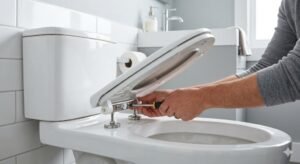
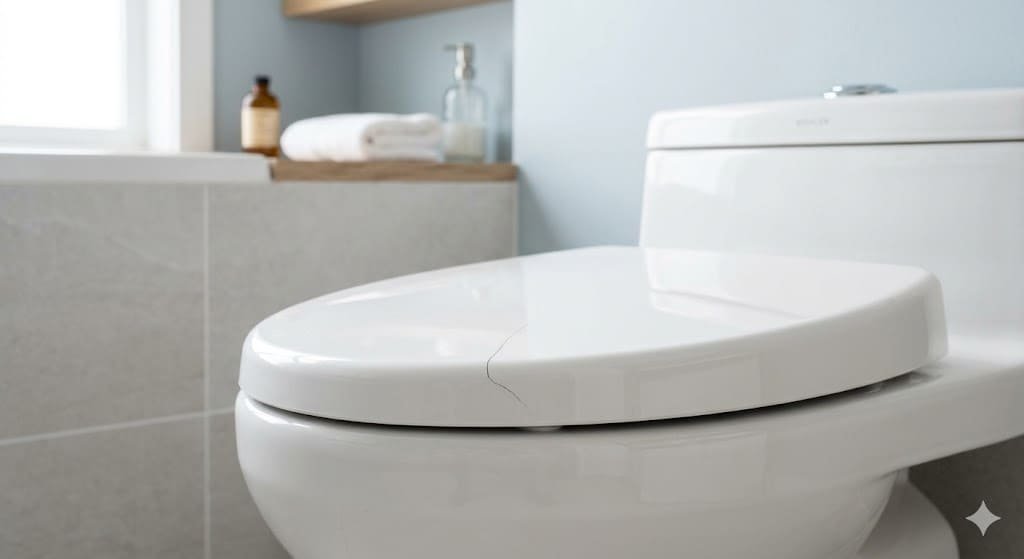
Introduction
How to fix a cracked toilet seat is a common question for many homeowners when they notice damage in their bathrooms. A cracked seat can be uncomfortable, unsafe, and unhygienic if ignored for too long. In many cases, the problem starts small but can quickly get worse with regular use.
In this guide, you’ll learn simple and practical ways to repair a cracked toilet seat, including temporary fixes, proper repair methods, and when it’s better to replace it completely.
Table of Contents
What Causes a Toilet Seat to Crack?
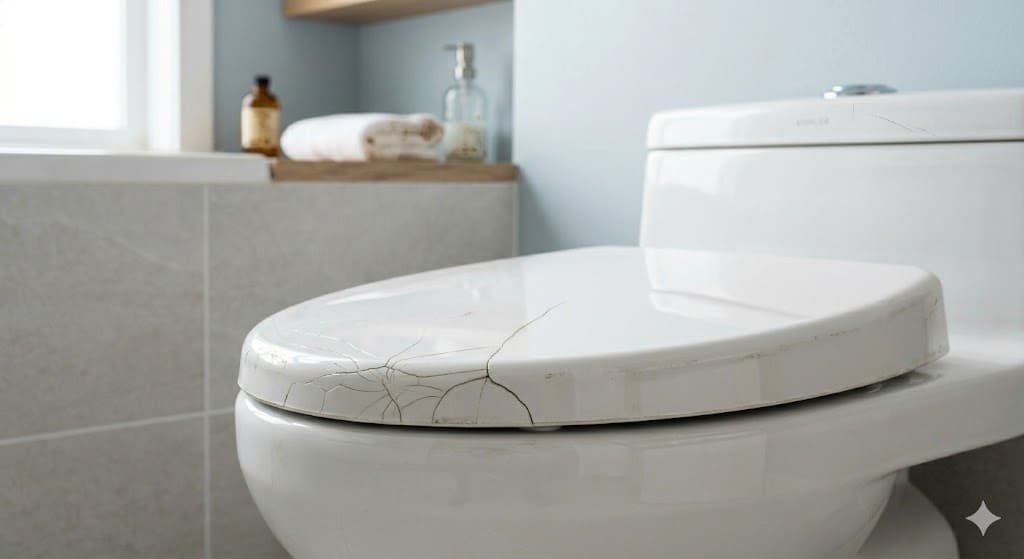
A cracked toilet seat is a common bathroom problem that can happen over time due to daily use, poor maintenance, or low-quality materials. Before learning how to fix a cracked toilet seat, it is important to understand what causes the damage in the first place. Knowing the main reasons can help prevent future cracks and extend the life of your toilet seat.
Heavy Pressure or Impact
One of the most common causes of a cracked toilet seat is excessive pressure. Standing on the seat, dropping heavy objects on it, or applying uneven weight can create stress that leads to cracks. Plastic toilet seats are especially vulnerable to sudden impact damage.
Age and Wear
Toilet seats experience constant daily use, which naturally weakens the material over time. Older seats may become brittle, faded, or less flexible, making them easier to crack. Continuous exposure to moisture and cleaning products can also speed up wear and tear.
Cheap Plastic Materials
Low-quality toilet seats are more likely to crack because they are made from thin or weak plastic. Budget seats may save money initially, but they often lack durability. Investing in a stronger material can reduce the chances of needing to fix a cracked toilet seat later.
Loose Hinges and Poor Installation
Loose hinges can cause the seat to shift during use, creating uneven pressure on certain areas. Over time, this repeated movement can weaken the structure and lead to cracks. Incorrect installation may also place unnecessary stress on the seat, especially around the mounting points.
Harsh Cleaning Chemicals
Strong chemical cleaners containing bleach or abrasive ingredients can slowly damage the surface of the toilet seat. These products may dry out plastic materials and create small fractures that eventually become larger cracks.
Temperature Changes and Moisture Exposure
Bathrooms often experience changes in humidity and temperature. Constant exposure to moisture and heat can weaken certain toilet seat materials over time. Wooden seats may swell or crack, while plastic seats can become brittle after long-term exposure to changing conditions.
Signs Your Toilet Seat Needs Repair or Replacement
A damaged toilet seat can quickly become uncomfortable, unsafe, and unhygienic. Before deciding how to fix a cracked toilet seat, it is important to know whether the seat can still be repaired or if replacing it is the better option. Below are the most typical indicators you should watch out for.
Visible Cracks or Splits
Small surface cracks are usually the first warning sign. Over time, these cracks can spread and weaken the entire seat. Even a tiny split may collect dirt and moisture, making the seat harder to clean properly.
Sharp or Rough Edges
Cracks often create rough edges that can scratch the skin or tear clothing. If the damaged area feels sharp or uneven, the toilet seat should be repaired immediately to avoid injury.
Wobbling or Instability
A toilet seat that shifts from side to side may have loose hinges or hidden structural damage. In some cases, tightening the hardware solves the problem. However, if the seat still feels unstable after tightening, replacement may be necessary.
Discolouration Around the Crack
Dark stains or yellowing around a crack can indicate trapped moisture and bacteria buildup. This is common in older plastic or wooden toilet seats and may signal that the damage has gone beyond a simple repair.
Cracks That Keep Getting Bigger
If the crack continues to expand even after repair attempts, the material has likely weakened too much. Learning how to fix a cracked toilet seat can help with minor damage, but repeated cracking usually means the seat has reached the end of its lifespan.
Broken Hinges or Mounting Points
Sometimes the crack forms near the hinges or bolt area. This part of the seat handles most of the pressure, so damage here can make the seat unsafe to use. In many cases, replacing the seat is the safest long-term solution.
Uncomfortable Sitting Surface
A cracked seat may bend, flex, or feel uneven while sitting. Besides being uncomfortable, this can also increase the risk of the seat breaking completely during use.
Recognising these signs early can help you decide whether a quick repair is enough or if investing in a new toilet seat is the smarter choice.
Can You Fix a Cracked Toilet Seat?
Yes, in many cases, you can learn how to fix a cracked toilet seat without replacing the entire seat. Small cracks, surface splits, and minor damage can often be repaired using strong epoxy adhesive, plastic repair glue, or waterproof sealants. These repairs help restore stability and prevent the crack from spreading further.
However, the success of the repair depends on the size and location of the crack. A small crack on the surface is usually easy to fix, while large splits or broken hinges may make the seat unsafe to use. If the toilet seat feels unstable, has sharp edges, or continues cracking after repair, replacing it is often the safer and more practical solution.
Before repairing the seat, always clean and dry the damaged area properly. Dirt, moisture, and cleaning chemicals can weaken the adhesive and reduce the strength of the repair. After applying the repair material, allow enough drying and curing time before using the toilet seat again.
Understanding how to fix a cracked toilet seat can help you save money and extend the life of your bathroom fixtures. Still, if the damage is severe or affects comfort and hygiene, installing a new toilet seat may be the better long-term option.
Tools and Materials You May Need
Before you start learning how to fix a cracked toilet seat, it is important to gather the right tools and materials. Using proper repair supplies will make the process easier, safer, and more durable. Most of these items are inexpensive and commonly available at hardware stores.
Epoxy Adhesive or Plastic Repair Glue
A strong waterproof epoxy is one of the best solutions for repairing small or medium cracks. It helps bond the damaged parts together and creates a firm hold that can last for a long time.
Sandpaper
Fine-grit sandpaper is useful for smoothing rough edges after the repair dries. This helps improve comfort and prevents sharp plastic edges from causing injury.
Cleaning Cloth or Sponge
The toilet seat should be completely clean before applying any adhesive. Dirt, moisture, or bathroom residue can weaken the repair and reduce durability.
Mild Cleaning Solution
Use a gentle cleaner or soap solution to remove bacteria, stains, and oils from the cracked area. Avoid harsh chemicals that may damage the seat material.
Protective Gloves
Disposable gloves help keep your hands clean while working with glue, sealants, or cleaning products. They also improve safety during the repair process.
Screwdriver
A screwdriver may be needed if you want to remove the toilet seat before repairing it. Taking the seat off often makes it easier to fix cracks properly.
Waterproof Sealant
A waterproof sealant can provide extra protection around the repaired crack. This is especially helpful in bathrooms where constant moisture can weaken repairs over time.
Replacement Hinges (Optional)
If the toilet seat is cracked because of loose or damaged hinges, replacing the hinges may solve the problem completely and improve seat stability.
Having these tools ready before you begin will make the process of how to fix a cracked toilet seat faster and more effective.
How to Fix a Cracked Toilet Seat Step by Step
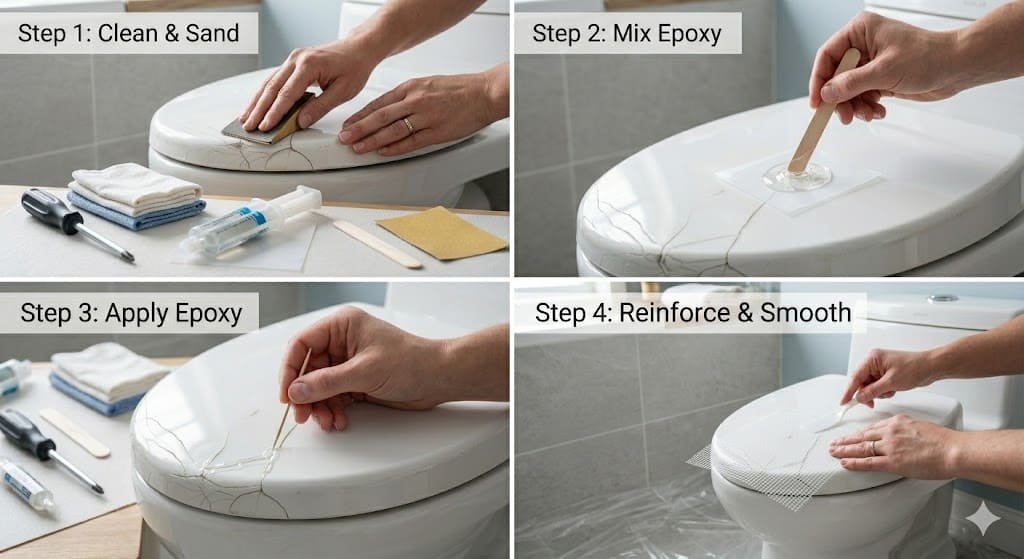
If you are wondering how to fix a cracked toilet seat, the good news is that small cracks can often be repaired at home with a few basic tools. Repairing the crack early can prevent further damage, improve comfort, and extend the life of the toilet seat. Follow these simple steps for a safe and effective repair.
Step 1 – Clean the Toilet Seat Thoroughly
Start by cleaning the damaged area carefully. Dirt, moisture, and bathroom residue can prevent adhesives from bonding properly. Use warm water and a mild cleaner to wipe the toilet seat completely.
Pay extra attention to the cracked section and remove any loose particles. After cleaning, dry the surface with a soft cloth.
Step 2 – Dry the Surface Completely
Before applying any repair material, make sure the toilet seat is fully dry. Moisture trapped inside the crack can weaken the repair and reduce durability.
Leave the seat uncovered for a few minutes or use a dry towel to absorb the remaining moisture.
Step 3 – Apply Epoxy or Plastic Repair Adhesive
A strong waterproof epoxy works best for most plastic toilet seats. Apply the adhesive directly into the crack according to the product instructions.
Use a small applicator or toothpick to spread the epoxy evenly inside the damaged area. Make sure the crack is fully filled without leaving gaps.
Step 4 – Hold the Crack Together Properly
Press both sides of the crack together gently so the adhesive bonds correctly. Some larger cracks may require tape or clamps to keep the seat stable while drying.
Avoid using too much pressure because it can spread the crack further.
Step 5 – Let the Repair Cure Fully
Allow enough time for the adhesive to cure completely. Most epoxy products require several hours to harden properly. Avoid sitting on the toilet seat during this time.
Waiting for full curing is important if you want the repair to last longer and remain stable.
Step 6 – Sand Rough Edges for a Smooth Finish
Once the repair is fully dry, lightly sand the repaired area using fine-grit sandpaper. This helps smooth rough edges and improves comfort during use.
Wipe away any dust after sanding to leave the toilet seat clean and neat.
Final Tip
Although learning how to fix a cracked toilet seat can save money, badly damaged or heavily cracked seats should usually be replaced. A secure and stable toilet seat is important for both safety and hygiene.
How to Repair a Cracked Wooden Toilet Seat
If you are searching for how to fix a cracked toilet seat, the repair process for a wooden seat is slightly different from repairing a plastic one. Wooden toilet seats are more durable and comfortable, but cracks can develop over time because of moisture, pressure, or regular wear.
Small cracks can usually be repaired at home with the right tools and materials.
Clean the Damaged Area.
Start by cleaning the toilet seat thoroughly. Use warm water and mild soap to remove dirt, dust, and bathroom residue. Dry the seat completely before starting the repair. Moisture trapped inside the crack can weaken the adhesive and reduce repair strength.
Apply Wood Glue or Wood Filler
For thin cracks, apply waterproof wood glue directly into the damaged area. If the crack is wider or has missing material, use a high-quality wood filler instead. Spread the product evenly so it fills the entire crack.
A small putty knife or plastic scraper can help smooth the surface and remove excess filler.
Clamp the Crack Securely.
Press the cracked sections together firmly. If possible, use clamps to hold the seat tightly while the glue dries. Proper pressure helps create a stronger bond and prevents the crack from reopening later.
Always follow the drying time recommended by the product manufacturer.
Sand the Surface Smooth.
Once the repair has fully cured, lightly sand the repaired area using fine-grit sandpaper. This smooths rough edges and helps the repaired section blend with the rest of the seat.
Wipe away sanding dust with a clean cloth before moving to the next step.
Seal the Repair for Moisture Protection.
Wooden toilet seats are constantly exposed to humidity and water, so sealing the repaired area is important. Apply a waterproof wood sealant or protective finish over the repaired section. This helps prevent future cracking and protects the wood from moisture damage.
Check Stability Before Use
Before using the toilet seat again, make sure the repaired area feels solid and secure. Tighten any loose hinges if needed, since movement can place extra stress on the repaired crack.
If the crack continues to spread or the seat feels unstable after repair, replacing the seat is usually the safest long-term solution.
Temporary Fixes for a Cracked Toilet Seat
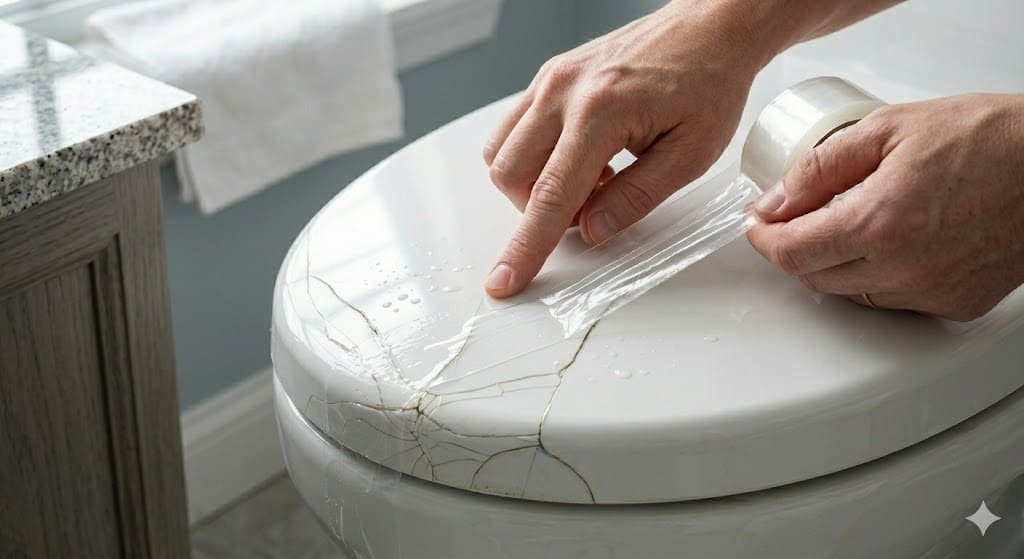
If you notice a crack in your toilet seat, fixing it quickly can prevent the damage from getting worse. While temporary repairs are not a permanent solution, they can help you safely use the seat until you replace it. Knowing how to fix a cracked toilet seat with simple methods can also save money and reduce inconvenience.
Waterproof Tape Method
One of the fastest temporary solutions is using strong waterproof tape. Clean and dry the cracked area completely before applying the tape. Place the tape firmly over the crack from both the top and bottom sides if possible. This method helps hold the seat together and prevents small cracks from spreading further.
Although tape repairs are simple, they work best for minor cracks and should only be used for a short period.
Quick Sealant Repair
A waterproof plastic sealant or epoxy can provide a stronger temporary fix. Apply the sealant carefully along the crack and allow it to dry fully according to the product instructions. Once hardened, the sealant can improve stability and reduce movement around the damaged area.
This is one of the most common methods people use when learning how to fix a cracked toilet seat because it is affordable and easy for beginners.
Cushion Cover Solution
If the crack creates rough or uncomfortable edges, adding a toilet seat cushion cover can improve comfort temporarily. The cover helps reduce direct pressure on the damaged area and makes the seat safer to use until repairs or replacement is completed.
However, a cushion cover does not repair the crack itself. It only helps manage discomfort and should be combined with another temporary repair method if the damage is noticeable.
Important Safety Tip
Temporary fixes can help for a short time, but badly cracked toilet seats should be replaced as soon as possible. Deep cracks may weaken the seat structure and create safety or hygiene problems over time.
When You Should Replace Instead of Repairing
In some cases, learning how to fix a cracked toilet seat is not enough because the damage is beyond repair. While small cracks can often be temporarily fixed, there are situations where replacing the seat is the safer and more practical option.
Large or Deep Cracks
If the crack is wide, deep, or spreading across a large area, repair methods like glue or epoxy will not hold for long. The seat may break completely under pressure, which can lead to injury or further damage.
Broken or Weak Hinges
When the crack is near the hinges or the mounting area, the structure of the seat is already compromised. Even if you try to fix the crack, the seat will remain unstable. In this case, replacement is the most reliable solution.
Repeated Cracking Issues
If your toilet seat keeps cracking again and again, it usually means the material is low quality or has reached the end of its lifespan. Instead of repeatedly trying to fix it, replacing it will save time and effort.
Hygiene and Cleaning Concerns
Cracks can trap dirt, moisture, and bacteria, making the seat harder to clean properly. If the damage is affecting hygiene, it is better to replace the seat rather than continue repairing it.
Cost vs. Value
Sometimes, repairing a cracked seat multiple times costs nearly the same as buying a new one. In such cases, replacing it is more cost-effective and gives you a safer, longer-lasting solution.
Final Tip
While knowing how to fix a cracked toilet seat is useful for minor damage, replacement is the smarter choice when the structure is weak, unsafe, or repeatedly failing.
If you want a complete guide on toilet seats and how to choose the right one for your bathroom, check out our latest detailed post for expert insights and easy buying tips.
How to Prevent Toilet Seat Cracks in the Future
Preventing damage is always easier than learning how to fix a cracked toilet seat after it happens. Most cracks develop due to pressure, poor handling, or low-quality materials, so a few simple habits can significantly extend the life of your toilet seat.
Avoid Excess Weight or Pressure
One of the main causes of cracks is applying too much weight on the seat. Avoid standing on it or allowing children to stand or jump on it. Toilet seats are designed for sitting only, and extra pressure can quickly weaken the plastic or wood over time.
Tighten Hinges Regularly.
Loose hinges create uneven pressure on the seat, which can lead to stress cracks. Check the hinges every few months and tighten them if needed. A stable, well-fitted seat is much less likely to crack or break during daily use.
Choose High-Quality Materials.
Plastic toilet seats made from cheaper materials tend to be more prone to cracking over time. Investing in durable materials like reinforced plastic or wood can greatly reduce the chances of damage. Soft-close seats are also a good option because they reduce impact when closing, helping prevent long-term wear.
Clean with Safe Products
Harsh chemicals can weaken the surface of the seat over time. Use mild cleaners instead of strong acids or abrasive scrubs. Gentle cleaning keeps the material strong and reduces the risk of small cracks forming that may eventually require you to learn how to fix a cracked toilet seat.
By following these simple prevention steps, you can extend the lifespan of your toilet seat and avoid unnecessary repairs or replacements.
Best Toilet Seat Materials for Durability
Choosing the right material plays a big role in preventing damage and reducing the need to learn how to fix a cracked toilet seat in the future. A strong, high-quality seat lasts longer, handles daily pressure better, and is less likely to develop cracks over time.
Plastic (Polypropylene or Thermoplastic)
Plastic toilet seats are the most common and budget-friendly option. High-quality polypropylene seats are lightweight, easy to clean, and resistant to minor impacts. However, cheaper plastic can crack more easily under heavy pressure or long-term use.
Wood (MDF or Moulded Wood)
Wooden toilet seats offer a solid, premium feel and are generally more durable than low-grade plastic. They are less likely to crack suddenly, but they can absorb moisture if not properly coated, which may lead to swelling or damage over time.
Thermoset Plastic
Thermoset plastic is a stronger and more rigid version of standard plastic. It is highly resistant to scratches, stains, and cracks, making it one of the best choices for long-term durability. This material is ideal if you want to avoid frequent repairs.
Soft-Close Toilet Seats
Soft-close seats are usually made from durable plastic or thermoset materials and include reinforced hinges. These seats reduce impact when closing, which helps prevent cracks and extends the overall lifespan of the seat.
Final Tip
If you want to reduce maintenance and avoid learning how to fix a cracked toilet seat repeatedly, investing in a durable material like thermoset plastic or a high-quality soft-close seat is the most reliable option.
See our latest post Toilet seat material guide for understanding Which Material Is Best for Your Bathroom.
Common Mistakes to Avoid When Repairing a Toilet Seat
When learning how to fix a cracked toilet seat, many people make small mistakes that can reduce the effectiveness of the repair or make the damage worse. Avoiding these errors will help you achieve a stronger and longer-lasting fix.
Not Cleaning the Surface Properly
One of the most common mistakes is applying glue or epoxy to a dirty surface. Dust, moisture, or soap residue can prevent the adhesive from bonding properly. Always clean and dry the area completely before starting any repair.
Using the Wrong Type of Adhesive
Not all glues work on toilet seat materials. Using regular household glue may seem convenient, but it usually fails quickly. For best results, always use epoxy or a plastic-safe adhesive designed for strong bonding.
Ignoring Small Cracks
Small cracks can seem harmless, but they often spread over time. A key part of knowing how to fix a cracked toilet seat is addressing the damage early. Ignoring minor cracks usually leads to a full break later, making replacement unavoidable.
Applying Too Much or Too Little Adhesive
Using too much adhesive can create uneven surfaces and mess, while using too little may not hold the crack properly. Apply a balanced, even layer to ensure a strong bond without weakening the structure.
Using the Seat Before It Fully Cures
Another common mistake is sitting on the seat before the epoxy or sealant has fully dried. This weakens the repair and may cause the crack to reopen. Always follow the curing time recommended by the product instructions.
Overlooking Safety Concerns
A cracked toilet seat can have sharp edges or hidden structural weaknesses. Even after a temporary repair, avoid putting excessive weight on it. If the damage is severe, replacement is always the safest option.
By avoiding these mistakes, you can improve your success when learning how to fix a cracked toilet seat and extend the life of your bathroom fixture.
Can you really learn how to fix a cracked toilet seat at home?
Yes, in many cases you can. Small cracks can often be repaired using epoxy, plastic adhesive, or waterproof sealants. However, if the crack is large or the seat feels unstable, replacement is usually the safer option.
FAQs
Is it safe to use a cracked toilet seat?
The answer varies based on how serious the damage is. Minor surface cracks may still be usable for a short time, but deeper cracks can weaken the structure and may cause the seat to break suddenly. It’s best to repair or replace it as soon as possible.
What is the best method for how to fix a cracked toilet seat?
The most effective method is using a strong epoxy resin designed for plastic or wood. It bonds the cracked parts together and provides better durability than glue or tape. Always clean and dry the area before applying any repair product.
Can superglue fix a cracked toilet seat?
Super glue can work for very small hairline cracks, but it is not a long-term solution. It becomes weak under pressure and moisture, so it may fail again over time. Epoxy is a stronger and more reliable choice.
How long does a repaired toilet seat last?
A properly repaired crack can last several months to a year, depending on usage and the quality of the repair material. Still, it is generally considered a temporary fix rather than a permanent solution.
Should I repair or replace a cracked toilet seat?
If the crack is small, you can try fixing a cracked toilet seat using DIY methods. But if the seat has multiple cracks, loose hinges, or feels unsafe, replacing it is the better and more hygienic option.
Conclusion
Knowing how to fix a cracked toilet seat can help you deal with minor damage quickly and avoid immediate replacement costs. Small cracks can often be managed with simple DIY methods like epoxy, sealants, or temporary fixes, especially when the damage is caught early.
However, it’s important to remember that these repairs are usually not permanent. If the crack continues to spread, or if the seat becomes unstable, replacing it is the safest and most reliable solution for long-term use.
Regular cleaning, careful use, and checking hinges can also help prevent cracks from forming in the first place. By acting early and choosing the right fix, you can keep your bathroom safe, clean, and comfortable.
See our complete guide Common Toilet Seat Problems and Their Solution at Home.